Winter Laundry Problems in Ottawa and How to Solve Them
How to handle winter laundry in Ottawa: indoor drying, salt stain removal, heavy coat care, static control, and when a pickup service saves you from the cold.
- Duong Quan Nguyen
- Updated March 10, 2026
- 25 min read
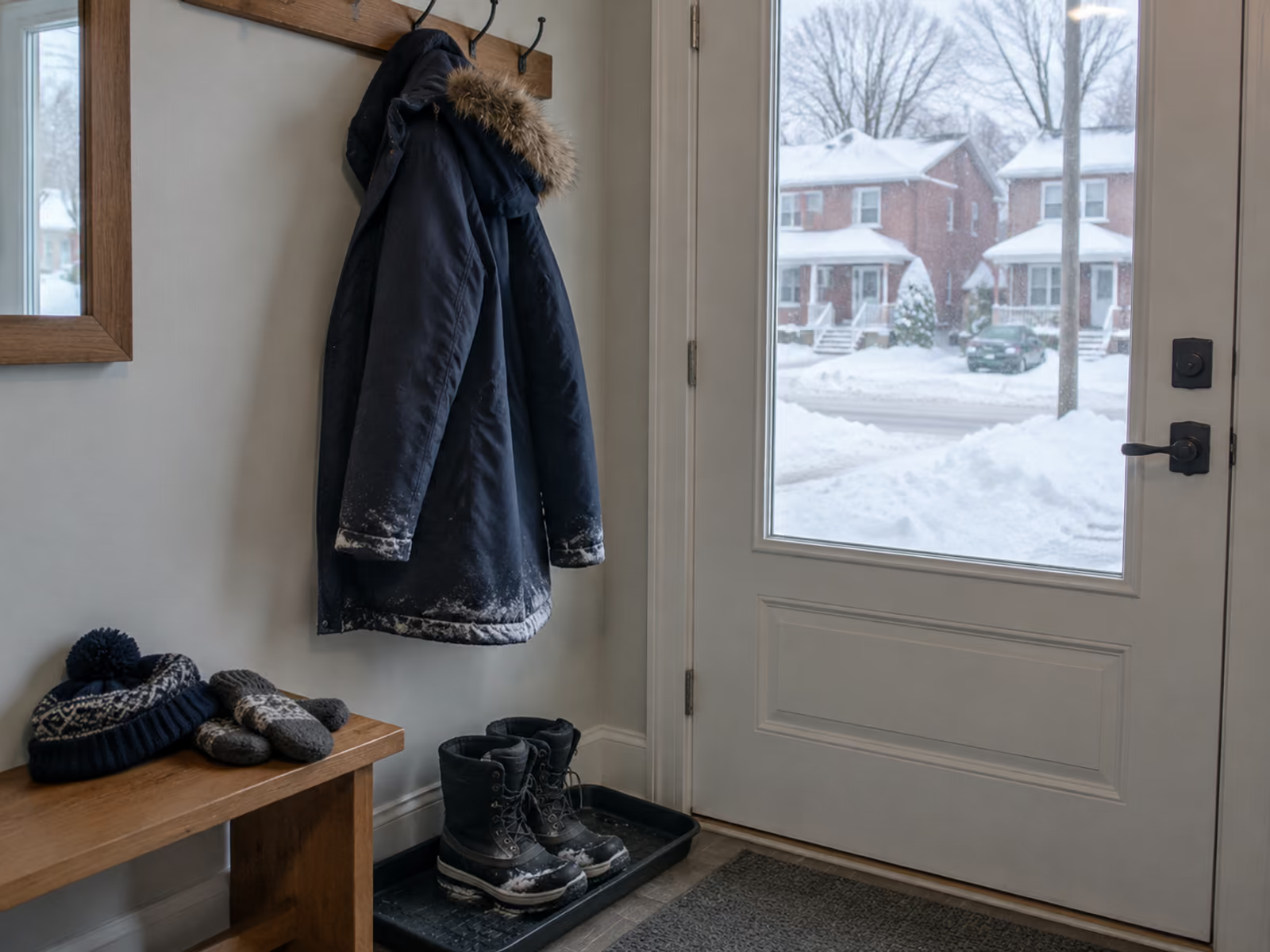
Read the guide
Keep the guide open while the Laundryless route stays clear.
Use the 9 jump links to move through this seasonal article without losing your place. On wider screens the dispatch rail stays beside the Ottawa laundry guide while the body keeps the original blog typography.
Seasonal
Quick answer
Treat salt stains the same day with equal parts white vinegar and warm water, then wash on cold and air-dry. Dry clothes indoors on a rack with good airflow, dry down parkas on low heat with dryer balls, and run a humidifier to cut static.
Ottawa winters mean minus twenty-five mornings, road salt on everything you own, and a laundry pile that doubles overnight once the layers come out. The season changes every part of the wash routine: heavier fabrics, longer drying times, salt stains that set if you ignore them, and static that turns a fleece pullover into a crackling science experiment. Winter laundry in Ottawa is not the same chore it was in September, and pretending otherwise is how clothes get ruined.
This guide covers the practical side of cold-weather laundry for anyone living through an Ottawa winter. We will walk through the specific problems the season creates, how to handle salt stains before they become permanent, which indoor drying methods actually work in a small apartment, how to care for heavy items like parkas and comforters without damaging them, and when handing the whole pile to a winter laundry pickup service makes more sense than fighting the season alone.
Why winter makes laundry harder in Ottawa
Ottawa's winter laundry volume can double compared to summer. Budget extra drying time, treat salt stains within 24 hours, and consider a pickup service for the heaviest weeks.
The shift happens fast. One week you are tossing a T-shirt and shorts into the hamper; the next you are peeling off a base layer, a fleece mid-layer, a parka shell, a scarf, a hat, gloves, and snow pants before you even get to the socks. Volume is the first and most obvious winter laundry problem. More layers on the body means more fabric in the basket at the end of every day, and that multiplied load compounds across a household. A family of four wearing summer clothes might produce three or four loads a week. The same family in January easily doubles that number without changing anything about their habits.
Volume alone would be manageable if drying were not also harder. In summer, a line outside handles everything: sunlight kills bacteria, wind speeds evaporation, and the whole process costs nothing. Ottawa winter removes that option entirely for roughly five months. Hanging anything outside between November and March means frozen fabric, ice crystals in the fibres, and clothes that come back inside stiff rather than dry. So every single item that once dried outside now needs to dry inside, competing for space with your furniture, your heating system, and your patience.
Then there is the salt. Ottawa road crews lay thousands of tonnes of salt and brine every winter season, and that salt finds its way onto every pair of boots, every hem of every pair of pants, and every bag that touches the ground near a curb. Salt stains are not just ugly. Left untreated, the calcium chloride in road salt can break down leather, weaken fabric fibres, and leave permanent white tide marks that no amount of regular washing will remove. The window for treating them is narrow: within a day or two, the stain is reversible; after a week of drying into the material, it is often permanent.
Static is the fourth seasonal problem, and it comes from the same source as the drying difficulty: dry indoor air. Ottawa homes in winter run furnaces that strip humidity out of the air, dropping indoor levels to fifteen or twenty percent. Fabrics rubbing together in a dryer or even in a drawer generate static charges that have nowhere to dissipate in that dry environment. The result is clothing that clings, sparks, and crackles, which is annoying with cotton and genuinely uncomfortable with synthetics. Static also attracts lint and pet hair, making freshly washed clothes look dirty again within minutes of putting them on.
Finally, winter introduces a category of laundry that barely exists the rest of the year: genuinely heavy items. A down parka can weigh three or four pounds on its own. A queen-size comforter seeing heavier use because the bedroom is cold tips the scale at eight to twelve pounds. Snow pants, heavy wool sweaters, flannel sheets, and thermal blankets all demand more water, more detergent, longer cycles, and more drying time than their summer equivalents. Many home machines simply cannot handle a king comforter or a properly stuffed parka without straining the drum, which means either multiple small loads or a trip to a commercial-size machine somewhere else in the city.
Six common winter laundry problems
Every Ottawa household faces the same set of seasonal challenges once the temperature drops. Some are obvious the first time you pull a salt-crusted pair of jeans out of the closet; others creep up over weeks until you realise your entire apartment smells faintly of damp wool. Recognising the problems by name makes them easier to solve, and each one has a practical answer further down in this guide.
Salt stains
Calcium chloride from road salt leaves white marks on boots, hems, and bags.
Slow indoor drying
No outdoor line for five months means everything competes for indoor space.
Static cling
Dry furnace air and synthetic layers create constant static buildup.
Heavy coat care
Parkas, snow pants, and wool coats need special wash and dry cycles.
Doubled volume
Multiple layers per person means twice the laundry of a summer week.
Wet boot smell
Damp footwear and gloves breed odour if not dried properly between wears.
Salt stains are the most time-sensitive of the six. Left on leather or fabric for more than a day or two, the minerals bond to the fibres and leave a permanent white ring that no regular wash will remove. The other five problems are cumulative rather than urgent: they build week over week until the system breaks, usually in the form of a laundry backlog so large that a single weekend cannot clear it. Understanding which problems need immediate action and which need better habits is the difference between a manageable winter and one where the laundry pile wins.
The volume problem deserves special attention because it amplifies every other issue. When you are washing twice as many loads, drying takes twice as long, static affects twice as many garments, and the odds of a salt stain sneaking through untreated go up simply because there is more fabric to inspect. Solving volume, whether by adjusting your wash frequency or handing the overflow to a service, makes every other winter laundry problem smaller by default.
Wet boot smell rounds out the list because it is the problem people notice last but complain about most. Boots and gloves that sit damp in a closet or mudroom develop a musty odour that transfers to anything stored nearby. The fix is simple: stuff boots with newspaper or a boot dryer insert after every wear, and hang gloves where air circulates rather than tossing them into a pile. Preventing the smell is far easier than washing it out of a coat that absorbed it from a neighbouring pair of boots.
How to remove salt stains from winter clothing
Salt stain removal is one of those tasks that sounds fussy until you do it once and realise it takes about five minutes. The trick is acting before the stain fully dries into the fabric. Road salt in Ottawa is primarily calcium chloride, which dissolves easily in a mild acid like white vinegar when the deposit is still relatively fresh. Once it has been through a hot dryer cycle or sat untreated for a week, the mineral bonds to the fibre and the stain becomes permanent. Every pair of winter boots, every pant hem that dragged through slush, and every bag that sat on a salted sidewalk is a candidate for this treatment.
Brush off dried salt
Use a stiff brush or old toothbrush to remove as much loose, dried salt as possible before applying any liquid. This prevents the salt from dissolving back into the fabric during treatment.
Mix white vinegar and water
Combine equal parts white vinegar and warm water in a small bowl. The mild acidity dissolves calcium chloride without damaging leather or fabric. No special products needed.
Dab the stain gently
Soak a clean cloth in the solution and dab the stained area. Do not rub, which pushes the salt deeper into the weave. Work from the outside of the stain inward to prevent spreading.
Wash on cold and air dry
Once the white marks have lifted, wash the garment on a cold cycle. Air dry rather than using a dryer, since heat can set any residual mineral traces that the vinegar missed.
This method works on most fabrics: denim, cotton, nylon, and polyester all respond well. Leather boots need a slightly different approach. After brushing off the loose salt, use the same vinegar solution but apply it with a damp sponge rather than soaking the leather. Wipe clean, let the boot dry naturally away from direct heat, and condition the leather afterward to replace the oils the salt stripped out. Suede is the most fragile case. A suede brush can handle light salt deposits, but heavy staining usually needs a dedicated suede cleaner rather than vinegar, which can darken the nap.
The timing matters more than the technique. A salt stain treated the same evening it happens lifts in seconds. The same stain left for a week needs repeated applications and may still leave a shadow. Building the habit of checking hems and boot lines when you come inside is the single most effective salt-stain strategy, because prevention through speed beats any cleaning product. If you know your weekly wash cannot happen for a few days, a quick brush and dab with vinegar water at the door is enough to keep the stain reversible until laundry day arrives.
For items that are already past the point of home treatment, or for the parka you do not want to risk treating yourself, a professional wash handles salt stains as part of the standard process. The sorting step catches salt deposits and pre-treats them before the main cycle, which is one reason why handing off winter laundry to a service often produces cleaner results than fighting each stain individually at home.
Winter fabric care checklist
Winter fabrics are less forgiving than summer ones. A cotton T-shirt can survive a careless hot wash with minimal damage, but a wool sweater, a down parka, or a fleece mid-layer will punish you for ignoring the care label. The checklist below covers the items that trip people up most often during an Ottawa winter. Each line is a habit worth building into your routine before the first heavy snowfall arrives.
Winter fabric care essentials
- Wash wool layers on cold and flat dry to prevent shrinkage and stretching
- Zip all zippers before washing parkas to protect the drum and adjacent fabrics
- Turn fleece inside out to reduce pilling from drum friction
- Wash thermal base layers on gentle cycle to preserve elasticity
- Never tumble-dry down jackets on high heat as it melts the fill clusters
- Treat salt stains within 24 hours before mineral bonds become permanent
Wool deserves special attention because Ottawa winters lean on it heavily. Merino base layers, wool socks, cable-knit sweaters, and wool-blend dress pants are all staples from November through March, and all of them share the same vulnerability: hot water and agitation cause the fibres to felt together, shrinking the garment permanently. Cold water and a gentle or hand-wash cycle are non-negotiable for anything with a significant wool content. Flat drying is equally important, because hanging a wet wool sweater stretches the shoulders and hem out of shape in ways that no amount of reshaping will fix once the fabric dries in that distorted position.
Down jackets are the other category that demands care beyond the default settings. The fill inside a down parka is clusters of fine feathers that trap air for insulation. High heat in a dryer melts the tips of those clusters together, creating clumps that no longer loft properly. The jacket still looks fine from outside, but its warmth drops noticeably because the insulating air pockets have collapsed. Low heat with tennis balls or dryer balls to break up clumps is the safe approach. It takes longer, sometimes two or three full dryer cycles on low, but the alternative is a parka that lost twenty percent of its warmth because you chose the fast setting.
Fleece pilling is the problem people notice but rarely connect to their wash routine. The tiny balls of fibre that form on fleece surfaces are caused by abrasion during tumbling. Turning the garment inside out before washing reduces surface contact with the drum and with other items in the load. Washing fleece with jeans or items that have metal hardware accelerates pilling dramatically, so separating fleece into its own load, or at minimum away from rough fabrics, is the simplest prevention. For fleece that has already pilled, a fabric shaver removes the surface damage without harming the garment, but prevention is always cheaper than repair.
For a deeper look at why shrinkage happens and how to prevent it across all fabric types, not just winter-specific ones, we covered the science and the practical steps in our guide on shrinkage prevention. The principles there apply year-round, but they matter most in winter when the fabrics at risk are also the most expensive to replace.
Indoor drying methods compared
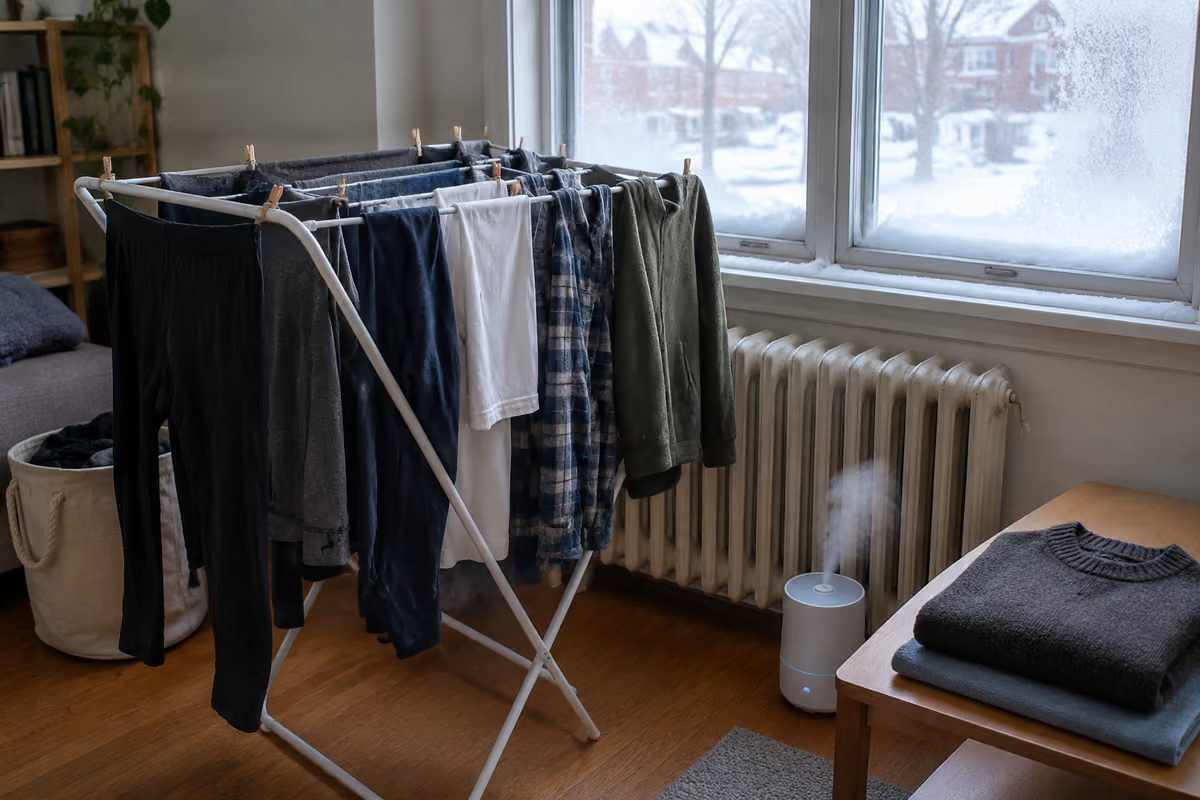
Once outdoor drying disappears for the season, every Ottawa household faces the same question: how do you dry clothes indoors without turning your apartment into a damp, cluttered mess? The answer depends on your space, your budget, and how much laundry you are producing each week. None of the options are perfect, but some are significantly better than others, and knowing the tradeoffs helps you pick the method that fits your situation rather than defaulting to whatever is closest.
| Method | Best for |
|---|---|
| Standard drying rack | Low cost, gentle on all fabrics, folds away when not in use |
| Heated drying rack | Faster than passive rack, still gentle, moderate energy use |
| Dehumidifier plus rack | Fastest passive method, prevents moisture buildup in apartment |
| Dryer on low heat | Fastest overall, suitable for cottons and synthetics, higher energy cost |
| Radiator or baseboard | Not recommended: uneven drying, fire risk, damages some fabrics |
The standard folding drying rack is the most common choice in Ottawa apartments for good reason. It costs under forty dollars, folds flat against a wall when not in use, and handles delicate fabrics that would shrink or distort in a machine dryer. The downside is speed. In a typical Ottawa winter apartment with dry forced-air heat, a full rack of clothing takes twelve to twenty-four hours to dry completely. Thicker items like jeans and towels can take even longer. For a household producing multiple loads per week, a single rack creates a bottleneck that means clothes are perpetually drying somewhere in the living space.
A heated drying rack cuts that time roughly in half. The bars warm gently, accelerating evaporation without reaching temperatures that damage fabric. Energy consumption is modest, typically comparable to a light bulb running for the same duration. The drawback is capacity: most heated racks hold one load at best, and they cannot handle bulky items like comforters or heavy sweaters without overloading the bars. They work well as a supplement to a standard rack rather than a full replacement.
The combination of a dehumidifier running beside a standard rack is arguably the best passive drying setup for an Ottawa winter apartment. The dehumidifier pulls moisture out of the air as the clothes release it, which speeds drying dramatically and simultaneously solves the condensation problem that makes landlords nervous about indoor drying. The dual benefit of faster drying and better apartment air quality makes this the method we recommend most often to customers who ask. The upfront cost is higher, since a decent dehumidifier runs between one hundred fifty and three hundred dollars, but the unit serves double duty as climate control in a Canadian winter apartment where moisture management matters year-round.
A tumble dryer on low heat remains the fastest option for everyday cotton and synthetic loads, and most Ottawa apartment buildings that have shared laundry rooms offer at least a few dryers. The tradeoffs are energy cost, shared-machine availability, and fabric wear. Every dryer cycle shortens the life of clothing slightly, particularly elastic waistbands, printed graphics, and anything with spandex content. Low heat reduces the damage compared to high, but the mechanical tumbling itself causes wear regardless of temperature. For robust everyday items like towels, sheets, and workout clothing, the convenience outweighs the gradual wear. For anything you want to last multiple seasons, air drying is the kinder choice.
Radiators and baseboard heaters are the method people default to when nothing else seems available, and they are the one method on this list we actively discourage. Draping wet fabric directly over a heat source dries unevenly, with the contact side overdrying while the outer surface stays damp. It can scorch delicate fabrics, warp elastic, and in extreme cases create a fire risk if fabric is left unattended on an older baseboard unit. Beyond the safety concern, wet clothing draped over a radiator also blocks heat from entering the room, making the rest of the apartment colder while the heater works harder, which raises your energy bill for a worse result.
The honest summary is that the best drying method depends on what you are drying. Delicates and wool go on a rack, always. Everyday cotton loads can go in a dryer on low if time matters more than fabric longevity. Heavy items that overwhelm a home dryer and take two days on a rack are the strongest case for handing the job to a service with industrial equipment. Our wash and fold service handles drying with commercial machines that can take a full comforter in a single cycle, which is the pragmatic answer when your apartment rack is already full and the next load is waiting.
For a related decision that affects drying outcomes, choosing the right wash temperature matters more in winter than in summer. Cold water leaves less residual heat in fabrics, which means slightly longer drying times but significantly less shrinkage risk. We covered the full tradeoff between cold vs warm wash temperatures in a separate guide.
Heavy items: parkas, comforters, and snow pants
Winter introduces a weight class of laundry that most home machines were never designed to handle. A properly insulated down parka, a king-size duvet, a pair of lined snow pants: these items push the limits of residential washers and dryers in ways that summer clothing never does. Handling them wrong risks damaging both the item and the machine, so knowing the rules for each category saves real money over the course of a season.
Parkas are the item people worry about most, and with good reason. A quality down or synthetic-insulated jacket costs several hundred dollars and can last a decade if cared for properly, or one season if washed wrong. The good news is that most parkas do not need frequent washing. Once or twice per winter is usually enough for a full wash, with spot cleaning handling the cuffs, collar, and any visible marks between washes. When you do wash a parka, the process matters: close all zippers and velcro, turn it inside out, use a gentle cycle with cold water and a small amount of mild detergent, and never use fabric softener, which coats down clusters and reduces their ability to loft.
Drying a parka is where most people make mistakes. Down jackets must be dried completely to prevent mildew from forming inside the baffles, and that process takes much longer than people expect. A home dryer on low heat with two or three clean tennis balls or wool dryer balls, tossed in to break up clumps of down, is the standard approach. Expect two to three full dryer cycles before the jacket is truly dry throughout. Pull it out periodically, shake it, and check for any remaining damp clumps. If you can still feel cool spots inside the baffles, it needs more time. Patience here is not optional: a parka that goes back in the closet ninety percent dry will develop a musty smell within days.
Down parkas need tennis balls in the dryer
Toss two or three clean tennis balls or wool dryer balls in with a down jacket. They break up wet clumps of fill so the down redistributes evenly as it dries. Without them, the fill mats into flat sections and the jacket loses its warmth. If the process feels like too much effort for a single item, hand it to us and we handle it with commercial dryers that finish the job in one cycle.
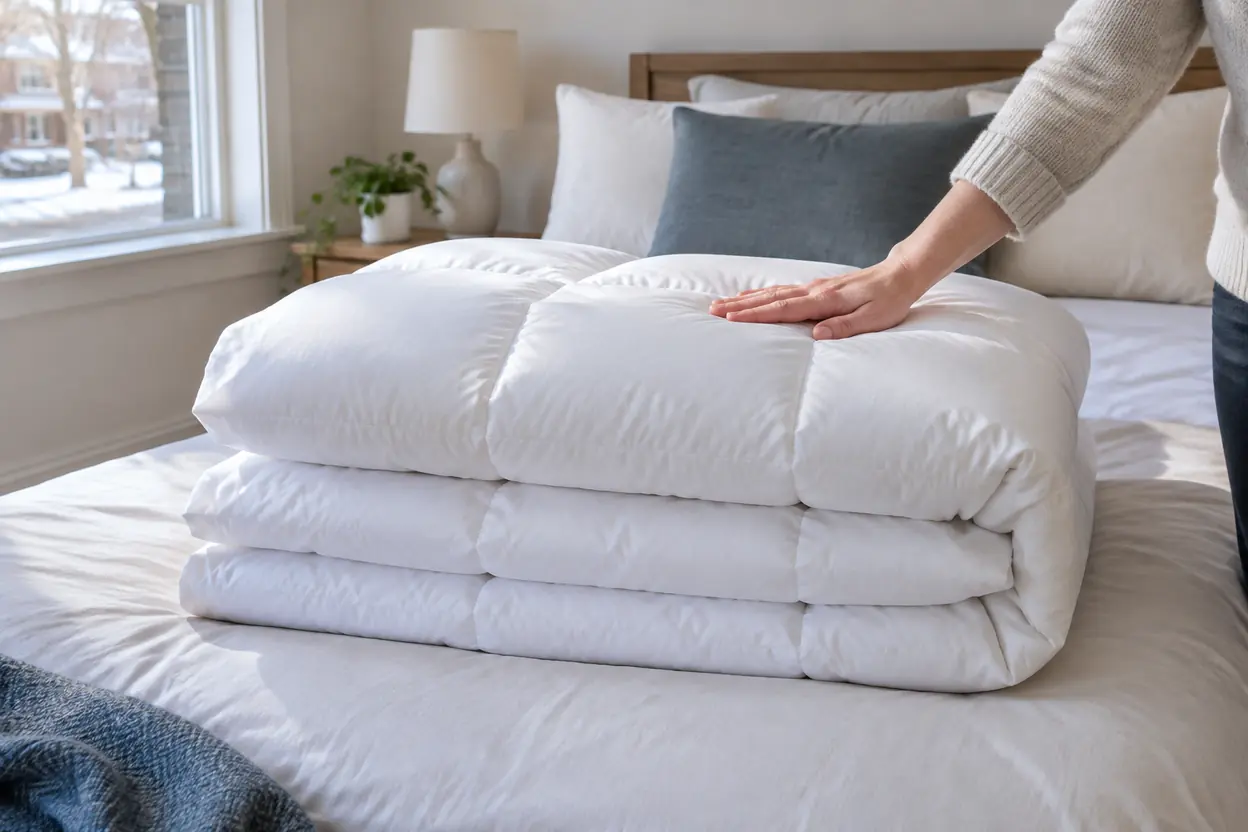
Comforters see heavier use in winter than any other season. When the bedroom temperature drops, people pull the duvet higher, sleep under it longer, and sweat into it more. That increased contact means winter comforters need cleaning more frequently than their summer counterparts. A good rhythm is every four to six weeks during the cold months, compared to every two to three months in warmer seasons. The challenge is physical: a queen-size comforter, wet, can weigh twenty-five pounds or more, which exceeds the capacity of most residential top-loading washers. Front-loaders handle the weight better, but even then, a king-size duvet in a standard home machine is a gamble. The drum cannot agitate properly when it is completely stuffed, which means detergent does not distribute, rinse water does not penetrate, and you end up with a comforter that smells clean on the edges and stale in the middle.
This is the honest case for professional comforter cleaning: the machines are simply bigger. Commercial washers and dryers handle the bulk without strain, the item gets properly agitated and rinsed, and the drying cycle finishes in a single pass rather than the three or four home cycles a thick duvet demands. For anyone who has wrestled a wet king-size comforter out of an undersized home washer and into a dryer that cannot quite close, the appeal is obvious. For guidance on how often this cleaning should happen across different seasons, we covered comforter cleaning frequency in a separate guide.
Snow pants are the forgotten category in winter laundry discussions. They accumulate road salt at the cuffs, slush and grime at the knees, and perspiration on the inside, yet people often go an entire season without washing them because the process feels uncertain. The care is simpler than it appears. Shake off any dried mud or salt, close all zippers and velcro tabs, turn them inside out, and wash on a gentle cold cycle. Most snow pants have a durable water-repellent coating that degrades with harsh detergent or hot water, so mild soap and cold temperature protect the coating while still cleaning the fabric. Air dry rather than tumble dry, since heat can damage waterproof membranes and sealed seams. A monthly wash during active use keeps them functional without degrading their weather resistance.
The thread connecting all three categories is the same: winter heavy items need gentler handling, lower temperatures, and more drying time than people instinctively give them. Rushing any of these, using hot water to save time, cranking the dryer to high to finish faster, skipping the tennis balls because you cannot find them, leads to damaged insulation, shrunken shells, and items that fail you mid-season when you need them most.
When pickup saves you from winter
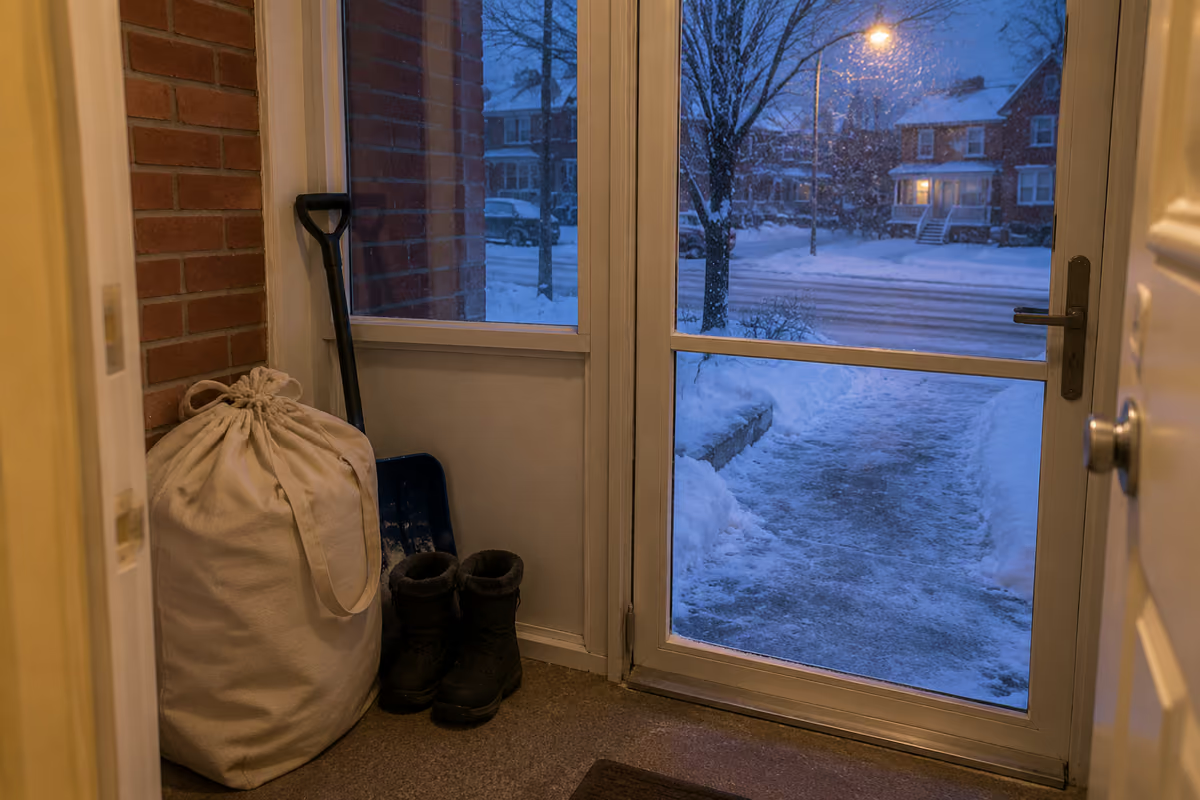
There is a particular kind of misery that belongs exclusively to winter laundry logistics. It is seven in the morning, minus eighteen outside, and you are standing at your building's entrance with a heavy bag of laundry slung over one shoulder, trying to navigate an icy sidewalk to your car or, worse, to a laundromat three blocks away. The bag is awkward. The footing is uncertain. The wind is cutting through whatever gap exists between your collar and your hat. This is the moment that converts more people to winter laundry pickup than any marketing ever could.
The case for pickup is strongest in the months when the alternative is most punishing. In summer, carrying a bag to a laundromat is a mild inconvenience, a ten-minute walk in pleasant weather. In January, that same walk involves navigating unshovelled sidewalks, dodging slush puddles at intersections, and arriving at your destination with cold hands and wet cuffs. The task has not changed, but the friction around it has multiplied by a factor that makes the per-pound cost of a pickup service look different in the arithmetic of your week.
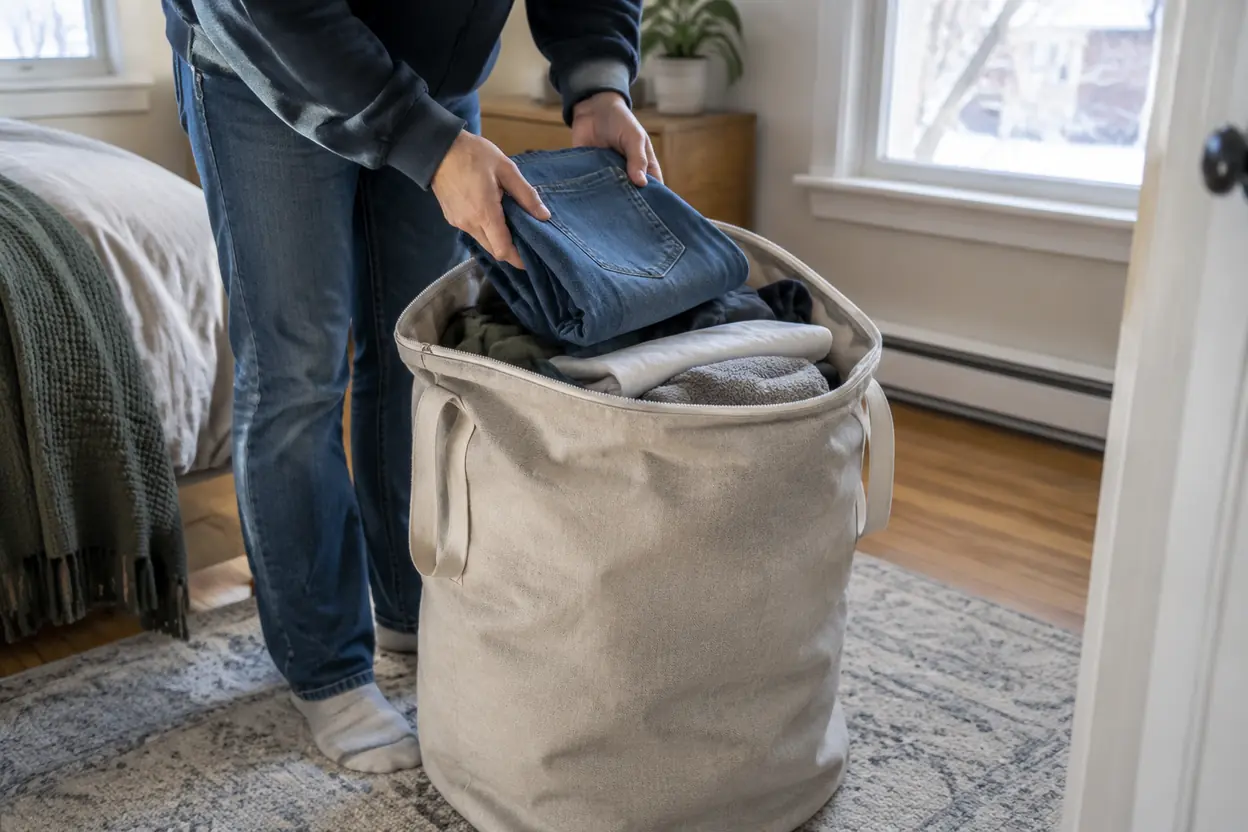
Consider what pickup actually removes from a winter Wednesday. It removes the carry through snow and ice. It removes the wait in a laundromat that may or may not be adequately heated. It removes the return trip with clean clothes that you are now trying to keep dry while crossing the same slushy streets. It removes the indoor drying rack that has been occupying your living room for two days because your apartment's air is too dry to evaporate anything quickly. It removes the second and third dryer cycle for heavy items that your building's shared machines cannot finish in one pass.
What replaces all of that is a bag left inside your door in the morning and clean, folded laundry returned to the same spot within 48 hours. You do not go outside with the laundry. You do not wait anywhere. You do not schedule your evening around dryer timers. The exchange is straightforward: a published per-pound fee buys back the hours the season would otherwise steal, and in winter those hours are worth more because the alternative is genuinely unpleasant rather than merely inconvenient.
The winter case for pickup is especially strong for the heavy items we discussed above. A wet king-size comforter weighs enough to make carrying it down a flight of stairs a genuine physical effort, let alone through a parking lot covered in black ice. A parka that needs three dryer cycles ties up your building's shared machines for an entire afternoon. Snow pants, boot liners, heavy wool sweaters: individually each is manageable, but the aggregate winter load tips the scales past what most people want to wrestle with when the alternative is leaving a bag by the door and forgetting about it.
There is also a timing benefit that matters more in winter than in summer. Ottawa winter days are short. Sunrise comes after eight in the morning and sunset arrives before five in the afternoon. The hours of usable daylight are precious, and spending two of them on laundry logistics, particularly on a weekend, feels like a worse trade in December than it does in July. Pickup reclaims those hours without requiring you to wake up earlier or stay up later to compensate.
Static control tips for dry Ottawa winters
Static cling is one of those winter annoyances that people accept as inevitable rather than treating as a solvable problem. It is solvable, or at least reducible to the point where you stop thinking about it. The root cause is simple: dry air plus friction equals static charge. Ottawa homes in winter typically sit at fifteen to twenty-five percent relative humidity unless you actively add moisture, and that bone-dry environment lets static charges build up on fabric surfaces with nowhere to dissipate. Every time two synthetic fabrics rub together in a dryer drum, electrons transfer from one surface to the other, and without humidity in the air to bleed those charges away, they persist until you pull the garment on and feel the cling.
The most effective single intervention is a humidifier running in your home. Bringing indoor humidity up to thirty-five or forty percent does more for static than any dryer product, because it addresses the root cause rather than masking the symptom. A basic evaporative humidifier in the main living space costs little to run and pays dividends beyond laundry: fewer cracked lips, less dry skin, and hardwood floors that do not gap as severely. If you already run one for comfort, you are already doing the single best thing for static without knowing it.
In the dryer itself, wool dryer balls outperform dryer sheets for winter static. They work mechanically, separating layers of fabric so air circulates between them, which reduces the surface-to-surface friction that generates charge in the first place. Three to six balls per load is the standard recommendation, and they last for hundreds of cycles before needing replacement. Dryer sheets, by contrast, work by coating fabric in a thin layer of lubricant that reduces friction after the fact. They work, but they also leave residue that builds up over time, reduces towel absorbency, and can irritate sensitive skin. For winter static specifically, the mechanical separation approach is more effective because winter loads tend to be heavier and denser, exactly the conditions where sheets struggle to distribute evenly.
Shorter dryer cycles also help. Over-drying is the single most common cause of excessive static in home laundry. Fabric that is pulled from the dryer while still very slightly damp, not wet enough to feel, but not bone-dry either, carries dramatically less static charge than fabric that has been tumbling in hot air for an extra fifteen minutes. The instinct in winter is to run the dryer longer because the air feels cold, but the dryer drum is the same temperature regardless of the season outside. Pulling clothes out at the barely-damp stage and letting them finish in the ambient air for ten minutes eliminates most static without requiring any product at all.
Separating synthetics from natural fibres in the dryer makes a noticeable difference because static is generated most aggressively when dissimilar materials rub together. Polyester fleece tumbling against cotton generates far more charge than either material tumbling with its own kind. If you run your synthetics, fleece jackets, base layers, athletic wear, in a separate shorter cycle from your cottons and wools, both loads come out with less cling. This is one of those sorting steps that feels like extra work until you do it once and notice the difference immediately.
A final tip that costs nothing: if a garment comes out of the dryer already charged and clinging, running a metal hanger along the inside surface discharges it instantly. The metal provides a path for the electrons to equalize, and the cling drops away. It is not a prevention measure, but it is a useful rescue when you are already dressed and notice the problem too late for anything else.
Conclusion
Winter laundry in Ottawa is not one problem. It is five or six problems that arrive together in November and do not leave until April: the volume of layers, the loss of outdoor drying, salt that ruins fabric, static that makes getting dressed unpleasant, and heavy items that overwhelm home machines. Each one is manageable on its own, but stacked together they can turn a routine chore into something that eats entire weekends.
The good news is that none of these problems require expensive solutions or dramatic lifestyle changes. Treating salt stains within a day, using a drying rack with a dehumidifier, switching to wool dryer balls, and separating synthetics from naturals in the dryer are all small adjustments that compound into a meaningfully easier winter. For the heavy weeks, the ones where the comforter needs washing, the parkas smell stale, and the drying rack is already full, a winter laundry pickup service handles the overflow without requiring you to leave the house in the cold.
The season is long, but laundry does not have to be the thing that makes it feel longer.
Ready To Book
Hand off the laundry in under two minutes.

Reader handoffCopy, email, print, or return to the archive.
Share or save
Send this Ottawa laundry guide to someone who needs it.
Share the ottawa laundry guide with a roommate, property contact, or teammate before pickup notes get messy. The controls stay local to this page: no tracking widgets, no third-party script, just practical laundry tips Ottawa readers can pass along.
Services that pair with this guide
Services that pair with this guide.
Use the related services below when these laundry tips Ottawa readers need to turn a seasonal note into a pickup, a wash and fold order, or a question about specialty handling.
Related services


Related laundry searches.
Ottawa laundry guides continue from a real service page. Every search below lands on a live route.

Done reading?
Use the guide, then hand off the laundry.
This guide should leave you with a clearer next step. Book a pickup when the load fits standard laundry, or contact us when care labels, volume, bedding, or business needs deserve review first.