How to Avoid Shrinking Clothes: A Laundry Care Guide
Why clothes shrink in the laundry, which fabrics shrink most, and how to wash, dry, and care for cotton, wool, denim, and synthetics so they keep their fit.
- Duong Quan Nguyen
- Updated July 23, 2026
- 21 min read
Read the guide
Keep the guide open while the Laundryless route stays clear.
Use the 7 jump links to move through this tips article without losing your place. On wider screens the dispatch rail stays beside the Ottawa laundry guide while the body keeps the original blog typography.
Tips
Quick answer
Heat is the main cause of shrinking, so wash in cold water and dry on low heat or air-dry anything you want to keep its fit. Never put wool in the dryer, check the care label on new clothes, and send dry-clean-only pieces to a professional.
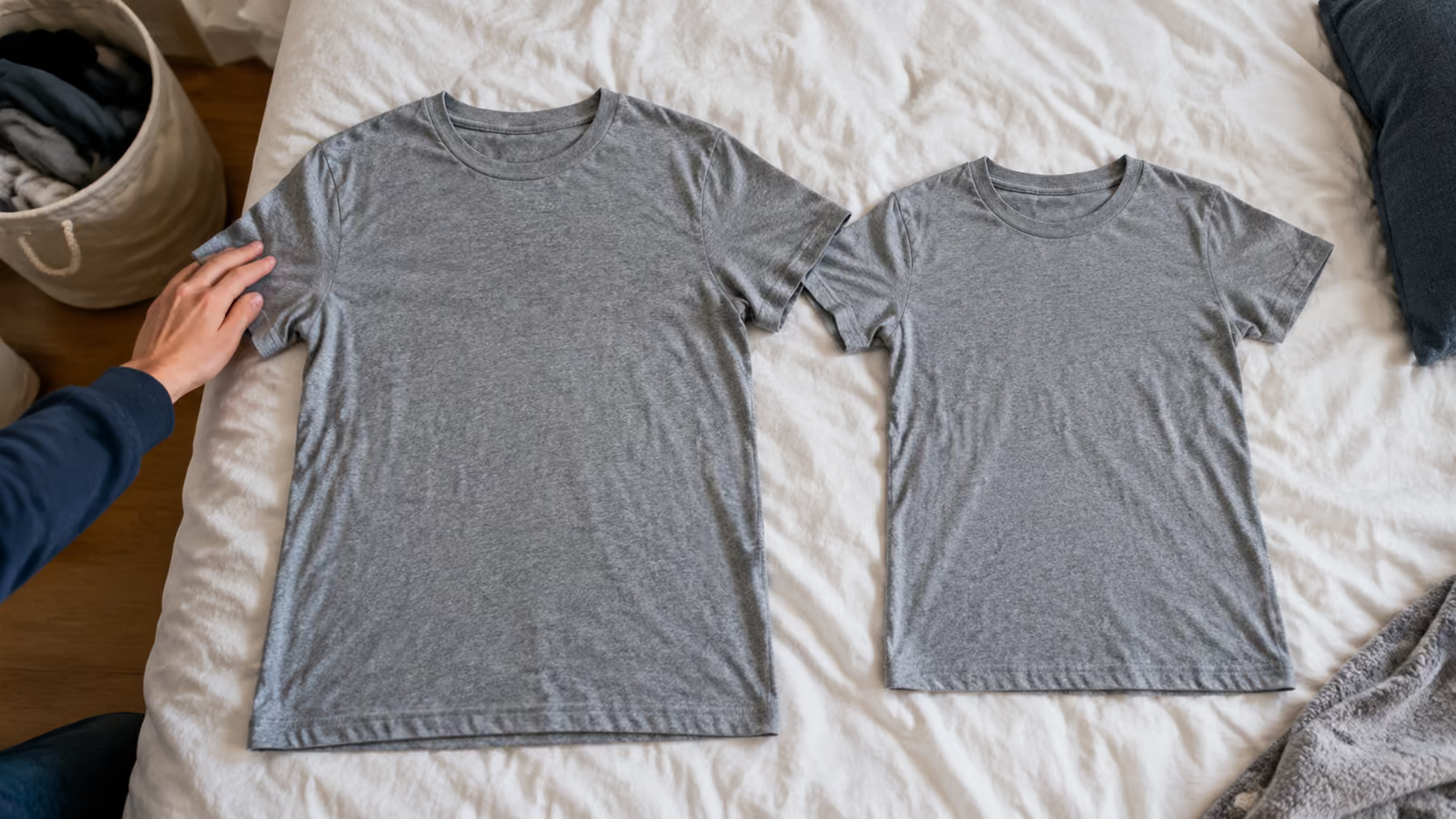
A favourite cotton tee fits like a child's after one hot wash. There is a reason for that, and it is entirely preventable. Shrinkage is one of the most common laundry frustrations, and yet the mechanics behind it are straightforward once you understand what heat, water, and agitation actually do to fabric at the fibre level. This guide explains why clothes shrink, which fabrics are most vulnerable, and exactly how to avoid shrinking clothes whether you wash at home or hand the job to a service that knows the rules already.
Before shrinkage prevention even comes into the picture, sorting matters. Separating garments by fabric weight and care needs is the first defence, because a wool sweater tumbling alongside heavy denim in a hot cycle has no chance of surviving unchanged. Once sorting is handled, everything else in this guide becomes much easier to apply consistently.
Why clothes shrink at all
5%
typical shrinkage on 100% cotton at hot wash and hot dry
Clothing shrinks because the fibres inside the fabric were stretched during manufacturing and heat or moisture allows them to relax back toward their natural, shorter state. That single sentence covers most of what happens inside your dryer, but the details matter because they point directly at the solutions.
There are three main causes of shrinkage, and they often work together in a single laundry cycle. The first and most common is heat. When fibres are exposed to high temperatures, whether from hot water in the wash or hot air in the dryer, their molecular bonds loosen and the stretched structure contracts. Cotton is especially prone because cotton fibres are spun under tension during production, and heat gives them the energy to spring back. The second cause is agitation. The tumbling action inside a washing machine or dryer physically compresses fibres together, tightening the weave and reducing the overall dimensions of the garment. This is why hand-washed items shrink less than machine-washed ones, even at the same temperature. The mechanical action matters independently of heat. The third cause is water absorption itself. Natural fibres like cotton and wool swell when they absorb water, and as they dry the swollen fibres can settle into a tighter arrangement than they started in. This effect is mild on its own, but combined with heat and agitation it compounds into noticeable shrinkage.
Manufacturers try to account for this. Most commercial cotton fabrics are pre-shrunk during production, a process that uses steam or chemical treatment to relax fibres before the garment is cut. Pre-shrinking removes much of the potential shrinkage, but not all of it. A pre-shrunk cotton shirt might still lose one to two percent of its dimensions over its first few washes, especially if subjected to conditions hotter than what the pre-shrinking process anticipated. The label might say pre-shrunk, but that is not the same as shrink-proof. It means the factory took the worst of the shrinkage out before the fabric reached you, not that the fabric is now immune to physics.
The practical point here is straightforward: if you can control heat, reduce agitation on vulnerable fabrics, and dry gently, you eliminate the three inputs that cause shrinkage. The rest of this guide is about exactly how to do that, fabric by fabric and setting by setting.
Heat is the main culprit
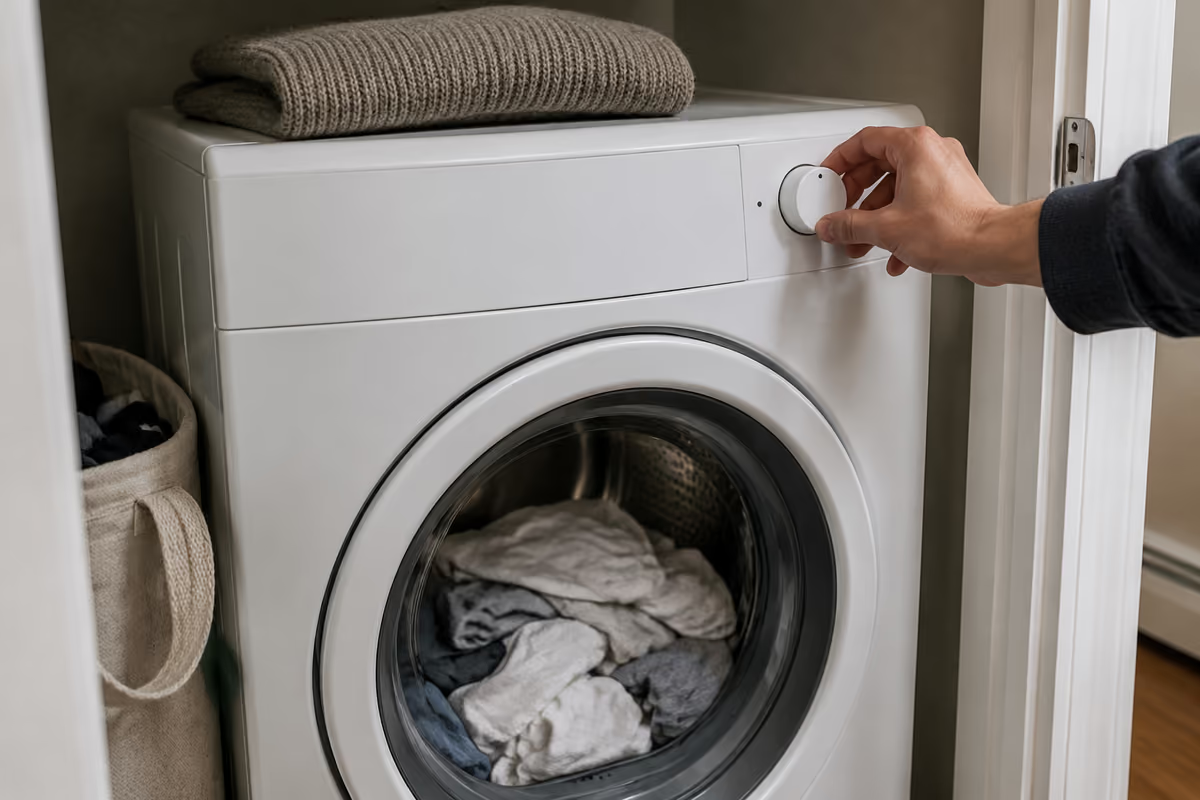
Of the three causes, heat deserves its own section because it is responsible for the vast majority of shrinkage that people notice at home. Agitation matters, water absorption matters, but heat is the accelerant that turns a mild tendency into a ruined garment. Understanding where heat enters the process, and how much of it actually reaches your clothes, is the single most useful thing you can learn about preventing shrinkage.
Hot water in the wash cycle is the first point of contact. When you select a hot or warm setting on your machine, the water temperature climbs to somewhere between 40 and 60 degrees Celsius, and at those temperatures natural fibres begin to relax and contract. Cotton responds quickly because its fibres were stretched tight during spinning and weaving, and hot water gives them the thermal energy to release that stored tension. Wool responds even more dramatically because its scaly fibre surface opens in warm water, allowing adjacent fibres to interlock and felt together, a form of shrinkage that is often irreversible. The cold vs warm water choice is worth understanding in detail, but the short version is that cold water removes the thermal component of shrinkage entirely while still cleaning effectively for most everyday loads.
The dryer, however, is where the real damage happens. This surprises people who assume shrinkage is mainly a washing problem. In reality, a tumble dryer on high heat exposes fabric to air temperatures between 55 and 75 degrees Celsius for thirty to sixty minutes, far longer and more intensely than a ten-minute wash cycle. The combination of sustained high heat and constant tumbling compresses and contracts fibres in a way that a warm wash alone rarely achieves. Many garments survive a warm wash without noticeable shrinkage but lose a full size after a single high-heat dry cycle. The dryer is not just a secondary risk. For most fabrics, it is the primary one.
Dryer heat causes more shrinkage than wash heat
Most clothing shrinks because of dryer heat, not wash heat. A garment that survives a warm wash can still lose a size in a high-heat dryer cycle. If you change only one habit, switch to low heat or air dry for items you care about. The dryer is where fits are lost.
There is a compounding effect that makes dryer heat particularly destructive. When fabric enters the dryer already warm from the wash, the fibres are in a relaxed, semi-contracted state. The dryer then applies additional heat before the fibres have cooled and settled, pushing the contraction further than either stage would alone. This is why the combination of hot wash followed by hot dry produces more shrinkage than either setting applied individually. The fibres never get a chance to stabilize between the two heat exposures, so the cumulative contraction is greater than the sum of its parts.
The practical lesson here is not that you must avoid all heat forever. Some fabrics tolerate warm water and medium dryer settings without issue. The lesson is that heat should be applied deliberately, matched to the fabric rather than defaulted to the highest setting out of convenience. The hottest setting on your dryer exists for heavy-duty items like towels and work clothes that are built to withstand it. Applying that same setting to a cotton dress shirt, a knit sweater, or a pair of fitted jeans is asking those garments to endure conditions they were never designed for. Turning the dial down, or removing the item from the dryer before it is bone dry, is the single cheapest form of garment preservation available to you.
How different fabrics behave
Not all fabrics shrink equally, and knowing which ones are vulnerable changes how you sort, wash, and dry an entire load. The differences come down to fibre structure: natural fibres that were stretched during spinning tend to contract when given heat or moisture, while synthetic fibres that were extruded into shape tend to hold their dimensions unless exposed to extreme temperatures. Here is how the most common fabric types respond to standard home laundry conditions.
Cotton
Shrinks 3-5% at hot wash and hot dry. Less if washed cold and air-dried. Most vulnerable in the first few washes.
Wool
Shrinks dramatically at any heat. Cold water and flat drying only. Felting from agitation is often irreversible.
Linen
Minor shrinkage of 2-3% possible. Warm wash is safe but air drying preserves shape best. Wrinkles more than it shrinks.
Polyester and synthetics
Rarely shrinks unless exposed to very high dryer heat. Melting point is the real risk, not contraction.
Denim
Shrinks in the first 1-2 washes then stabilises. Turn inside out, wash cold, and hang dry to preserve fit.
Silk
Do not machine wash on hot. Gentle cold cycle or hand wash only. Heat damages the protein fibre permanently.
Cotton is the fabric most people think of when they picture shrinkage, and for good reason. A standard cotton t-shirt washed on hot and tumble-dried on high can lose three to five percent of its length and width in a single cycle. That translates to roughly a centimetre or more in the torso of a medium shirt, which is enough to move a comfortable fit into the too-tight category. The shrinkage is most aggressive in the first two or three washes, because that is when the residual manufacturing tension is still being released. After those initial cycles, cotton settles and subsequent shrinkage becomes minimal as long as conditions stay consistent. The key word there is consistent. A cotton shirt that has stabilised after three cold washes can still shrink further if you suddenly expose it to a hot cycle it has never experienced before.
Wool behaves differently and more dangerously. Wool fibres have a scaly surface that opens in warm water, and when those open scales interlock with adjacent fibres during agitation, the result is felting. Felting is not the same as simple contraction. It is a structural change that makes the fabric thicker, denser, and permanently smaller. You cannot un-felt a sweater the way you can sometimes stretch a shrunken cotton shirt back to size. Wool requires cold water, minimal agitation, and flat drying. Many people skip the machine entirely and hand-wash wool in cold water, which is the safest approach. If you do machine-wash wool, use a gentle cycle with cold water and never, under any circumstances, put it in the dryer.
Linen is more forgiving than people expect. It can shrink two to three percent in a warm wash, but the shrinkage is mild and tends to resolve itself when the garment is ironed or worn. Linen wrinkles far more than it shrinks, so the practical concern with linen is appearance rather than fit. Air drying and a quick press keep linen in shape without worry.
Polyester and other synthetic fabrics are engineered to resist shrinkage, and they succeed. The molecular structure of polyester is set during extrusion at temperatures far higher than anything a home dryer produces, so the fibres have no stored tension to release. The risk with synthetics is not shrinkage but melting or warping at extremely high temperatures. As long as you keep the dryer on medium or below, synthetic garments maintain their dimensions indefinitely. Blended fabrics that combine cotton with polyester shrink less than pure cotton precisely because the synthetic component holds its shape and anchors the cotton fibres in place.
Denim is cotton, so it obeys the same physics, but the heavy twill weave gives it some structural resistance. Raw or unwashed denim shrinks noticeably in the first one or two washes as the starch and sizing are removed and the fibres relax for the first time. After that initial break-in period, denim stabilises and holds its shape well. The traditional advice to wash jeans rarely and in cold water exists precisely to preserve fit through that vulnerable early period. Turning denim inside out protects the surface colour and reduces friction on the exposed fibres. If you have invested in a pair of jeans that fit perfectly off the rack, the simplest protection is to wash them cold and hang them to dry until they have been through at least three cycles without noticeable change.
Silk is a protein fibre, like wool, and responds poorly to heat. Hot water can strip the natural oils that give silk its lustre, and high dryer heat can make the fabric brittle and prone to tearing. Silk should be washed on a gentle cold cycle or by hand, and dried flat or hung on a padded hanger away from direct sunlight. Most silk garments benefit from professional care, and for Ottawa residents who own silk blouses, dresses, or scarves, routing those pieces through a proper cleaning process rather than risking them at home is a worthwhile habit.
Items that need professional care
Some garments are simply not built for home machines, and trying to force them through a standard wash cycle is how expensive pieces end up ruined. Wool suits, cashmere sweaters, silk dresses, structured blazers, and anything with a "dry clean only" label fall into this category. These items share a common trait: their fibres, construction, or finishing cannot survive the combination of water immersion, agitation, and heat that a typical home cycle delivers. Forcing them through anyway does not save money. It accelerates the garment toward the donation bin.
Wool suits are the most common casualty. The structured shoulders, the pressed seams, and the carefully shaped lapels all depend on a construction method that water destroys. A wool suit jacket that goes through a home wash emerges shrunken, felted, and permanently misshapen. The fabric itself might survive a gentle cold hand-wash in isolation, but the internal canvas, the shoulder padding, and the fused interfacing cannot. The garment is engineered as a system, and that system requires solvent-based cleaning rather than water-based washing.
Cashmere and merino sweaters present a gentler version of the same problem. They can technically be hand-washed in cold water with care, but the margin for error is thin. A few degrees too warm, a moment of rough handling, and the fibres felt together irreversibly. For items that cost what quality cashmere costs, the calculation often favours professional dry cleaning over the risk of home washing. The per-item cost of professional care is a fraction of the replacement cost when home washing goes wrong.
Silk dresses and blouses have similar vulnerabilities. Water can leave permanent marks on certain silk weaves, and any heat at all damages the protein structure of the fibre. A silk garment that was once lustrous and draping can emerge from a home wash dull, stiff, and subtly smaller. Professional cleaning uses solvents that interact with the fabric without damaging its surface properties, which is why dry-cleaned silk retains its character wash after wash while home-washed silk degrades.
The general rule is simple: if you spent more than you are comfortable losing, or if the care label says dry clean only, respect both signals. These items are designed around professional maintenance, and the cost of that maintenance is built into the value proposition of owning them. For Ottawa residents who have a wardrobe of pieces that deserve better than a gamble in the home machine, delicate items care covers the full approach to protecting vulnerable fabrics across every stage of the laundry process.
Wash settings cheat sheet
Knowing which fabrics shrink is only useful if you also know which machine settings protect them. The table below maps common fabric types to the wash temperature and drying method that prevent shrinkage while still getting the garment clean. Think of it as a reference card you can check before starting a load, especially when you are unsure about a particular item.
| Fabric type | Recommended setting |
|---|---|
| Cotton (everyday) | Cold wash, tumble dry low or air dry |
| Cotton (fitted or structured) | Cold wash, remove from dryer slightly damp and hang |
| Wool and cashmere | Cold wash on gentle cycle, flat dry only, never tumble |
| Linen | Warm wash acceptable, air dry or low tumble, iron while damp |
| Polyester and synthetics | Cold or warm wash, medium tumble dry, avoid high heat |
| Denim (first 3 washes) | Cold wash inside out, hang dry to preserve fit |
The highlighted row covers the situation most people face most often: everyday cotton basics like t-shirts, underwear, and casual shirts. Cold water and a low dryer setting protect these items from the majority of shrinkage they would otherwise experience over their lifetime. The savings are cumulative. A cotton shirt washed cold and dried on low for fifty cycles will retain its original fit far better than one washed warm and dried on high for the same number of cycles. The difference after a year of weekly washing is visible and measurable.
For cotton items with more structure, like dress shirts, chinos, or fitted blouses, the extra step of removing them from the dryer while still slightly damp makes a significant difference. Fabric contracts most aggressively in the final minutes of a dryer cycle, when the residual moisture has evaporated and the fibres are at their hottest and driest. Pulling these items out before that final stage and hanging them preserves both fit and finish. It takes thirty seconds of attention and saves you from the slow creep of cumulative shrinkage that turns a well-fitting shirt into one you stop reaching for.
Wool and cashmere have no room for compromise. The gentle cycle matters because it reduces agitation, and flat drying matters because hanging a wet wool garment stretches it in one direction while gravity pulls the water weight down. Flat drying lets the garment dry in its natural shape without distortion. If you own quality knitwear and have been tumble-drying it, stopping that single habit will extend the life and fit of those pieces by years.
Our wash and fold service defaults to cold wash and appropriate-heat drying matched to each fabric type in the load. The sorting step that happens before any machine starts is precisely what allows us to run cotton on one setting, synthetics on another, and route anything delicate to hand processing or dry cleaning rather than forcing everything through a single generic cycle. When you hand off a mixed bag of laundry, that sorting discipline is what protects your fitted cotton shirts from being tumbled alongside towels on high heat.
Anti-shrink habits at home
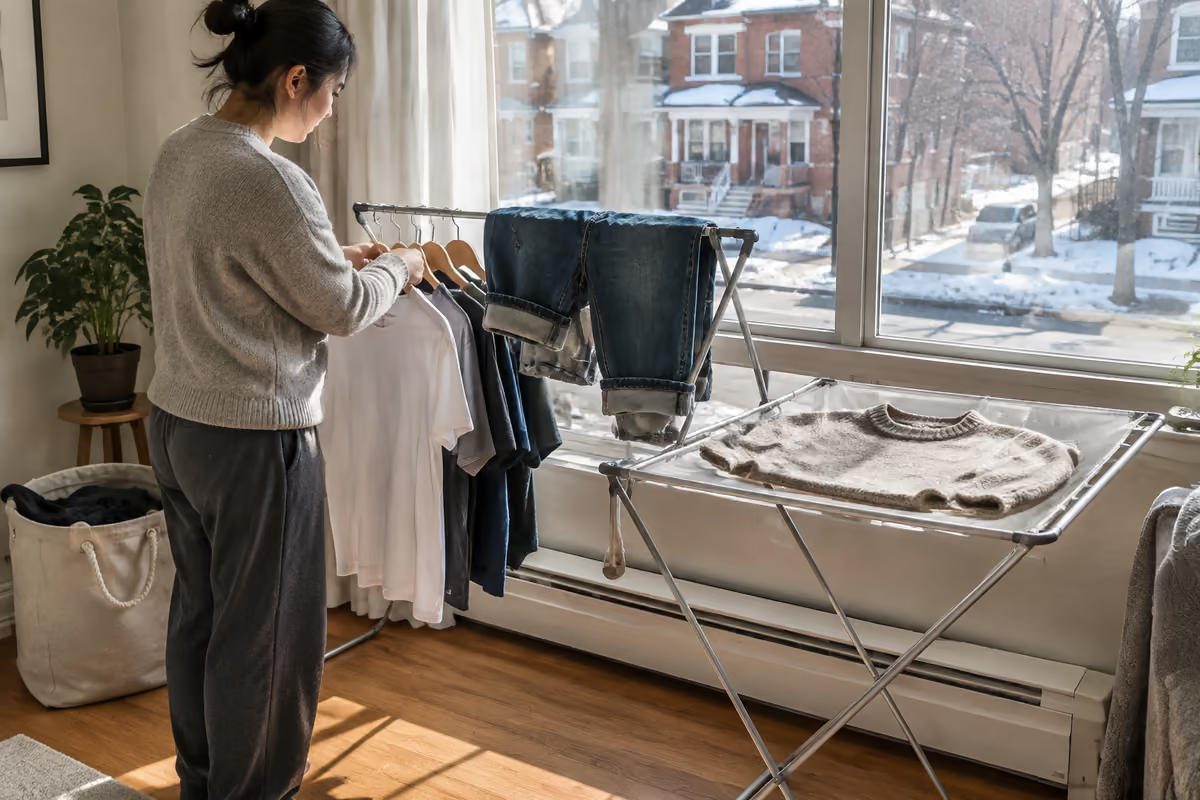
Prevention comes down to habits rather than knowledge. Most people who shrink their clothes already know, in the abstract, that heat is risky. The problem is that knowledge does not automatically become behaviour. Building a handful of consistent habits removes the need to think about shrinkage on every individual load, because the defaults themselves protect your clothes. Here are the six habits that matter most, ranked by impact.
Daily habits that prevent shrinkage
- Wash on cold by default. Only use warm or hot when the fabric specifically needs it and the care label confirms it.
- Air dry cottons you care about. Hanging or flat drying removes the dryer from the equation entirely.
- Never put wool in the dryer. Not on low, not for five minutes, not to fluff. Never.
- Turn denim inside out before washing. This protects colour and reduces surface agitation on the outer fibres.
- Read the care label once and remember it. One glance at a new garment tells you its limits for life.
- If in doubt, hang dry the first time. You can always tumble-dry later once you know the fabric tolerates it.
The first habit, washing on cold, is the single most impactful change you can make. Cold water cleans effectively for the vast majority of everyday laundry. The detergents available today are formulated to work at low temperatures, so the cleaning argument for hot water has largely evaporated. The only loads that genuinely benefit from warm or hot water are heavily soiled work clothes, cloth nappies, or items that need sanitising after illness. For everything else, cold water removes the thermal component of shrinkage while delivering the same level of clean.
Air drying is the second habit, and it matters because the dryer is where most shrinkage actually happens. People tend to focus on wash temperature because that is the setting they choose consciously, but the dryer often runs on whatever setting it was last used at, which is frequently high heat. Removing vulnerable items from the dryer equation entirely is the simplest form of protection. A drying rack in a well-ventilated room handles most garments overnight. In Ottawa's dry winter air, indoor drying is faster than most people expect, and in summer a clothesline or balcony rack dries a shirt in under an hour.
The wool rule is absolute because wool damage is irreversible. A cotton shirt that has shrunk a percent or two is still wearable and may stretch back slightly with wear. A wool sweater that has felted is finished. The fibres have physically interlocked in a way that cannot be undone by any home method. The disproportion between the severity of the damage and the casualness of the action, tossing a sweater in the dryer for ten minutes, is what makes this rule worth stating in blunt terms. Never means never. There is no safe duration, no safe setting, no exception.
Turning denim inside out is a small action with a long-term payoff. The outer surface of jeans takes the most friction from tumbling against other garments, and that friction accelerates both colour loss and fibre compression. Turning them inside out means the interior surface takes the wear instead, preserving the external appearance and reducing the mechanical stress that contributes to shrinkage. Combined with cold water and hang drying, this habit keeps denim fitting properly through years of wear.
Reading care labels is a one-time investment per garment. The label tells you the maximum temperature the manufacturer tested, the drying method they recommend, and whether the fabric can tolerate bleach or ironing. That information does not change over the garment's lifetime. Reading it once when you first bring the item home, and sorting accordingly from that point forward, means you never have to guess. The labels are not suggestions. They represent the conditions under which the manufacturer guarantees the fabric will perform as intended. Exceeding them is not adventurous. It is gambling with the garment's fit and lifespan.
The final habit, hang drying anything unfamiliar, is a safety net for new purchases. When you do not yet know how a fabric will respond to your dryer, defaulting to the gentlest option protects you from an irreversible outcome on the first wash. After that first air-dry cycle, you can evaluate whether the fabric handled it well, check the fit, and decide whether to try a low dryer setting next time. This incremental approach costs you nothing but a few extra hours of drying time and saves you from the frustration of a brand-new garment that no longer fits after a single wash day.
Laundry pickup and delivery honours the care notes you leave with each order. If you want a specific item air-dried, flagged for low heat, or handled separately from the rest of the load, a note in your booking is all it takes. The habits listed above are what we follow by default for every order that comes through, because they represent the safest baseline for preserving fit across a mixed bag of fabrics.
Can you un-shrink a garment?
The short answer is sometimes, partially, and only with certain fabrics. The longer answer is that prevention is always cheaper and more effective than rescue, but when a garment has already shrunk there are a few techniques worth trying before you write it off entirely.
Cotton is the most responsive to un-shrinking attempts. The most common method involves soaking the garment in lukewarm water with a generous amount of hair conditioner or fabric softener for fifteen to thirty minutes. The conditioner relaxes the fibres and lubricates them, allowing you to gently stretch the fabric back toward its original dimensions while it is still wet. Lay the garment flat on a clean towel, pin or weight the edges to hold the stretched shape, and let it air dry completely. This does not always restore the full original size, but it can recover one to two centimetres of length, which is often enough to make a slightly-too-short shirt wearable again.
The key to the conditioner method is gentleness. You are not yanking the fabric back into shape. You are coaxing relaxed, lubricated fibres to lie in a slightly longer arrangement than they settled into after shrinking. Pull evenly in all directions, reshape the neckline and shoulders by hand, and work slowly. Aggressive stretching can distort the garment in other ways, leaving you with a shirt that is the right length but oddly shaped across the chest or shoulders.
Wool is far less forgiving. Felted wool has undergone a structural change at the fibre level. The scales on each wool fibre have interlocked with adjacent fibres, creating a denser, thicker fabric that is smaller in every direction. This interlocking is difficult to reverse because it is not just contraction but a chemical bond between fibres. You can try the conditioner soak method on lightly felted wool, and occasionally it helps, but heavily felted garments are generally permanent. A cashmere sweater that emerged from a hot dryer two sizes smaller is, realistically, a loss. Prevention was the only realistic option, and once that window has passed, the garment is what it is.
Synthetic fabrics that have distorted from excessive heat sometimes respond to a warm water soak followed by reshaping while wet, but the results are inconsistent. Polyester that has warped or puckered from high dryer heat has experienced a partial re-melting of its fibres, which is not something water or conditioner can undo. The damage is in the molecular structure of the polymer itself.
The honest framing here is that un-shrinking is a gamble with low stakes. The garment is already compromised, so trying a conditioner soak costs you nothing but twenty minutes and a tablespoon of product. If it works, you have recovered a piece you were about to lose. If it does not, you are in the same position you started in. But the success rate is low enough that it should never be your plan. Prevention, through proper temperature selection, appropriate drying methods, and respect for care labels, is the approach that actually preserves your wardrobe. Rescue is for the occasional accident, not a substitute for good habits.
For Ottawa households dealing with the aftermath of a shrinkage accident on an expensive piece, the better path forward is often professional assessment. A dry cleaner with experience in fabric restoration can sometimes achieve results that home methods cannot, particularly on structured garments where the shrinkage has affected internal components as well as the outer fabric.
Ready To Book
Hand off the laundry in under two minutes.

Reader handoffCopy, email, print, or return to the archive.
Share or save
Send this Ottawa laundry guide to someone who needs it.
Share the ottawa laundry guide with a roommate, property contact, or teammate before pickup notes get messy. The controls stay local to this page: no tracking widgets, no third-party script, just practical laundry tips Ottawa readers can pass along.
Services that pair with this guide
Services that pair with this guide.
Use the related services below when these laundry tips Ottawa readers need to turn a tips note into a pickup, a wash and fold order, or a question about specialty handling.


Related laundry searches.
Ottawa laundry guides continue from a real service page. Every search below lands on a live route.

Done reading?
Use the guide, then hand off the laundry.
This guide should leave you with a clearer next step. Book a pickup when the load fits standard laundry, or contact us when care labels, volume, bedding, or business needs deserve review first.