How to Sort Laundry Before a Pickup Service Arrives
A practical guide to sorting laundry before pickup in Ottawa: color rules, fabric categories, special handling, and what we re-sort when the bag arrives.
- Duong Quan Nguyen
- Updated April 14, 2026
- 28 min read
Read the guide
Keep the guide open while the Laundryless route stays clear.
Use the 9 jump links to move through this tips article without losing your place. On wider screens the dispatch rail stays beside the Ottawa laundry guide while the body keeps the original blog typography.
Tips
Quick answer
A light sort is enough: pull out dry-clean-only pieces, split whites, lights, and darks, and set delicates aside in their own pile. Add any special care to your booking notes. Every bag is sorted again when it arrives, so an unsorted bag is still fine.
Sorting laundry before a pickup service collects your bag is one of those tasks that feels either completely obvious or oddly mysterious, depending on how you grew up doing laundry. Some people learned a three-pile system from a parent and have never questioned it. Others have thrown everything into a single load for years without visible consequence and wonder whether the whole exercise is theatre. The truth sits between those positions, and it matters more than you might expect when a service is about to handle your clothes on your behalf.
This post is the deep dive on sorting itself. Our full pickup prep guide covers the night-before checklist, bag choice, and scheduling details. Here we focus entirely on how to sort laundry so that your fabrics stay safe, your colours stay true, and your preferences come through clearly to the team handling the wash. Our wash and fold service re-sorts every bag that arrives, but a light pre-sort on your end still helps in ways we will explain.
Why sort at all when the service re-sorts
A natural question is some version of "if you re-sort everything anyway, why should I bother?" It is a fair question, and the answer is not that you must sort perfectly. The answer is that a light sort catches the things that matter most before your bag ever leaves the house, and those catches protect your clothes in ways that a downstream re-sort cannot always replicate.
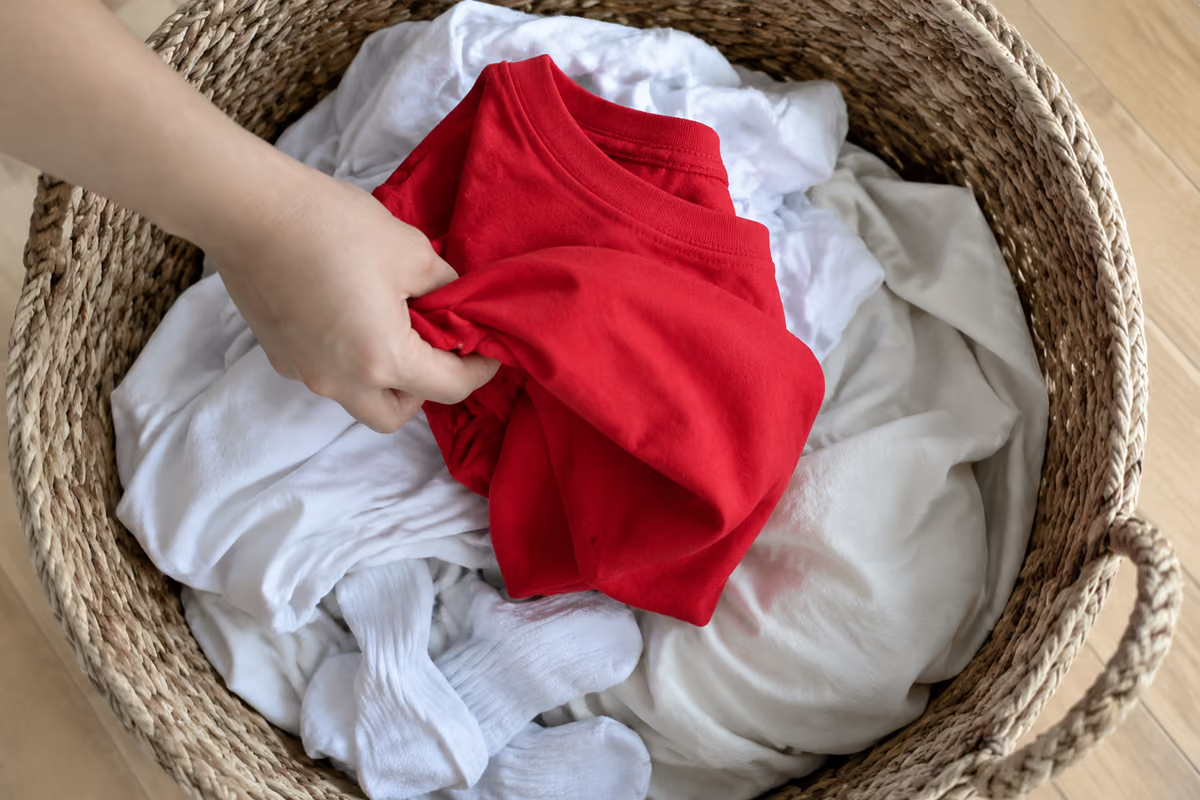
The first reason is colour bleed. A brand-new red t-shirt on its first or second wash can release enough dye to tint an entire load of whites pink. Once that dye transfers and sets in a dryer, it is essentially permanent. Our sorting station catches most colour risks, but we are working from visual inspection of a closed bag's contents. You, standing in your bedroom, know which items are new, which were bought last week in a bright dye, and which have never been washed before. That knowledge is yours alone, and acting on it takes ten seconds: pull the new bright item and set it on top with a mental note or a physical one.
The second reason is stain flagging. A coffee spill on a shirt cuff is easy to miss inside a full bag of mixed laundry, but it pre-treats far better when caught before the wash cycle begins. If you notice a stain while sorting, you can either pre-treat it yourself or simply flag it in your booking notes. Either way, the stain gets attention before hot water or a dryer can set it permanently. Without a flag, a stain that blends into the colour of the fabric can slip through the sort station unnoticed and come back fixed in place.
The third reason is dry-clean separation. This one is not optional. Items labelled "dry clean only" cannot go through a standard wash cycle without risk of damage, shrinkage, or shape loss. Pulling those items out during your sort is the single most important thing you can do before a pickup, because it is the one step that prevents genuine harm rather than merely improving outcomes. Our team will catch obvious dry-clean items at the sort station, but a silk blouse tucked inside a pillowcase, or a wool blazer folded between t-shirts, can escape visual inspection in a packed bag.
The fourth reason is communication. Sorting is a quiet form of telling us how you want your laundry handled. When you separate delicates into their own pile, or pull out a hand-wash item and place it on top with a note, you are giving us clear instruction without writing a paragraph. The physical separation itself is the message. Conversely, when everything arrives in a single undifferentiated mass, we default to the safest assumptions, which are gentle but not tailored. A pre-sort lets your preferences come through without requiring you to write detailed care instructions for every garment.
None of this means you need to run a professional-grade sorting operation in your hallway. The goal is not perfection. The goal is to catch the high-consequence items, the new brights, the flagged stains, the dry-clean pieces, and let the service handle the rest of the nuance. Think of it as a first pass that protects against disasters, not a final sort that replaces ours.
A simple five-step sort
If you want a system that takes less than five minutes and covers the important ground, this is the one we recommend. It is not the only way to sort, but it is the method that balances effort against protection most sensibly for someone who is handing laundry off to a service rather than running their own machines. The five steps move from coarse separation to fine, so each pass builds on the one before it.
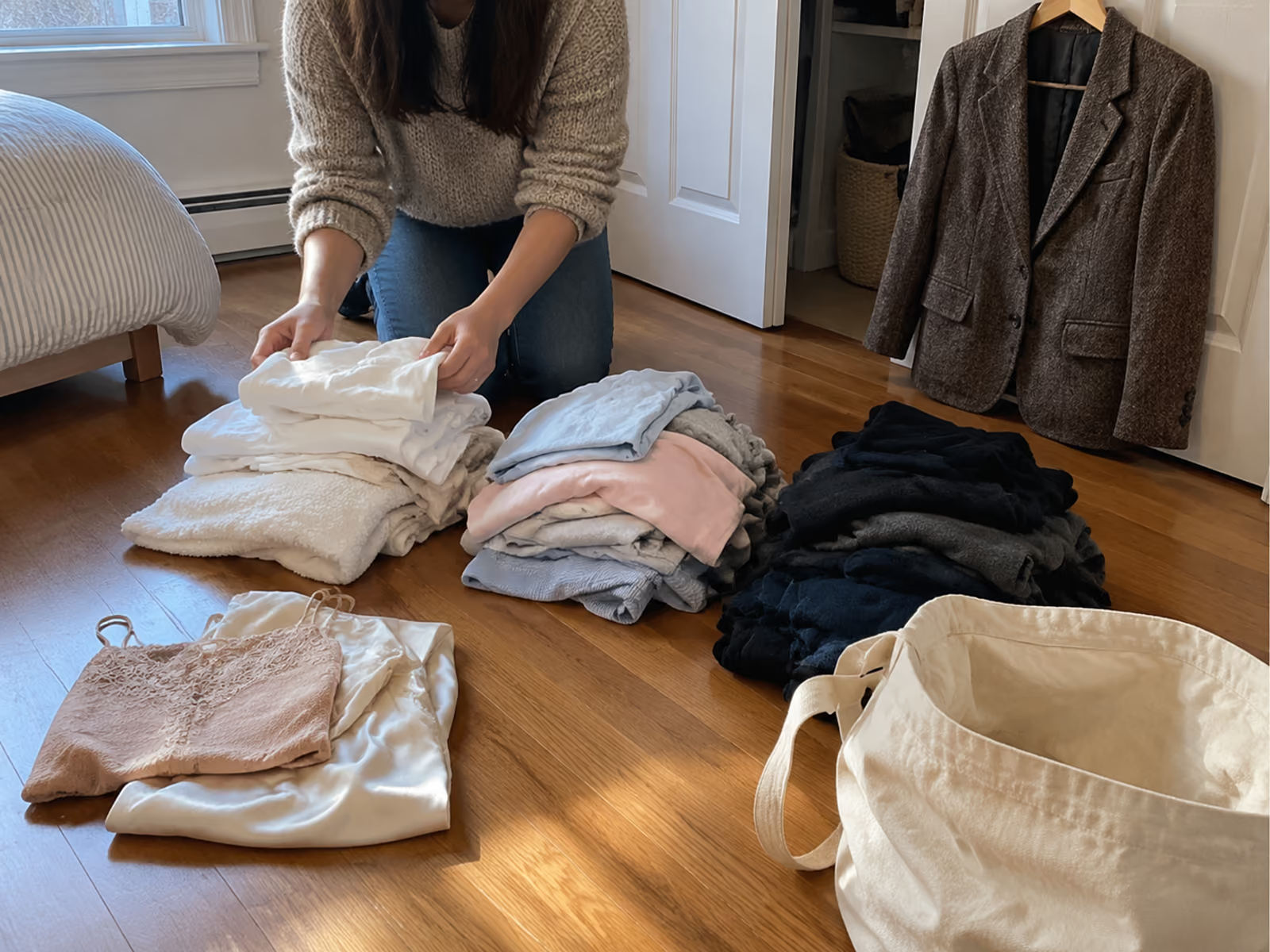
The first step is to get everything out of wherever it has been hiding. Pull the hamper, the gym bag, the pile on the chair, the towels from the bathroom hook, and drop it all onto a flat surface where you can see the full scope. A bed works well. A clean section of floor works too. The point is visibility: you cannot sort what you cannot see, and most people underestimate their total volume until it is spread out in one place. This step also reveals the stray sock that slipped behind the hamper and the shirt you forgot you wore on Tuesday.
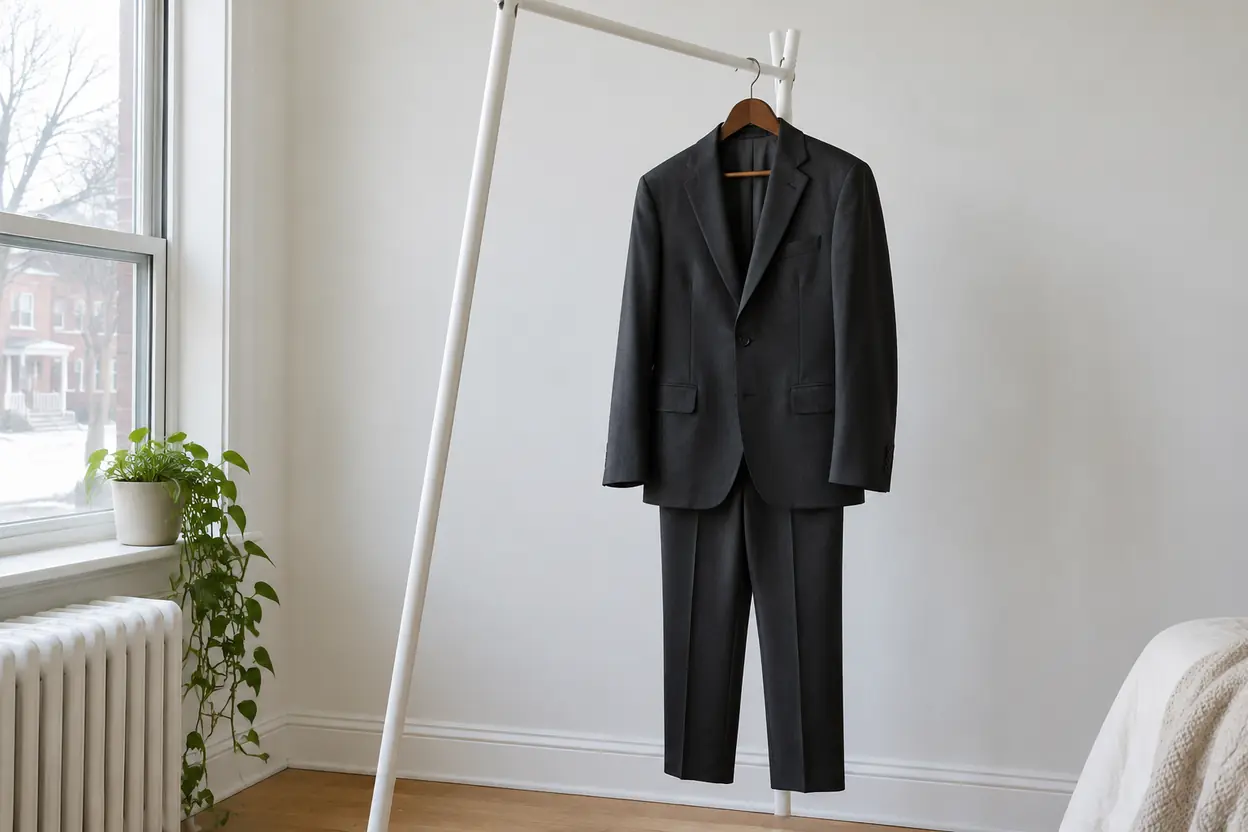
The second step is to pull out anything that is dry-clean only. Look for care labels that explicitly say "dry clean" or "dry clean only," and for fabrics you know from experience cannot handle water: structured wool blazers, silk blouses, lined suits, leather or suede pieces. Set these aside in their own small pile or hang them on a doorknob. They will either go in a separate garment bag for pickup or stay behind entirely if you plan to drop them at a cleaner yourself. This is the single most important step in the entire sort, because it is the one that prevents genuine damage rather than merely optimising outcomes. If you only do one thing, do this.
The third step is the colour separation that most people think of when they hear "sorting." Divide what remains into three stacks: whites, lights, and darks. Whites are obvious: anything that is fully white or nearly so. Lights include pastels, beiges, light greys, and pale colours that would show a dye transfer clearly. Darks cover navy, black, charcoal, deep reds, and anything heavily saturated. The goal is to keep potential dye donors away from potential dye receivers. A dark item rarely suffers from sharing a load with another dark item, but a white towel next to a new pair of indigo jeans is a recipe for a blue tint that never fully leaves.
The fourth step is to pull out fragile items, the pieces that need gentler handling regardless of their colour. Delicates, hand-wash items, bras with underwire, anything with lace or beading, lightweight knits that could stretch. These get their own small pile, separate from the colour stacks. If you have items you know need air drying rather than tumble drying, this is where they land too. Flagging these in your booking notes, or simply placing them on top of the bag where they are visually obvious, tells our sort station to route them appropriately.
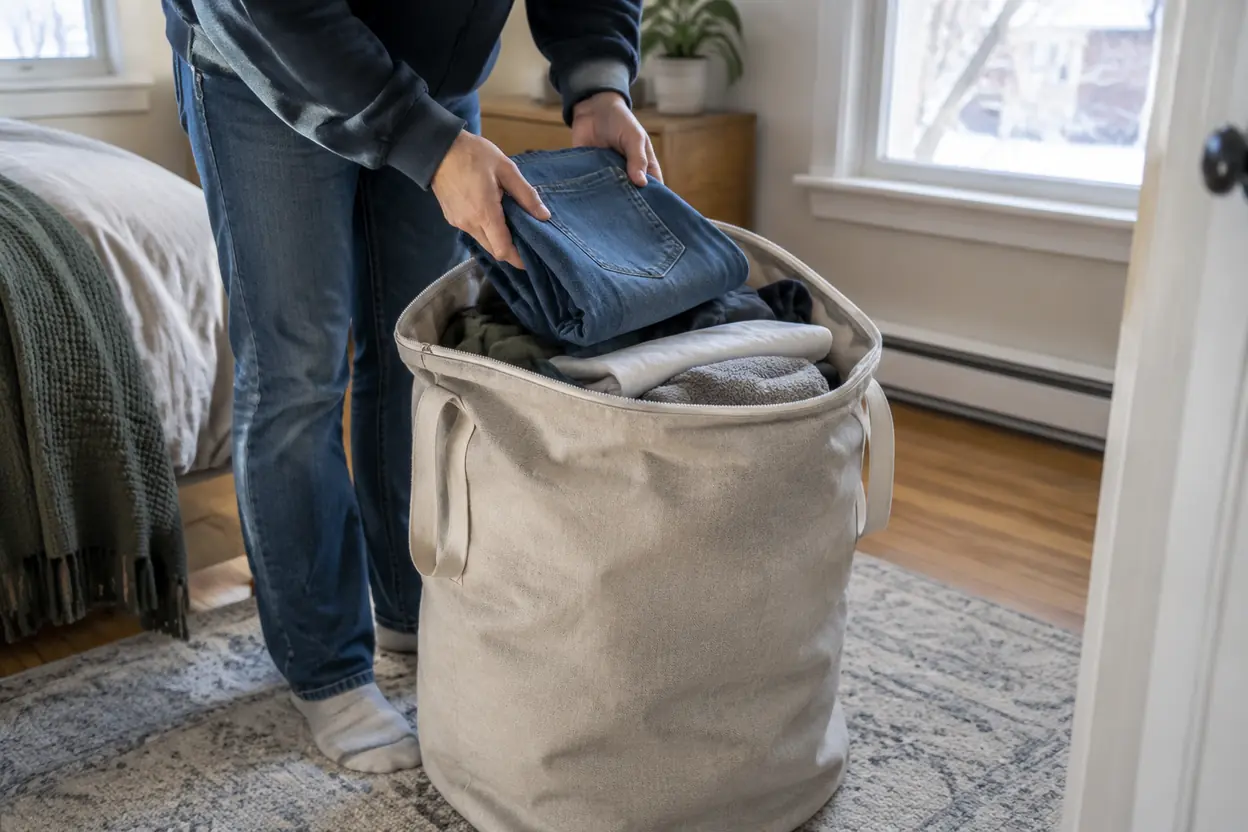
The fifth step is loading the bag. Place bedding and towels at the bottom, since they are heavy and can cushion lighter items above. Then layer the colour stacks in whatever order makes sense to you, with delicates on top where they are least compressed and most visible. If you pulled dry-clean items in step two, they go in a separate garment bag or clearly labelled section. The bag is now ready for the door.
Spread everything on a flat surface
Pull laundry from every hiding spot and lay it all out so you can see the full volume. A bed or clean floor section works well. Visibility is the foundation of a good sort.
Pull out dry-clean-only items
Check care labels for dry-clean-only instructions. Silk, structured wool, lined suits, and leather pieces go in a separate pile or garment bag. This step prevents damage.
Separate into three colour stacks
Whites in one pile, lights (pastels, beige, pale grey) in another, darks (navy, black, saturated colours) in a third. The goal is keeping dye donors away from dye receivers.
Pull out fragile and hand-wash items
Delicates, underwire bras, lace, beaded pieces, lightweight knits, and anything needing air dry get their own small pile regardless of colour.
Load the bag bottom to top
Bedding and towels at the bottom for weight, colour stacks layered above, delicates on top where they are visible and least compressed.
The entire process takes three to five minutes once you have done it twice. On the first attempt it might take ten, simply because you are thinking about each decision rather than acting on instinct. By the third or fourth pickup, the sort becomes automatic, something your hands do while your mind is elsewhere, and the whole sequence compresses into a quick evening routine that barely registers as effort.
One thing worth noting: this five-step sort is not the same thing our team does at the wash station. Our sort is more granular, separating by fabric weight, wash temperature, and specific care instructions that go beyond colour. Your sort is a first pass that catches the high-consequence items and gives us a clean starting point. Think of it as triage rather than surgery. You catch the emergencies; we handle the precision.
The eight fabric categories that matter
Colour is only half the sorting equation. The other half is fabric type, and it matters because different fabrics need different wash temperatures, agitation levels, and drying methods. Two items that are the same colour can still damage each other if one is a heavy denim and the other is a lightweight silk. Understanding the basic fabric categories helps you make smarter sorting decisions, especially for items that sit on the boundary between "fine in a normal load" and "needs gentler handling."
Cotton is the backbone of most laundry loads. T-shirts, underwear, socks, towels, bedsheets, and most casual wear are cotton or cotton-dominant blends. Cotton tolerates warm water, handles agitation well, and dries reliably in a tumble dryer at medium heat. It is the easiest fabric to sort because it has the widest tolerance range. The main thing to watch is shrinkage on the first wash of a new item, particularly if the cotton is unwashed or pre-shrunk labelling is absent.
Polyester and synthetic blends make up most activewear, many work shirts, and a growing share of casual clothing. These fabrics dry quickly, resist wrinkles, and hold their shape well, but they are sensitive to high heat. A hot dryer can melt synthetic fibres at the microscopic level, creating a plasticky feel or permanent creases. Sort polyester items together or with other synthetics and flag them for medium or low heat drying. They also tend to trap odours more than natural fibres, so they benefit from a full wash cycle rather than a quick rinse.
Blended fabrics, typically cotton-polyester mixes, behave somewhere between the two parent materials. They are forgiving in the wash and handle moderate heat in the dryer. Most everyday work shirts and casual trousers fall into this category. They sort comfortably with either cotton or polyester loads, which makes them the least fussy items in your hamper.
Denim is technically cotton, but its weight and dye characteristics set it apart. Jeans, denim jackets, and heavy denim skirts should be sorted together or with other darks. New denim bleeds indigo dye aggressively for the first several washes, which is why your first instinct to keep new jeans away from lighter items is correct. Denim also takes longer to dry due to its weight, so mixing it with lightweight items means either the light items over-dry or the denim comes out damp.
Wool requires cold water, minimal agitation, and flat drying or very low tumble heat. Hot water and aggressive spinning cause wool fibres to felt, which is the irreversible matting that turns a sweater into a stiff, shrunken version of itself. Most wool items in a typical Ottawa wardrobe are sweaters, scarves, and winter accessories. Sort them separately and flag them in your booking notes. If you are unsure whether something is wool, check the care label for references to "wool," "merino," "cashmere," or "lambswool." Reading our guide on fabric care basics covers the temperature rules in detail.
Silk is the most delicate common fabric in a household wardrobe. It cannot tolerate hot water, strong detergents, or mechanical agitation without losing its lustre and structural integrity. Silk blouses, scarves, ties, and dress linings should be pulled during your sort and either flagged for hand-wash treatment or routed to dry cleaning items depending on the care label. When in doubt, err on the side of dry cleaning for silk, because the cost of a gentle professional clean is far lower than the cost of replacing a damaged silk piece.
Linen is a warm-weather fabric common in Ottawa summers: shirts, trousers, dresses, and lightweight blazers. It washes well in cool or lukewarm water but wrinkles aggressively in a tumble dryer. If you want linen items returned without heavy creasing, flag them for hang drying or low heat. Linen also softens beautifully with repeated washing, so it does not need the gentle handling that silk demands, just the right drying approach.
Synthetic activewear, the moisture-wicking fabrics used in running shirts, yoga pants, and gym shorts, deserves its own category despite being technically polyester or nylon. These fabrics often have antimicrobial treatments, mesh panels, or bonded seams that do not tolerate high heat. They also harbour bacteria more stubbornly than cotton, which means they benefit from a full wash cycle with a sport-appropriate detergent rather than a quick rinse. Sort activewear together, wash on cold, and dry on low or hang to maintain the stretch and wicking properties.
Cotton
Tolerates warm water and medium-heat drying. The easiest fabric to sort.
Polyester and synthetics
Quick drying but heat sensitive. Keep away from high tumble settings.
Blended fabrics
Cotton-poly mixes that sort comfortably with either parent fabric.
Denim
Heavy, dye-bleeding cotton. Sort with darks, especially when new.
Wool
Cold water only, minimal agitation, flat or low-heat drying.
Silk
Hand wash or dry clean. No hot water, no strong detergents.
Linen
Washes well but wrinkles in a dryer. Flag for hang or low-heat drying.
Activewear
Wash on cold, dry on low. Full cycle to clear trapped bacteria.
You do not need to memorise all eight categories to sort well. The practical takeaway is simpler: heavy items sort with heavy items, delicate items get pulled aside, and anything you are unsure about gets a note in the booking. The fabric categories are a reference for when you are holding something and genuinely wondering whether it belongs in the main pile or needs special routing. Over time, the decisions become automatic, and you stop consulting labels for items you have washed many times before.
What needs special handling
Beyond colour and fabric category, some items need explicit flagging because they carry risks that a visual sort cannot always catch. These are the pieces that benefit from a note in your booking, a physical separation in the bag, or both. The goal is not to make your sort more complicated but to give you a mental checklist for the items that matter most.
Anything labelled "dry clean only" is the top priority. We covered this in the sorting steps, but it bears repeating here because the consequences are the most severe. A wool suit jacket that goes through a standard wash cycle can shrink, felt, and lose its shape permanently. A silk dress exposed to agitation and heat can lose its lustre and develop pulls that cannot be repaired. These items belong in a separate garment bag or clearly separated at the top of your laundry bag, and they should be routed to dry cleaning items rather than wash and fold.
Hand-wash silk and wool items that are not strictly dry-clean-only still need gentler treatment than a standard machine cycle provides. These include lightweight wool sweaters, silk camisoles, and wool-blend scarves. Flag them in your booking notes so they receive a delicate cycle or hand-wash treatment rather than joining the main load. Our guide on delicate items handling covers the full range of care approaches for these pieces.
Activewear with antimicrobial fabric or bonded construction should be washed separately from cotton and dried on low heat. The antimicrobial treatments degrade faster with heat exposure, and the bonded seams in many modern athletic garments can separate in a hot dryer. Separating activewear during your sort ensures these items get the cycle they need rather than riding along with a load optimised for heavier cotton items.
Down-filled items, including jackets, vests, and some pillows, need special attention because the filling clumps when wet and requires a specific drying approach to redistribute properly. Flag these in your notes so they can be dried with appropriate tumbling and temperature rather than standard heat that could damage the fill.
Items with embellishments, such as sequins, beading, rhinestones, or decorative metalwork, catch on other fabrics during a wash cycle and can both damage themselves and snag neighbouring items. Pull them during your sort, place them in a mesh wash bag if you have one, or flag them for delicate handling.
Items with broken zippers or damaged hardware can catch on other garments in the wash and cause pulls or tears. If you know a zipper is broken, either zip it shut if it still closes or flag the item so it can be handled separately rather than tumbling freely against other clothes.
Pet bedding and items heavily soiled with pet hair deserve a separate wash rather than mixing with your regular wardrobe. Pet hair clings to fabrics in the wash and transfers readily to other items. If you are including pet bedding in your pickup bag, place it in a separate section and note it in your booking so it runs as its own load.
- Dry-clean-only items pulled and separated into a garment bag
- Hand-wash wool and silk flagged in booking notes
- Activewear separated for a cold, low-heat cycle
- Down-filled items noted for special drying
- Embellished pieces placed in mesh bags or flagged
- Broken zippers zipped shut or flagged for separate handling
- Pet bedding separated and noted for its own load
The reason we present this as a checklist rather than a rigid requirement is that not every pickup will include all these categories. Most weekly bags are straightforward: cotton, blends, a few synthetics, towels, maybe bedsheets. The checklist is for the weeks when something unusual enters the rotation, a new down jacket after a winter sale, pet blankets after a muddy park visit, or a formal dress that needs dry cleaning before an event. Run through the mental list, flag what needs flagging, and move on.
Real sorted-pile examples and guidance
Theory only carries you so far. What does a sorted pile actually look like in an Ottawa home on a Sunday evening? The answer varies by household size and composition, but a few common patterns emerge across the customers we serve regularly.
A single person living alone typically produces ten to fifteen pounds of laundry per week, which translates to a pile that looks surprisingly modest when spread on a bed. The sort for a single dweller is usually two or three piles: darks (which tend to dominate in a younger wardrobe heavy on jeans, black t-shirts, and dark socks), lights or whites (a smaller stack of dress shirts, light tees, and underwear), and a separate handful of delicates or activewear. The whole sort takes under three minutes because the total volume is low and the variety is limited. Many people living alone barely need to sort at all, because a wardrobe that stays consistent from week to week turns the sort into a ten-second scan rather than a full exercise.
A couple sharing a household doubles the volume and introduces more variety. Two wardrobes means a wider range of fabric types, more colour diversity, and often a greater gap in care preferences. One partner might wear primarily cotton and denim while the other leans toward synthetics and delicates. The sort for a couple works best as four piles: whites, lights, darks, and a small delicates or special-handling pile that catches items from both wardrobes. The total volume usually lands between eighteen and twenty-five pounds, which fills a standard laundry bag comfortably without compression. Couples who have been using our service for a few months often develop a shared sorting shorthand, leaving specific spots in the hamper for each category so the night-before sort is a matter of moving existing piles into the bag rather than starting fresh.
A family with children adds towels, bedding, and a steady stream of small, heavily soiled items that accumulate faster than you expect. Kids generate a disproportionate amount of stained clothing, and the stains tend to be food, grass, and mud rather than the coffee and wine of adult laundry. The family sort often runs to five or six piles: whites, lights, darks, children's heavily soiled items (which benefit from pre-treatment), bedding and towels (which form their own load due to weight and bulk), and a delicates pile for anything fragile from the adult wardrobes. Total volume can climb past thirty pounds in a busy week, especially after a weekend outdoors or a round of changing bedsheets. The trick for families is to sort bedding separately from clothing, because a king-sized sheet set takes up so much drum space that mixing it with regular clothing results in an uneven wash for everything involved.
A clearly separated dry-clean stack suits professionals whose wardrobe includes suits, blazers, structured dresses, or silk pieces. A simple habit is to keep a small garment bag hanging in their closet that accumulates dry-clean items throughout the week. On pickup day, the garment bag goes in alongside the regular laundry bag, physically separate and visually obvious. This is the cleanest possible signal to our sort station that specific items need routing to dry cleaning rather than the standard wash cycle.
For all these examples, the principle is the same: the sort is a rough triage that catches the high-risk items and gives the service a clean starting point. You are not expected to replicate a commercial sorting operation in your bedroom. You are expected to pull the things that would be harmed by a default wash, flag anything unusual, and let the rest flow through in sensible colour groupings. The service handles the rest of the nuance from there.
When to skip sorting entirely
There are days when sorting is not going to happen, and that is genuinely fine. We say this not as corporate politeness but as practical advice from people who handle unsorted bags regularly and know exactly what happens when one arrives. If you are sick, overwhelmed, running late, or simply having a week where the laundry is the least important thing on your list, skip the sort. Put everything in the bag and leave it at the door. We will sort it at our station.
The one exception, and we cannot soften this enough to make it optional, is dry-clean items. If your bag contains anything that would be damaged by water and agitation, pull those items out regardless of how pressed for time you are. This is a ten-second task, not a five-minute exercise. A single silk blouse or wool blazer tucked into a bag of cotton t-shirts can sustain permanent damage in a wash cycle, and no amount of downstream care can reverse shrinkage or felting once it has happened. Everything else can be sorted at our station. Dry-clean items cannot be un-washed.
Colour bleed risk with new items
A brand-new item in a saturated dye, particularly reds, deep blues, and bright purples, can bleed heavily on its first two or three washes. If you have recently purchased something in a vivid colour and have not washed it yet, pull it out and wash it separately the first few times, even if you are outsourcing the rest of your laundry. Once a dye transfers to another garment and sets in a dryer, the stain is essentially permanent. This is the one colour risk that a downstream sort cannot fully protect against, because a new item looks identical to a washed one from the outside.
Beyond the dry-clean exception and the new-dye caution, there is nothing in an unsorted bag that our team cannot handle. We separate by colour and fabric at the wash station as a matter of standard procedure, regardless of whether you have pre-sorted or not. The pre-sort helps because it gives us a head start and surfaces items you know about that we might not catch visually, but its absence does not create a crisis. It creates a slightly longer sort on our end, which is work we are already equipped to do.
The psychology of skipping the sort is worth a sentence. Some people feel guilty handing over an unsorted bag, as though they have failed a test or given us extra work we did not sign up for. That guilt is misplaced. The service is designed to handle any bag, sorted or not. The Ottawa pickup and delivery system accounts for sorting time in its workflow regardless of what arrives. You are paying for a complete laundry service, and sorting is part of that service. The only thing we genuinely need from you is the dry-clean separation, because that protects your clothes from irreversible damage. Everything else is our job.
Think of the pre-sort as a spectrum rather than a binary. On one end, a full five-step sort with colour separation, fabric grouping, and detailed notes. On the other end, a single scan for dry-clean items before dropping the bag. Both are acceptable. Most customers land somewhere in the middle, doing a quick colour split and pulling obvious dry-clean pieces, and that level of effort is more than sufficient for excellent results.
Sort it yourself versus let us sort
At this point you might be wondering whether there is any practical difference in outcome between a well-sorted bag and one we sort ourselves at the station. The honest answer is that both paths lead to clean, well-handled laundry, but they differ in small ways that matter to some customers more than others.
The comparison comes down to six factors: time spent, stain detection, dry-clean safety, colour protection, fabric category sorting, and bedding separation. Each factor favours one approach or balances evenly, and your personal priority among them determines how much sorting effort is worth your while.
Time spent is the most obvious factor. A pre-sort at home costs you three to five minutes. Letting us sort costs you zero minutes. If your time is genuinely scarce, the zero-minute option exists and works. If you have a few minutes during your evening routine, the pre-sort adds a layer of protection that our downstream sort enhances rather than replaces.
Stain detection favours the pre-sort because you know your own stains. You know which shirt caught a splash of pasta sauce, which pair of trousers brushed against a painted fence, and which towel was used to clean up a spill that might have left a mark. We work from visual inspection of items we have never seen before, which catches obvious stains but misses subtle ones that match the fabric colour. A note in the booking or a physical separation of stained items gives our team a head start that meaningfully improves outcomes.
Dry-clean identification is the strongest argument for a home sort, because it is the one category where a mistake causes irreversible harm. You know which items in your wardrobe need dry cleaning. We can infer from fabric and label inspection, but inference is slower and less reliable than knowledge. Pulling dry-clean items at home is faster, surer, and eliminates the risk of a hidden silk piece slipping through.
Colour protection is roughly tied. Both you and our team can separate whites, lights, and darks effectively. The one edge you hold is knowing which items are new and have never been washed, since new dyes bleed more than established ones and visual inspection cannot distinguish them.
Fabric category sorting favours our team because our sorting is more granular than a typical home sort. We separate by fabric weight, wash temperature, and drying requirements in ways that go beyond the colour-based system most people use at home.
Bedding separation is tied. Both approaches handle it well. Bedding is bulky and obvious, so whether you sort it at home or we separate it at the station, it ends up in its own load either way.
| Sort at home | Let us sort |
|---|---|
| 3-5 minutes of your time | Zero minutes of your time |
| You catch stains you know about | We catch only visible stains |
| You know which items are dry-clean | We infer from labels and fabric |
| You know which items are brand new | New and washed items look the same to us |
| Basic colour separation | Granular fabric and temperature sorting |
| Bedding sorted at home | Bedding separated at station |
The practical recommendation is somewhere in the middle. Do the quick sort: pull dry-clean items, separate new brights, flag visible stains, and let us handle the granular fabric sorting from there. That middle path gives you the best protection for the least effort, and it is the approach we recommend after your first few pickups.
Common sorting mistakes
Even people who sort regularly tend to fall into a few patterns that reduce the effectiveness of their effort. These mistakes are not catastrophic individually, but they accumulate into outcomes that frustrate: a shirt that slowly greys, a sweater that gradually shrinks, or a gym bag that never quite smells fresh despite regular washing.
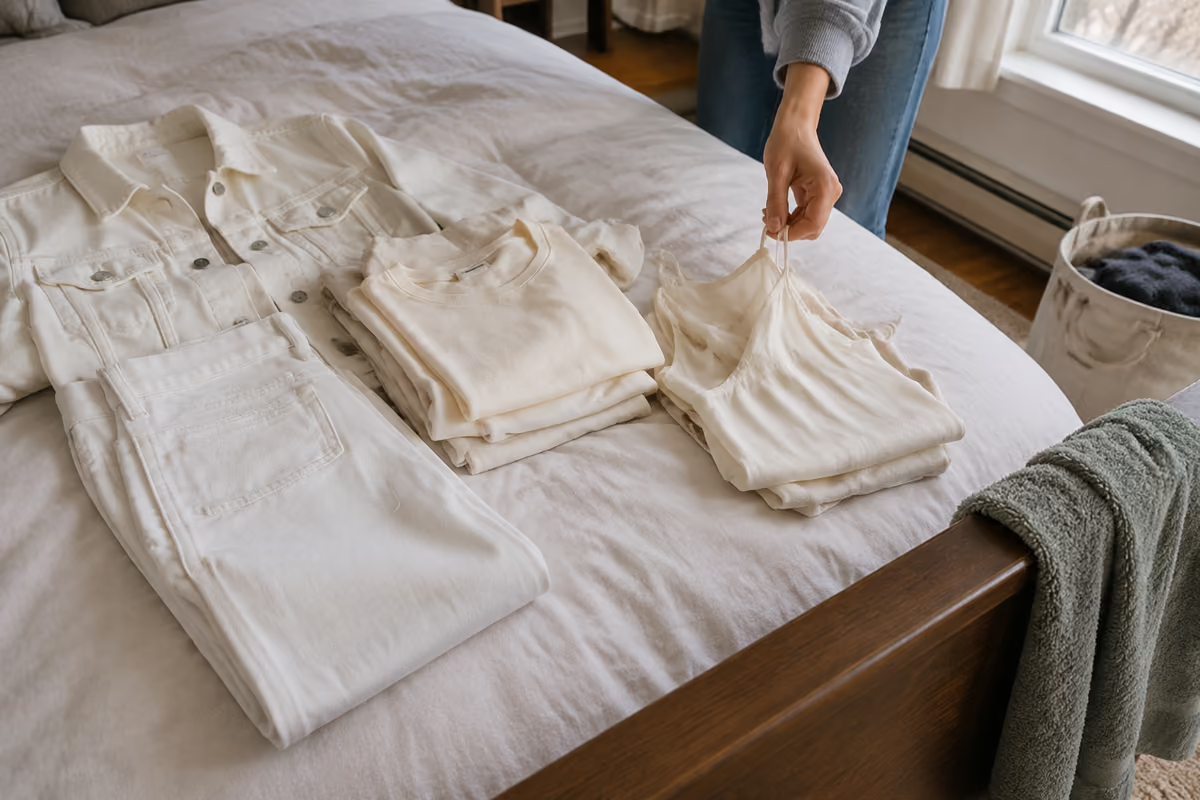
The first and most common mistake is sorting only by colour and ignoring fabric weight entirely. Colour separation protects against dye transfer, but it does nothing to protect a lightweight blouse from being battered by heavy jeans in the same load. A light-coloured silk camisole and a pair of white denim shorts are both "lights" by colour, but they need completely different wash settings. The fabric category matters at least as much as the colour, and often more. When you are holding an item during your sort, ask yourself two questions: what colour group does it belong to, and does it need the same agitation and heat as the rest of that group? If the answer to the second question is no, pull it aside.
The second mistake is throwing wet or damp items into the bag without allowing them to dry first. A damp towel or a sweaty gym shirt sealed into a closed bag for even a few hours creates a micro-environment where mildew thrives. By the time that bag arrives at our station, the damp item may have already transferred odour to neighbouring garments or begun developing the musty smell that requires an extra wash cycle to remove. If an item is damp, hang it over a door or chair until it is at least surface-dry before adding it to the bag. It does not need to be fully dried, just not actively wet.
The third mistake is not flagging dry-clean items clearly. We have discussed this in multiple sections because it is the single highest-consequence error in a home sort. People know they have dry-clean items but forget to separate them, or assume that because the item is on top of the pile, it is obvious. It is not obvious from the outside of a closed bag. Physical separation into a garment bag or a clearly distinct section of the main bag is the only reliable signal. A note in the booking is a strong backup.
The fourth mistake is ignoring care labels entirely and sorting purely by visual impression. A dark-coloured silk shirt looks like it belongs with other darks, but its care needs are entirely different from a dark cotton t-shirt. The care label exists to answer the question your eyes cannot: what temperature, agitation, and drying method does this specific fabric need? You do not need to read every label every week, but when an item is new, unfamiliar, or expensive, a quick glance at the label saves future regret.
The fifth mistake is overfilling the bag to the point where items at the bottom are heavily compressed. Compression itself does not damage most fabrics, but it makes our sort slower and increases the chance that a delicate item buried at the bottom gets overlooked during visual inspection. A bag that is full but not straining its seams gives us the best working conditions and the fastest turnaround. If your laundry volume exceeds what fits comfortably in one bag, consider splitting across two bags rather than compressing everything into one.
The sixth mistake is sorting once and then tossing new items into whatever pile is closest rather than evaluating each piece as it enters the hamper. A good sorting system runs continuously throughout the week, not as a single event on pickup night. If your hamper has a quick mental division, darks on the left, lights on the right, dry-clean items on the shelf above, then the night-before sort becomes a matter of moving existing groupings into the bag rather than starting from scratch with an undifferentiated pile. The evening sort should take one minute, not five, because the work has been happening gradually all week.
Conclusion
Sorting laundry before a pickup does not need to be complicated, time-consuming, or perfect. The entire exercise reduces to a few key principles that protect your clothes and communicate your preferences without requiring expertise or detailed fabric knowledge.
If you do nothing else, pull the dry-clean items. If you have thirty seconds more, flag a stain. If you have three minutes, run the full five-step sort. Each level of effort adds a layer of protection, but none of them are required for the service to work well. Our wash and fold service re-sorts every bag that arrives, and the team handles the granular fabric and temperature decisions regardless of what you send.
The honest framing is that sorting is a collaboration rather than a responsibility. You bring the knowledge that only you have, which items are new, which carry stains, which need dry cleaning, and we bring the expertise in fabric care, temperature settings, and wash chemistry. The better you communicate through your sort, the more precisely we can tailor the wash to your wardrobe. But even on the weeks where communication is a bag dropped at the door with no thought at all, the result is still clean, well-handled laundry returned to your door within 48 hours of pickup.
When you are ready to hand off the bag, Ottawa pickup and delivery runs on a scheduled route with 48-hour standard turnaround, and an optional 24-hour rush when you need it back sooner. Whether your bag arrives perfectly sorted or cheerfully unsorted, we handle it from there.
Ready To Book
Hand off the laundry in under two minutes.

Reader handoffCopy, email, print, or return to the archive.
Share or save
Send this Ottawa laundry guide to someone who needs it.
Share the ottawa laundry guide with a roommate, property contact, or teammate before pickup notes get messy. The controls stay local to this page: no tracking widgets, no third-party script, just practical laundry tips Ottawa readers can pass along.
Services that pair with this guide
Services that pair with this guide.
Use the related services below when these laundry tips Ottawa readers need to turn a tips note into a pickup, a wash and fold order, or a question about specialty handling.
Related services



Related laundry searches.
Ottawa laundry guides continue from a real service page. Every search below lands on a live route.

Done reading?
Use the guide, then hand off the laundry.
This guide should leave you with a clearer next step. Book a pickup when the load fits standard laundry, or contact us when care labels, volume, bedding, or business needs deserve review first.