How Often Should You Clean Your Comforter or Duvet
How often to clean comforters, duvets, and quilts based on use, allergies, and season, plus signs it is overdue and when professional cleaning makes sense.
- Duong Quan Nguyen
- Updated September 24, 2026
- 24 min read
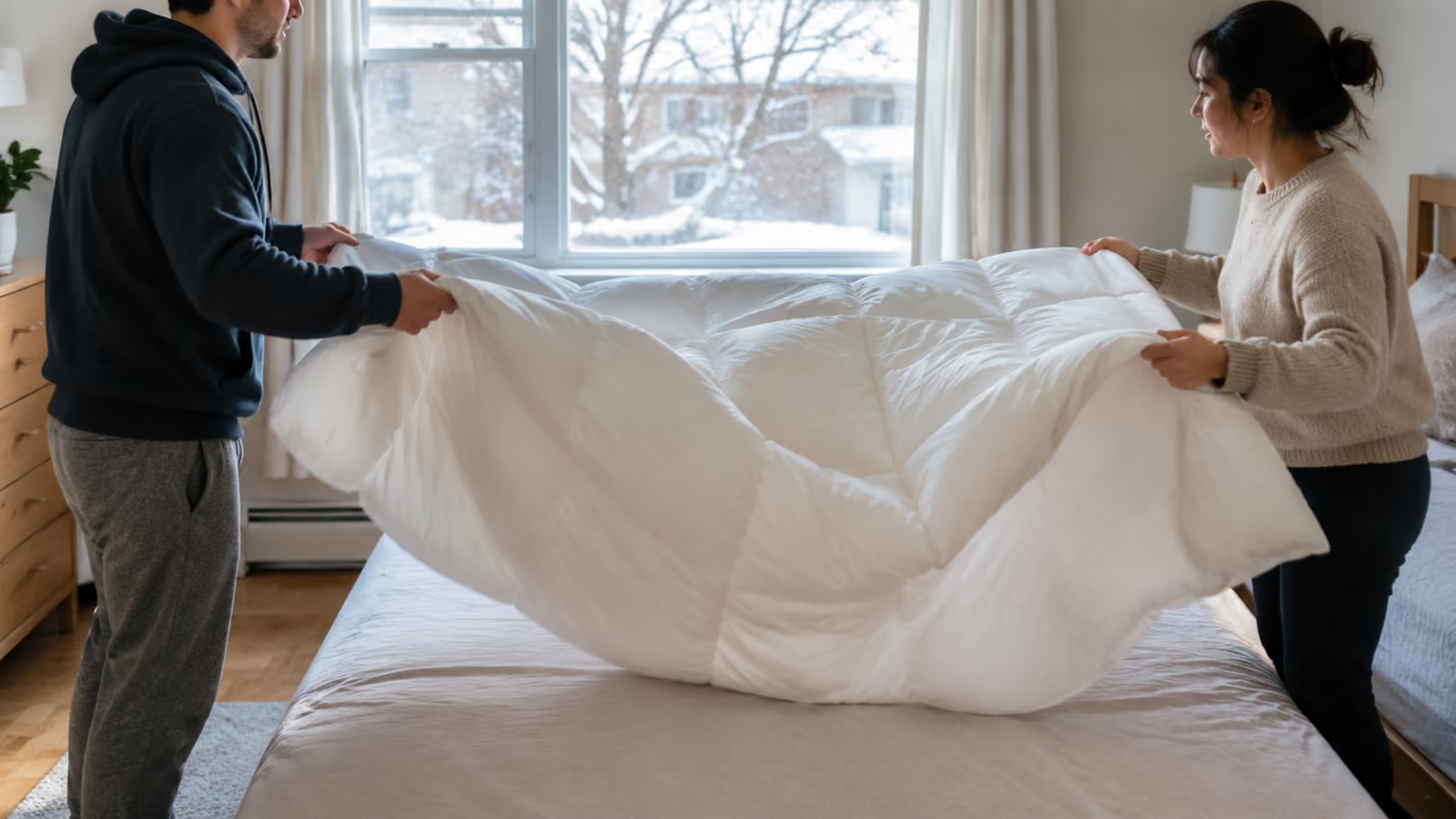
Read the guide
Keep the guide open while the Laundryless route stays clear.
Use the 8 jump links to move through this guides article without losing your place. On wider screens the dispatch rail stays beside the Ottawa laundry guide while the body keeps the original blog typography.
Guides
Quick answer
Clean a down comforter or quilt every two to three months and a synthetic one every one to two months. With a duvet cover, wash the cover every few weeks and the insert every three to four months, or sooner if it smells musty or allergies flare up.
Most people wash their comforter once a year. Most should wash it every two to three months. That gap between what we do and what we should do is wider for comforters than for almost any other household textile, and the reasons are understandable. Comforters are large, awkward to handle, and feel clean longer than they actually are because they sit under a top layer of sheets that absorbs the visible dirt first. The result is a piece of bedding that quietly accumulates months of sweat, skin cells, dust mites, and ambient moisture while looking perfectly fine on the surface.
This guide answers the question plainly: how often you should clean your comforter based on what it is made of, how you use it, and what season you are in. It also covers the warning signs that a comforter is overdue, the honest comparison between washing at home and using a professional comforter cleaning service, and the situations where professional handling is not a luxury but a practical necessity. If you have been putting off a wash because the logistics feel complicated, you are not alone, and the path forward is simpler than the size of the thing suggests.
The short answer by comforter type
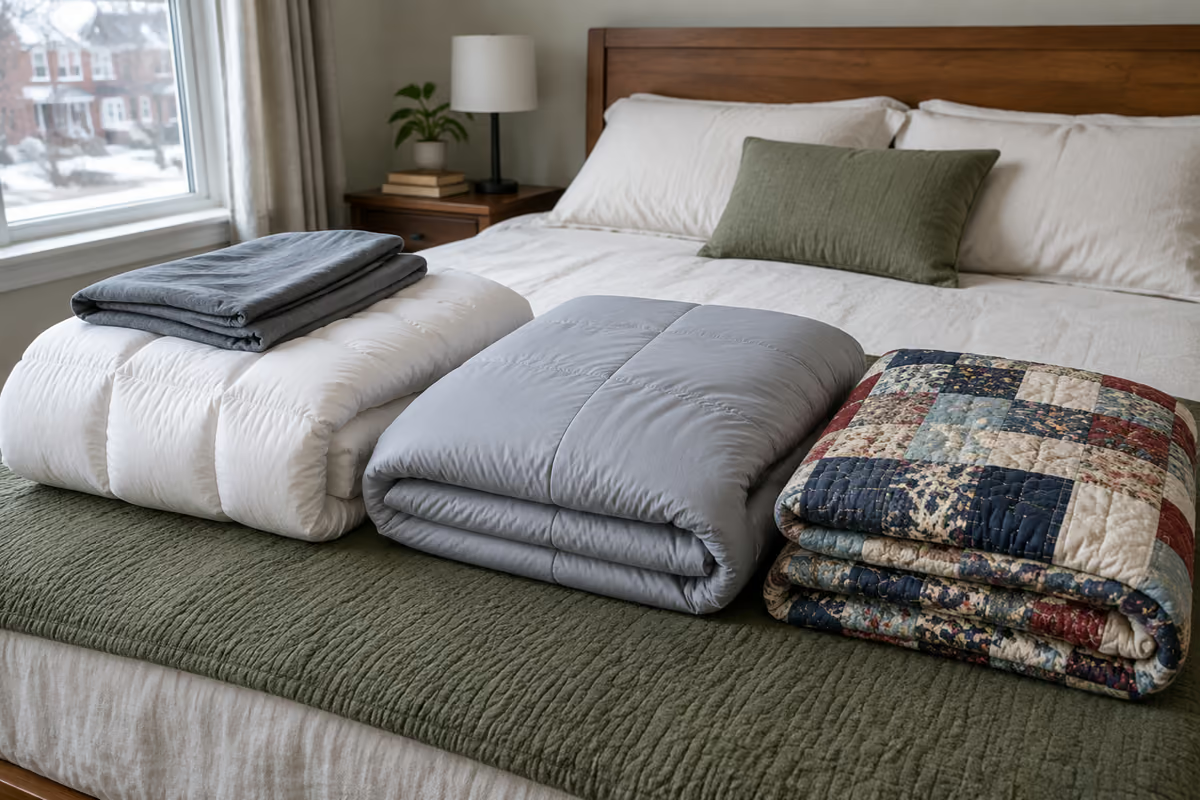
Not every comforter needs the same frequency. The fill material, the construction, and whether you use a protective cover all shift the timeline. Here is the honest breakdown by type, assuming normal use in a bedroom that stays at a reasonable temperature overnight.
A down comforter should be cleaned every two to three months under regular use. Down is excellent at trapping warmth, which also means it traps moisture from your body heat overnight. That moisture feeds the dust mites and bacteria that build up inside the fill clusters over time. The natural oils from your skin migrate through the shell fabric gradually, and once they saturate the down clusters the comforter loses loft and starts to feel flat in patches. Cleaning restores that loft by removing the oils that weigh the clusters down. If you use a duvet cover over your down comforter and wash the cover monthly, you can stretch the comforter itself to every three or four months, because the cover intercepts the majority of what would otherwise reach the fill.
A synthetic-fill comforter needs cleaning more often, roughly every one to two months. Synthetic fibres do not have the same natural resilience as down. They compress under the weight of accumulated oils and moisture faster, and once compressed they do not bounce back as easily without a proper wash and tumble cycle. The upside is that synthetic comforters are generally easier to wash at home because the fill tolerates water and heat better than down does. The downside is that the more frequent washing accelerates wear on the shell fabric and the fill bonding, so gentle cycles and moderate heat matter more over the long run.
A duvet with a removable cover operates on a split schedule. The cover itself should be washed every two to four weeks, treated essentially like a fitted sheet since it sits against your body and absorbs the same sweat and skin oils. The duvet insert inside the cover needs cleaning every three to four months, because the cover is doing the hard work of interception. This split approach is the most efficient for people who want to minimize full washes of a bulky item while still sleeping on clean bedding night after night. It is also why bedding manufacturers push duvet covers so strongly: they are not just decorative, they are a maintenance strategy.
Quilts fall somewhere between down and synthetic in terms of frequency, roughly every two to three months. The layered construction of a quilt, with its stitched-through panels holding batting in place, means that soil distributes more evenly rather than pooling in clusters. That even distribution makes quilts slightly more forgiving about timing than a down comforter, but they still accumulate the same biological load over the same weeks. Heirloom or vintage quilts with delicate stitching or antique fabrics are a separate conversation entirely, one we will return to in the section on professional cleaning below.
The general principle across all types is that the cleaner the layer above, the longer the comforter itself can go between full washes. Sleeping on clean sheets, using a duvet cover, and showering before bed rather than in the morning all extend the interval meaningfully. None of these are rules you need to follow perfectly. They are levers. Pull the ones that suit your routine and you can find a schedule that keeps the comforter genuinely clean without washing it more often than it needs.
A seasonal cleaning schedule
Your comforter does not exist outside of time. The seasons shape how heavily you use it, how much you sweat under it, and how long it sits in storage between rotations. A cleaning schedule anchored to the calendar is easier to maintain than one that asks you to count weeks, because the seasonal transitions give you natural reminders that require no effort to remember.
Spring (March-April)
Deep clean after winter heavy use
Your comforter has worked hard through four to five months of nightly Ottawa cold. Spring is the time for a thorough wash before lighter bedding takes over or before you store it for summer.
Summer (June-July)
Wash before storing or rotating
If you switch to a lighter blanket for summer, clean the winter comforter before folding it away. Storing a dirty comforter locks in oils and odours that set over months of inactivity.
Fall (September-October)
Refresh before heavy-use season begins
Pull the comforter out of storage or give it a wash before the cold sets in. Starting the season with a clean comforter means you will not need a mid-winter wash unless allergies demand one.
Winter (January-February)
Mid-winter refresh for allergy sufferers
If you have dust-mite allergies or notice flat spots developing, a mid-January cleaning resets the fill loft and removes the allergen load that builds up during the heaviest use months.
The spring deep clean is the most important one on the list for most people. After a full Ottawa winter of nightly use, your comforter has absorbed several months of body oils, dead skin cells, and ambient humidity from heated indoor air. The fill has been compressed under your body weight for a hundred-plus nights in a row. A thorough wash at the end of winter addresses all of this at once: it removes the accumulated soil, it restores the loft that makes the comforter warm and even, and it gives you a fresh starting point for whatever comes next, whether that is lighter summer bedding or continued use through the shoulder season.
The summer wash serves a different purpose. If you rotate your comforter out for a lighter blanket when temperatures rise, the instinct is to fold it and tuck it into a closet immediately. That instinct creates a problem. Whatever oils and moisture were in the comforter when you stopped using it will sit there all summer, slowly oxidizing and creating the musty smell that greets you when you pull it back out in October. Washing before storage prevents that entirely. It takes the same effort as washing before use, but it saves you from discovering in fall that the comforter smells stale and needs an urgent wash when you are already reaching for warmth.
The fall refresh depends on whether you stored the comforter clean. If you did, a quick tumble in the dryer on low heat for twenty minutes is often enough to restore loft without a full wash. If you did not, or if the storage spot was humid, a full wash before the cold season is the safer move. Starting winter with a genuinely clean comforter is the single best way to avoid needing a mid-winter wash, which is the most inconvenient one on the calendar because you are actively using the comforter every night and being without it in January is uncomfortable.
The mid-winter refresh is conditional rather than universal. If you do not have allergies and your comforter still feels lofty and smells neutral in January, you can skip it. But if you notice your allergy symptoms worsening at night, or if the comforter has developed flat patches that do not recover after shaking, a mid-season wash addresses both issues. Ottawa winters mean the comforter sees heavy, continuous use from November through March, and for allergy sufferers that continuous exposure to accumulating dust mites can genuinely disrupt sleep quality. A single mid-winter wash breaks that accumulation cycle and resets the clock.
The seasonal approach works because it removes the cognitive load of counting weeks. You do not need to remember when you last washed the comforter or set a reminder on your phone. You simply pair the cleaning with a seasonal transition you already notice, the first warm week, the first cold night, the day you pull out the winter bedding or put it away, and the habit maintains itself without effort.
Signs your comforter needs cleaning now
Sometimes the calendar is not the best guide. Your comforter will tell you when it needs attention if you know what to look for. These signals override whatever schedule you are following, because they indicate that the comforter has already crossed from acceptably used into genuinely dirty, regardless of how many weeks have passed since the last wash.
Visible stains
Yellow patches from sweat or oil that have soaked through sheets and set into the shell fabric.
Musty or stale smell
A noticeable odour when you pull back the covers or lean close, especially after the bed has been made all day.
Allergy flare-ups at night
Increased sneezing, congestion, or itchy eyes that worsen when you get into bed and improve when you leave it.
Flat or clumpy fill
Sections where the fill has compressed into hard lumps or thinned out, leaving cold spots.
Pet hair buildup
A layer of fur that shaking and lint rolling no longer fully removes from the surface or interior.
Sweat discoloration
Brownish or grey patches along the edges or centre where nightly perspiration has accumulated over weeks.
Visible stains are the most obvious signal but also the last to appear, which means they indicate a problem that started weeks or months earlier. The oils from your skin are colourless when fresh. They only yellow after prolonged oxidation, which means by the time you see a yellow patch the oils have been sitting in the fill long enough to change colour chemically. A comforter that has reached visible staining has been overdue for some time and will benefit from a thorough wash rather than a surface treatment.
The musty smell is subtler and easier to dismiss, especially because you acclimate to your own bedding scent overnight. The test is simple: strip the bed entirely, leave the room for an hour, then come back and lean into the comforter with your face. If the smell registers as stale, damp, or vaguely sour, the fill has accumulated enough moisture and biological material to produce that odour on its own. Airing the comforter outside on a dry day can temporarily reduce the smell, but it does not address the source. Only washing removes the organic matter that produces the odour in the first place.
Allergy symptoms that worsen specifically at night are one of the clearest indicators that dust mites have colonized the fill. Dust mites thrive in the warm, humid micro-environment inside a comforter, feeding on the dead skin cells that migrate through sheets and shell fabric. Their waste particles are the actual allergen, and those particles accumulate in direct proportion to how long the comforter goes between washes. If your nose is clear during the day and stuffy by midnight, the comforter is the most likely culprit, especially during Ottawa winters when windows stay closed and indoor humidity from heating systems gives mites an ideal habitat.
Flat or clumpy fill is a structural signal rather than a hygiene one, but it often indicates the same underlying cause. When oils and moisture saturate down clusters or synthetic fibres, they lose their ability to loft evenly. The fill sticks to itself in some areas and thins in others, creating an uneven sleeping surface with cold spots and lumpy ridges. A proper wash followed by thorough tumble drying with dryer balls can restore the original distribution in most cases, but only if the clumping has not progressed to the point where the fill has permanently bonded. The longer you wait, the harder it becomes to reverse, which is why catching it early matters.
Ottawa winters mean heavier comforter use and closed windows that trap humidity indoors. If you have dust-mite allergies, plan a mid-January refresh to break the allergen accumulation cycle before it disrupts your sleep through the coldest months.
Pet owners face an additional layer of maintenance that non-pet households do not. Pet hair works its way through outer fabrics and lodges in the fill over time, and pet dander carries its own allergen load separate from dust mites. If your cat or dog sleeps on the bed, even occasionally, the cleaning frequency should shift toward the shorter end of the recommended range for your comforter type. A duvet cover helps enormously here, because it is far easier to wash a cover weekly than to wash the entire comforter monthly. For households with multiple pets or pets that shed heavily, the cover becomes less of a convenience and more of a necessity for keeping the comforter usable between washes.
Sweat discoloration along the edges and centre of a comforter tells a specific story about how the person sleeps. The centre patch corresponds to the torso, where the body produces the most heat and the most perspiration overnight. Edge discoloration often tracks the arms and shoulders. Both indicate that sweat has been passing through sheets and accumulating in the comforter fill over an extended period. Light discoloration can often be addressed with a standard wash, but deep or widespread staining may require pre-treatment or professional handling to lift fully. The longer the staining sits, the more it oxidizes and sets, which is another reason prompt cleaning matters more than perfection of schedule.
For further reading on how winter bedding care interacts with Ottawa's specific climate challenges, including how indoor heating and closed-window humidity affect your bedding throughout the cold season, we cover the topic in depth separately.
Home washing versus professional cleaning
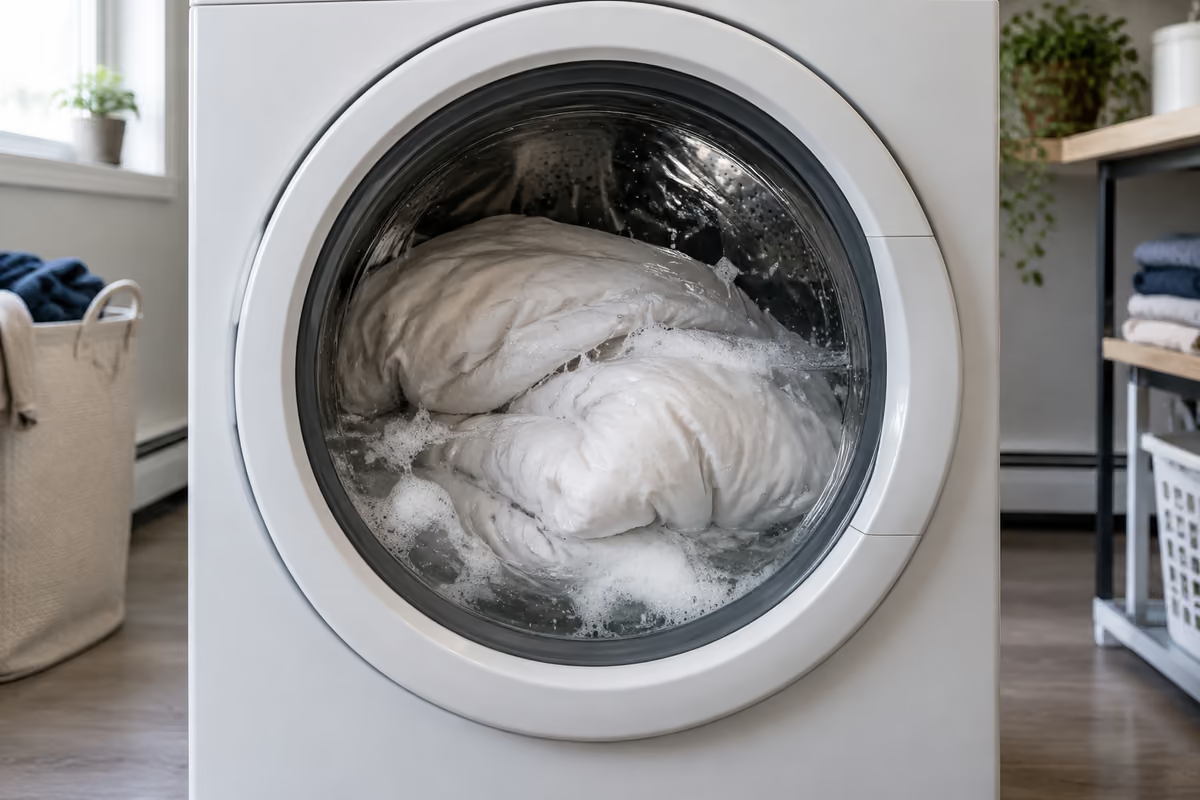
The question of whether to wash your comforter at home or send it out is not really about preference. It is about physics. The answer depends on the size of your washing machine, the size of your dryer, the type of fill in your comforter, and your tolerance for the risk that something goes wrong in a way that is expensive to fix. Both approaches have legitimate roles, and most people will use both at different points depending on the situation.
Home washing works well for synthetic-fill comforters in twin, double, or small queen sizes, provided your machine has a large enough drum to allow the comforter to move freely during the wash cycle. The key word is freely. A comforter that is crammed into the drum so tightly that it cannot rotate will not wash evenly. Water and detergent cannot circulate through compressed fill, so you end up with areas that are soaked and cleaned sitting next to areas that barely got wet. The same principle applies to drying: a comforter needs room to tumble and separate so that heat can reach the interior evenly. If your dryer is too small for that tumbling action, you end up with a comforter that feels dry on the outside but remains damp in the centre, which creates the exact mildew problem you were trying to avoid by washing it in the first place.
Professional cleaning addresses the capacity problem directly. Commercial machines have drums large enough to handle king-size comforters with room to spare, which means the wash and dry cycles work as intended rather than as compromises. The water-to-fabric ratio stays correct, the fill gets agitated and rinsed properly, and the drying happens from the outside in without leaving damp pockets in the middle. For down comforters specifically, professional handling also addresses the temperature sensitivity that makes home drying risky. Down needs low, sustained heat over a longer period than most people have patience for at home, and commercial dryers can maintain that consistent low temperature for as long as the fill needs to dry completely.
| Home wash | Professional cleaning |
|---|---|
| Limited drum size, so king comforters often do not fit with room to tumble | Commercial drums accommodate all sizes with proper water-to-fabric ratio |
| Drying takes 2-3 full cycles or several hours, risk of damp centre if rushed | Large commercial dryers handle the full volume in a single sustained cycle |
| Fill redistribution depends on manual shaking between dryer cycles | Tumble action in commercial machines redistributes fill evenly throughout |
| Stain treatment limited to consumer-grade products and surface application | Pre-treatment with professional-grade solutions on identified stains before wash |
| Free in direct cost but takes 4-6 hours of intermittent attention | Flat per-item fee with pickup and delivery included, no time spent |
| Suitable for synthetic fills in twin to queen sizes | Suitable for all fill types, all sizes, including delicate or oversized items |
The drying time difference deserves particular attention because it is where most home washes go wrong. A king-size down comforter can take three to four hours in a residential dryer to dry completely, and many people pull it out after one or two hours because it feels dry to the touch on the outside. That exterior dryness is misleading. The interior clusters can hold moisture for hours after the shell feels warm and dry, and storing or using a comforter with damp fill invites mildew growth that produces the exact musty smell described in the previous section. Professional dryers solve this by running longer at a controlled low temperature, and by using moisture sensors that detect when the fill itself, not just the shell, has reached the target dryness.
The cost comparison is simpler than people assume. Washing at home costs nothing in direct fees but consumes four to six hours of intermittent attention across wash cycles, dryer cycles, and the checking and shaking required between them. Professional cleaning charges a flat fee per item, includes pickup and delivery, and returns the comforter ready to use without any time investment on your part. Whether the fee is worth it depends on how you value those hours and how confident you are that your home equipment can handle the specific comforter you own. For a twin synthetic comforter in a household with a full-size washer and dryer, home washing is perfectly reasonable. For a king down comforter in a condo with a compact stacked unit, professional cleaning is not a luxury but a practical acknowledgment that the equipment cannot do the job properly.
For a deeper comparison of how comforter-specific washing differs from standard laundry loads in terms of temperature, cycle length, and handling, we cover the technical differences in our guide to comforter cleaning vs regular wash.
When professional cleaning is the right call
There are situations where home washing is not just less convenient but genuinely inappropriate for the comforter you own. Recognizing those situations before you start a wash cycle saves you from discovering the problem mid-way through, when the comforter is already wet and too heavy to move easily. The following categories are the ones where professional handling moves from a nice-to-have to the practical default.
Down comforters, particularly those with high fill power ratings, are the most common case. Down clusters are delicate structures that can be damaged by aggressive agitation, excessive heat, or improper drying. A home washer's agitation cycle is designed for clothing-weight loads, not for a three-kilogram mass of compressed feathers that needs to be gently circulated in a large volume of water. Professional machines use lower agitation speeds with higher water volumes, which lets the down float and release soil without being crushed against the drum walls. The drying matters even more: down that is not dried completely and evenly develops mildew inside the clusters, which produces an odour that no amount of airing will remove and may require replacing the comforter entirely.
King-size comforters of any fill type present a pure capacity problem. Most residential washing machines have drums rated for loads up to about eight kilograms. A king-size comforter, dry, weighs between three and five kilograms depending on fill type. That sounds like it fits, but the drum needs to be no more than two-thirds full for the comforter to move freely during the cycle. When you account for the water weight that the fill absorbs, a king comforter in a standard residential drum is effectively packed wall-to-wall with no room to agitate. The result is uneven cleaning at best and a strain on the machine's bearings and motor at worst. This is not a matter of opinion or caution. It is a physical constraint that no amount of careful loading can overcome in a standard-size machine.
Heirloom quilts and antique textiles require a gentler approach than any home machine can provide, regardless of the gentle cycle setting. The stitching on a vintage quilt may be cotton thread that has weakened over decades, and the fabrics themselves may be pre-shrunk unevenly or not at all. Machine agitation, even on delicate, can pull stitches loose or cause panels to shift relative to each other. Professional cleaning for these items often involves hand-washing or very-low-agitation immersion that a residential machine simply cannot replicate. If the quilt has sentimental or monetary value beyond its function as bedding, the cost of professional handling is trivial compared to the cost of replacement, which for a genuine antique is often impossible at any price.
Heavily stained comforters benefit from professional pre-treatment that addresses the stain chemistry before the item enters the wash. Consumer stain removers are effective on surface stains caught quickly, but a comforter stain has usually been setting for weeks or months before anyone notices it through the layers above. Professional pre-treatment can target specific stain types, protein-based stains from sweat, oil-based stains from skin, tannin stains from spills, with appropriate chemistry applied before the wash begins. This sequencing matters because washing a set stain without pre-treatment can actually lock it in permanently by changing its chemical structure under heat.
When your comforter should not go in a home machine
If your comforter does not fit freely in the drum with room to tumble, it will not clean properly at home. The same applies if the care label specifies professional cleaning, if the fill is natural down in king or queen size, or if the item has sentimental value that makes the risk of damage unacceptable. In these cases, the capacity and control of commercial equipment is not optional but necessary for a result that actually cleans rather than just wets the item.
The decision framework is straightforward. If your comforter fits your machine with room to move, if the fill tolerates standard residential agitation, and if you have the time and patience for multiple dryer cycles with checking between them, home washing works fine. If any of those conditions fails, professional cleaning is not an upgrade but the baseline for doing the job correctly. Our professional comforter cleaning service handles all sizes and fill types with equipment sized for the job, and laundry pickup and delivery means the logistics of getting a bulky item to and from a facility are handled without you needing to wrestle a wet king-size comforter into your car.
How pickup and delivery works for bedding
Getting a bulky comforter to a cleaning facility is the logistical friction that stops most people from maintaining a proper schedule. A comforter is awkward to carry, difficult to fit in a car without compressing it in ways that feel wrong, and heavy enough when dirty that the trip itself becomes a chore you postpone indefinitely. Pickup and delivery removes that friction entirely, which is why it matters specifically for bedding in a way that it does not matter as much for a bag of everyday clothing.
The process for bedding works the same way as a standard laundry pickup and delivery order, with one practical difference: the bag. A king-size comforter will not fit in the standard laundry bag most people use for clothing. You can use a large garbage bag, a duvet storage bag, or any oversized container that keeps the comforter contained during the handoff. Some people simply fold the comforter and leave it by the door without a bag at all, which works perfectly well as long as the pickup spot is sheltered from weather. The comforter does not need to be compressed or vacuum-sealed. It just needs to be in a place where we can collect it during the morning window.
Once collected, bedding items are handled separately from standard wash-and-fold loads. They run through the same commercial equipment described in the comparison section above, with cycle lengths and temperatures matched to the fill type. Down gets low-heat extended drying. Synthetic gets moderate heat with periodic tumbling checks. Quilts get gentle agitation with reduced spin speeds. The specifics are handled on our end based on what the item is, not based on instructions you need to provide, though you are welcome to add notes about anything unusual if you prefer.
The turnaround for bedding follows the same timeline as other orders: the standard turnaround is within 48 hours of pickup, and a 24-hour rush is available as an opt-in surcharge when you need the comforter back sooner. That turnaround holds for bulky bedding because commercial dryers handle the volume in a single cycle that would take a residential dryer three or four runs. That time compression is the whole reason a bedding order fits comfortably inside the standard window instead of dominating an entire afternoon at home.
For people who maintain a seasonal schedule, the most common pattern is to book a pickup at each seasonal transition, roughly four times a year. Setting a recurring pickup is not required for this. Most people simply book when the season changes and they notice the comforter is due. The pickup is the easy part. The hard part was deciding to do it, which you have already done by reading this far and recognizing that your comforter has probably been overdue for longer than you care to admit.
If you share your home with someone who uses a different comforter, or if you have children with their own bedding, multiple items can go in a single pickup. Pricing for bedding is per item rather than by weight, so you know the cost before booking. A king comforter, a child's single duvet, and a throw blanket can all go in one order, each priced at its published rate with no bundling surprises. You can see the full per-item rates for all bedding sizes on the pricing page. If you have everyday laundry at the same time, book a separate wash and fold order and pick the same pickup window.
Common bedding questions
A few questions come up repeatedly from people who are either washing their comforter for the first time in a while or considering professional cleaning for the first time. Here are the honest answers.
Can I wash a down comforter at home?
You can, if your machine is large enough for the comforter to move freely in the drum. A front-loader with a 4.5 cubic foot or larger capacity handles most queen-size down comforters. The bigger challenge is drying: down needs low heat for three to four hours to dry completely through to the centre clusters, and pulling it out too early invites mildew. If your dryer is smaller than your washer, professional cleaning is the safer option.
How long does professional comforter cleaning take?
The standard turnaround is within 48 hours of pickup, and a 24-hour rush is available as an opt-in surcharge when you need it back sooner. The actual wash-and-dry process takes several hours, but because commercial equipment handles the volume in fewer cycles than residential machines, the standard turnaround is comfortable without rushing any step.
Will cleaning damage the fill?
Proper cleaning does not damage fill. What damages fill is improper cleaning: too much heat on down, too aggressive a spin on delicate quilting, or insufficient drying that leads to mildew and clumping. Both home and professional cleaning are safe when done correctly. The difference is that professional equipment makes correct handling easier because the machines are sized for the job.
Should I use a duvet cover to reduce washing?
Yes, a duvet cover is the single most effective way to extend the interval between full comforter washes. The cover absorbs the sweat, oils, and skin cells that would otherwise reach the fill, and it is far easier to wash weekly than the comforter itself. Think of it as a fitted sheet for your comforter: it is the sacrificial layer that keeps the expensive item cleaner longer.
How do I store a clean comforter?
Store in a breathable cotton bag or a clean, loosely draped pillowcase rather than a sealed plastic bin. Sealed containers trap any residual moisture and create the damp environment that mildew needs. A breathable cover allows air circulation while keeping dust off. Store in a cool, dry spot away from direct sunlight, which can yellow shell fabric over time.
What about pillows?
Pillows follow a similar logic. Down and synthetic pillows should be washed every three to four months, or whenever they fail the fold test: fold the pillow in half, and if it does not spring back open on its own, the fill is too saturated to support your head properly. We clean pillows too. They are not on the online price list yet, so contact us before you book and we confirm the price first.
The thread that connects all of these answers is that proper cleaning, whether at home or professionally, protects rather than damages your bedding. The real risk is not washing too often. It is waiting so long between washes that the accumulated oils, moisture, and biological material compromise the fill permanently. A comforter that is washed on a sensible schedule at the right temperature with adequate drying will outlast one that is washed rarely but aggressively when it finally becomes unbearable.
For households where multiple bedding items need attention at once, sending the comforters, duvets, and throws together in one bedding order keeps the logistics simple. Each item is priced at its published rate by size, so adding a throw to a comforter order does not complicate the cost calculation. The pricing for every bedding size is published on the comforter cleaning service page, where you can see exactly what each item costs before booking.
Conclusion
The short answer to how often you should clean your comforter is more often than you probably do now, but less often than you might fear. For most people, that means three to four times a year aligned with the seasons: a deep clean in spring after heavy winter use, a wash before summer storage, a refresh in fall before the cold returns, and an optional mid-winter wash if allergies demand it. The specific type of comforter shifts the timing slightly, with synthetic fills needing more frequent attention and covered duvets needing less, but the seasonal framework holds for all of them.
The pattern that works for most Ottawa households is simple. Use a duvet cover and wash it frequently. Clean the comforter itself at each seasonal transition. Watch for the warning signs that indicate it needs attention sooner. And when the size of the item or the sensitivity of the fill makes home washing impractical, use a professional bedding cleaning service that has the equipment to do the job properly rather than forcing it through a machine that cannot accommodate it.
Your comforter works for you every night. A few hours of professional care a few times a year is a reasonable return on that nightly service. When you are ready to schedule a cleaning, a laundry pickup for bedding works the same way as any other order: book a window, leave the comforter at your door, and it comes back clean without you spending an afternoon wrestling it into a residential dryer. If your comforter has been overdue longer than you care to admit, today is a perfectly good day to change that, and the dry cleaning service handles any delicate or structured pieces that need a gentler approach than a standard wash.
Ready To Book
Hand off the laundry in under two minutes.

Reader handoffCopy, email, print, or return to the archive.
Share or save
Send this Ottawa laundry guide to someone who needs it.
Share the ottawa laundry guide with a roommate, property contact, or teammate before pickup notes get messy. The controls stay local to this page: no tracking widgets, no third-party script, just practical laundry tips Ottawa readers can pass along.
Services that pair with this guide
Services that pair with this guide.
Use the related services below when these laundry tips Ottawa readers need to turn a guides note into a pickup, a wash and fold order, or a question about specialty handling.


Related laundry searches.
Ottawa laundry guides continue from a real service page. Every search below lands on a live route.

Done reading?
Use the guide, then hand off the laundry.
This guide should leave you with a clearer next step. Book a pickup when the load fits standard laundry, or contact us when care labels, volume, bedding, or business needs deserve review first.