Comforter Cleaning vs Regular Wash: What Is Different
Why comforter cleaning differs from a regular wash cycle: machine size, drying method, fill care, and when professional bedding service protects your investment
- Duong Quan Nguyen
- Updated September 15, 2026
- 21 min read
Read the guide
Keep the guide open while the Laundryless route stays clear.
Use the 9 jump links to move through this guides article without losing your place. On wider screens the dispatch rail stays beside the Ottawa laundry guide while the body keeps the original blog typography.
Guides
Quick answer
A comforter needs a larger drum, a gentle cycle, and a long, low-heat dry that breaks up the fill, while a regular wash is built for thin, light fabrics. Skipping those steps can leave the fill clumped or damp inside, which leads to flat spots and mildew.
A comforter is not a shirt. Treating it like one is how you end up with a lumpy, flat, expensive mistake. Most people toss bedding into whatever machine is available, run a normal cycle, and hope for the best. Sometimes it works out. Often it does not, and the damage only becomes obvious weeks later when the fill has shifted permanently or a faint mildew smell settles into the batting that no amount of Febreze can reach.
The question that brings most people to this page is simple: can I just wash my comforter the same way I wash everything else? The honest answer is that it depends on what you are willing to risk. A regular wash cycle treats every item identically, agitating fabric in a drum sized for shirts and jeans, spinning at speeds calibrated for everyday weight, and drying at temperatures chosen for cotton tees. A comforter is none of those things. It is large, thick, filled with material that clumps when wet, and heavy enough to strain a residential machine. The process it needs is fundamentally different, and understanding why saves you from learning the hard way.
If you have ever wondered how often bedding actually needs cleaning, our cleaning frequency guide covers the timing question in detail. This post focuses on the method: what makes comforter cleaning a distinct process, what happens when you ignore the difference, and when it makes sense to hand the job to a comforter cleaning service rather than wrestling a king-size duvet into a machine that can barely close.
Why comforters need different treatment
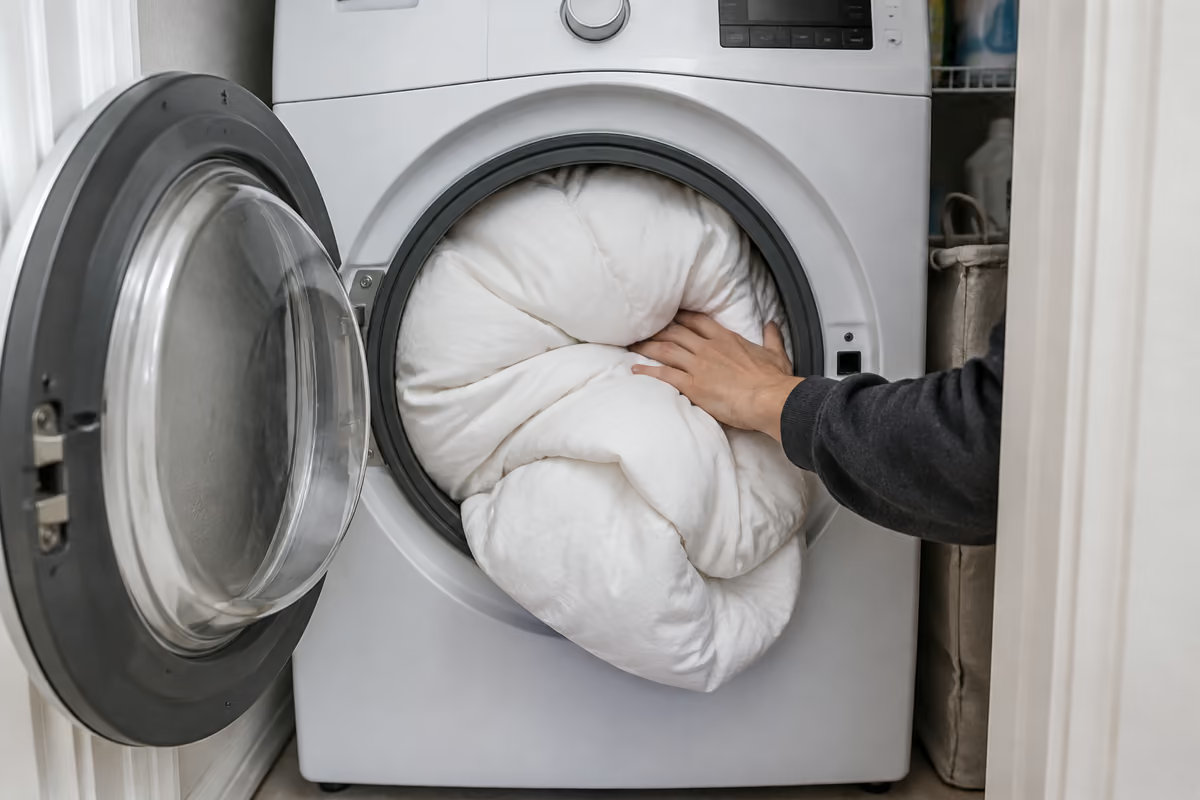
The gap between a comforter and a regular garment is not a matter of degree. It is a difference in kind, and it shows up across four dimensions that a standard wash cycle was never designed to accommodate.
Size is the most obvious problem. A king-size comforter, unfolded, measures roughly 106 by 92 inches. A standard residential washing machine drum holds between 4.2 and 5.0 cubic feet. The math does not work. You can force a comforter into a home machine by folding, rolling, or cramming it against the drum wall, but the result is a bundle so tightly packed that water cannot circulate through the fill. Detergent sits on the outer shell while the interior stays unwashed. The machine technically ran a cycle, but it did not clean the comforter in any meaningful sense. A commercial front-loader used by professional services holds 20 to 60 pounds and offers the drum volume that lets a comforter tumble freely, which is the only way water and detergent actually reach the fill layer.
Fill type is the second dimension, and it is the one that catches careful people off guard. Down clusters are fragile protein structures that clump when soaked and break apart under aggressive agitation. Synthetic polyester batting is more resilient but mats flat if it spends too long compressed while wet. Wool fill, rarer but present in higher-end bedding, felts irreversibly if it encounters heat or friction at the wrong moment. Each fill type has a narrow window of acceptable temperature, agitation speed, and drying conditions. A regular wash cycle does not distinguish between any of these; it runs a single program regardless of what is inside the shell.
Drying is the third and arguably most dangerous variable. A comforter that feels dry on the outside can hold trapped moisture deep inside the fill for days. That moisture, invisible and odourless for the first 48 hours, becomes mildew once it finds warmth. The mildew grows inside the batting where you cannot see it, and by the time you notice a musty smell the damage is permanent. Proper drying requires extended low-heat tumbling with periodic fluffing to redistribute the fill and expose all layers to airflow. Most home dryers lack the drum size to tumble a comforter freely, which means sections stay compressed and damp even after an hour-long cycle shows the timer at zero.
Weight when wet is the fourth factor, and it is the one that threatens your machine rather than your bedding. A dry king comforter weighs between 6 and 10 pounds depending on fill. Wet, that same comforter can exceed 25 pounds, unevenly distributed inside the drum. Residential washers are not built for that kind of off-balance load. The drum bearings strain, the suspension rattles, and if the machine detects a dangerous imbalance it will abort the spin cycle entirely, leaving you with a soaking comforter that now needs to be lifted out by hand. Repeated heavy loads of this kind shorten the life of a home machine by years, a cost that never shows up on a single utility bill but compounds quietly over time.
These four factors, size, fill sensitivity, drying risk, and wet weight, are not edge cases. They apply to every comforter in every home, from a budget polyester throw to a premium goose-down duvet. The variation between those extremes changes which specific settings are needed, but it does not change the fundamental truth: a comforter is an engineered textile with interior structure, and treating it like a bag of cotton clothing ignores that structure entirely.
Regular wash vs comforter cleaning
When people say they wash their comforter at home, what they usually mean is that they run it through the same cycle they use for everything else. That works for sheets, towels, and everyday clothing because those items share a set of physical properties: moderate weight, thin cross-section, and no interior fill that can shift or clump. A comforter shares none of those properties, and the table below makes the divergence concrete.
| Regular wash cycle | Comforter cleaning process |
|---|---|
| Standard 4.5 cu ft residential drum | Commercial 20-60 lb capacity front-loader |
| Normal or heavy-duty agitation | Gentle cycle with extended soak phase |
| Standard detergent dose | Reduced detergent to prevent residue in fill |
| High-speed spin (1000+ RPM) | Low-speed spin to protect baffles and seams |
| Single dryer cycle at medium-high heat | Extended low-heat drying with tumble balls |
| No fill redistribution step | Periodic fluffing to prevent clumping |
| 45-70 minutes total | 3-4 hours including full dry verification |
| Moderate risk of damage per cycle | Process designed around fill preservation |
The machine size row is worth dwelling on, because it is the constraint that makes everything else inevitable. When a comforter cannot tumble freely inside the drum, water distribution fails. And when water distribution fails, detergent cannot dissolve evenly, soil cannot release from the fibres, and the rinse cycle cannot flush residue from the fill. Every downstream problem, the detergent buildup, the incomplete cleaning, the extended dry time, traces back to a drum that is simply too small for the item inside it.
The agitation difference matters more than it appears. A regular cycle uses aggressive tumbling to lift soil from fabric. That works for a cotton shirt because the shirt is thin, flexible, and has no internal structure to damage. A comforter has baffles, which are the stitched channels that keep fill distributed evenly. Aggressive agitation can tear baffle seams, allowing fill to migrate from one section to another. Once that happens, the comforter develops permanent thin spots and thick spots that no amount of fluffing will fix. Professional comforter cleaning uses a gentle cycle specifically to protect those seams while still generating enough water movement to clean the fill.
Drying time is the row that surprises most people. A standard home dryer cycle runs 45 to 60 minutes. That is enough for a load of shirts because shirts are thin and release moisture quickly. A comforter needs three to four times that duration because the fill layer traps moisture deep inside where airflow cannot easily reach it. Running a single standard cycle and pulling the comforter out when the timer ends almost guarantees that the interior is still damp. You will not feel it through the shell fabric, and it will not be obvious for the first day or two. But trapped moisture in a warm, dark interior is exactly the condition mildew needs to establish itself.
The regular wash and fold process handles everyday items beautifully because those items were designed to be washed in residential machines at standard settings. A comforter was designed to sit on a bed, not inside a drum, and the cleaning process has to account for that fundamental difference in purpose.
What can go wrong at home
Home washing a comforter is not guaranteed to end badly. Plenty of people have done it without disaster, particularly with thinner synthetic comforters in newer, larger-capacity machines. But the margin for error is narrow, and the failures tend to be expensive because a damaged comforter cannot be repaired. It can only be replaced. Here are the most common ways the process goes wrong.
Clumping fill is the failure people notice first because it changes how the comforter looks and feels immediately. Down clusters that were evenly distributed across the baffle chambers before washing migrate to the lowest point during the spin cycle. When the comforter comes out of the dryer, some sections are thick and lumpy while others are paper-thin. You can try to redistribute the fill by hand, pulling and shaking the comforter section by section, but once down clusters have compressed together while wet they bond in ways that manual fluffing cannot fully reverse. The comforter ends up with a quilted, patchy appearance that was never part of its design.
Mildew from incomplete drying is the failure people notice last, which makes it the most dangerous. A comforter pulled from a home dryer can feel dry to the touch on the shell fabric while holding significant moisture in the centre of the fill layer. That trapped dampness, sealed inside a warm textile in a dark bedroom, creates ideal conditions for mould and mildew growth. The first sign is usually a faint musty odour that appears a week or two after washing. By that point the mildew has colonised the fill and the comforter is no longer safe to sleep under. No amount of rewashing removes established mildew from interior batting; the comforter is functionally ruined.
Signs your comforter has hidden moisture damage
If your comforter smells musty within two weeks of washing, feels heavier than it should, or shows dark spots on the shell fabric that were not there before, moisture was trapped during drying. These signs mean the fill has likely started to degrade. Continuing to sleep under a mildew-affected comforter can aggravate allergies and respiratory sensitivity.
Torn baffles from aggressive agitation represent structural damage that is invisible from the outside until you notice fill migration weeks later. Baffle seams are the internal stitching that creates channels within the comforter, keeping fill distributed evenly across the sleeping surface. A residential washer running a normal or heavy-duty cycle subjects the comforter to high-speed tumbling and abrupt direction changes that stress these seams. Over one or two washes the stitching weakens. Over three or four it gives way entirely, and the fill is free to pile up in one corner while the rest of the comforter goes flat. There is no way to restitch baffles without opening the shell, which is a repair more expensive than many replacement comforters.
Faded or damaged shell fabric results from detergent concentration and temperature mismatches. A comforter shell is often a tightly woven cotton sateen or a microfibre blend chosen for softness against skin. These fabrics react poorly to hot water and concentrated detergent, both of which are standard in a normal wash cycle designed for heavier-soiled everyday clothing. The result is a shell that loses its lustre, feels rougher to the touch, and may develop discoloured patches where detergent pooled against the fabric during an incomplete rinse. None of this affects warmth, but it affects the feel and appearance of something you interact with every night.
The common thread across all four failures is that they stem from applying a process designed for thin, flat, unstructured textiles to an item that is thick, filled, and internally structured. The damage is rarely dramatic in the moment. It accumulates across two or three home washes until the comforter is noticeably degraded, and at that point the only remedy is replacement. For context on whether your particular comforter type is better suited to washing or dry cleaning, that companion post covers the decision framework by fabric and fill type.
Before and after: home wash vs professional cleaning
The difference between a home-washed comforter and a professionally cleaned one is not subtle. It is visible the moment you lay both flat on a bed, and it is felt the first night you sleep under the professionally handled one. The contrast is clearest with down and down-alternative comforters, where fill distribution determines both warmth and longevity, but it applies across every fill type.
A comforter that has been through two or three home wash cycles typically shows a recognizable pattern of decline. The fill has shifted toward the edges or corners, leaving the centre thin. The loft, which is the height the comforter sits at when laid flat, has compressed from its original four or five inches down to two or less. The shell fabric may feel slightly stiff from detergent residue that was never fully rinsed, and there is sometimes a faint staleness that is not quite mildew but suggests trapped moisture at some point in its history. The comforter still functions as a blanket. It covers you and provides some insulation. But it no longer performs as it was designed to.
After home washing
- Fill migrated to corners and edges
- Loft compressed below 2 inches
- Shell fabric stiff from detergent residue
- Faint staleness from incomplete drying
- Thin spots over the sleeper zone
- Baffles stressed or partially torn
After professional cleaning
- Fill evenly distributed across all chambers
- Original loft restored to 4-5 inches
- Shell fabric soft with no residue
- Completely fresh with no trapped odours
- Consistent warmth across the full surface
- Baffles intact and seams stress-free
A professionally cleaned comforter comes back looking closer to how it looked when it was new. The fill sits evenly across every baffle chamber because the commercial drum was large enough for water to circulate through the entire piece, and the extended low-heat drying with tumble balls redistributed the fill as it dried rather than letting gravity pull it to one side. The shell fabric is soft because the gentle cycle and reduced detergent dose did not strip its finish or leave residue behind. The loft is back because the fill was never compressed while wet long enough to lose its spring.
This is not a cosmetic difference. A comforter with evenly distributed fill insulates better than one with thin spots and thick spots. It traps a uniform layer of air across your body rather than letting heat escape through the depleted centre while the corners pile up unused warmth. For Ottawa winters, where bedroom temperatures can drop into the low teens overnight even with the heat running, that uniform insulation is the difference between sleeping comfortably and waking up cold at three in the morning reaching for an extra blanket.
There is also a tactile dimension that photographs cannot convey. A comforter whose fill has been properly dried and redistributed feels lighter in the hand than one with compressed, partially damp batting, even when the two weigh the same on a scale. The lofted fill traps air rather than lying flat against the shell, and that trapped air is what gives a well-maintained comforter its characteristic cloud-like drape. When you pull it over yourself at night, a lofted comforter settles around your body without pressing down. A compressed one lies heavy and flat, more like a weighted blanket than a thermal layer. The difference is immediate and unmistakable once you have experienced both.
The practical reality is that most people do not notice the decline because it happens gradually. Each home wash degrades the comforter by a small increment, and you adjust to the new normal without registering the change. It is only when you sleep under a properly maintained comforter, or when you get your own back from a comforter cleaning service for the first time, that the contrast becomes obvious. The loft, the softness, the even warmth: these are not luxury features. They are what the comforter was built to deliver, and a cleaning process that preserves them is simply a process that lets the comforter do its job.
Cost comparison: home wash vs professional service

The instinct to wash a comforter at home is often driven by cost. Professional cleaning feels like a luxury expense when a home machine is already paid for and sitting idle in the next room. That instinct makes sense on the surface, but it dissolves when you account for the full cost of a home wash rather than just the electricity and detergent.
A home wash of a king comforter at a laundromat, which is where most people end up because their home machine is too small, involves the extra-large front-loader fee, two or three dryer cycles because a single cycle will not fully dry the fill, detergent, and the time to drive there, wait, transfer loads, and drive back. That time cost is real. A comforter takes two to three hours of elapsed machine time, and you cannot leave a laundromat unattended with your bedding in it without accepting the risk of someone pulling it out mid-cycle. So you sit, or you make two round trips, and either way your afternoon is gone.
Home wash at a laundromat (king comforter)
- Extra-large washer cycleVaries by laundromat
- 8-12
- Two dryer cycles (60 min each)Single cycle leaves fill damp
- 10-14
- Detergent (reduced dose for fill)
- 2-3
- Drive time and fuelTwo round trips if not waiting
- 5-10
- Your time (2-3 hours)Opportunity cost varies by person
- Unpaid
Does not include the cumulative cost of fill damage, shortened comforter lifespan, or machine wear if using a home unit.
Professional comforter cleaning for a king-size item runs $35.99 CAD as a flat per-item rate. That includes pickup from your door, the full cleaning process with proper equipment, drying verification, and return delivery. There is no trip to make, no time to spend waiting, and no risk of fill damage from undersized equipment. The price gap between home and professional narrows considerably once you include the laundromat fees and your time, and it disappears entirely when you factor in the longevity difference.
A comforter that is professionally cleaned every time retains its loft and fill distribution for years longer than one that is home-washed repeatedly. If a quality king comforter costs between 200 and 500 dollars to replace, and home washing shortens its useful life by two to three years compared to professional care, the per-year cost of professional cleaning is substantially less than the per-year cost of accelerated replacement. This is not a marginal difference. It is the difference between a comforter that lasts eight to ten years and one that needs replacing after four or five.
The pickup and delivery model eliminates the final friction point that makes professional cleaning feel like an inconvenience. You do not need to drive to a shop, find parking, carry a bulky comforter inside, and remember to come back for it. The service comes to your door, takes the comforter, and returns it clean. The only thing you do is schedule the pickup, which takes less time than finding your car keys.
For households that clean bedding seasonally, twice a year at the turn of winter and again in spring, the annual cost of professional comforter cleaning is modest relative to what the comforter itself cost and what a replacement would run. It is an investment in the longevity of an item you already own, not an ongoing expense that scales with use the way per-pound laundry does.
There is also a hidden cost that never appears on any receipt: the frustration tax. Hauling a bulky comforter to a laundromat in Ottawa winter, waiting in a poorly heated room while the machines run, transferring a 25-pound wet mass from washer to dryer without dropping it on a dirty floor, and then discovering two days later that the fill smells off because the drying was incomplete. That sequence has a psychological cost that compounds with each repetition. People who have been through it twice tend not to go a third time. They either stop cleaning their comforter altogether, which creates its own hygiene problems over a Canadian winter, or they find a better option. Professional cleaning exists precisely for that inflection point: the moment when the effort and risk of doing it yourself outweigh the straightforward cost of having it done properly.
How professional comforter cleaning works
Understanding what happens behind the scenes removes the uncertainty that keeps people washing comforters at home despite mediocre results. The professional process is not mysterious or complicated. It is a sequence of deliberate steps, each addressing one of the vulnerabilities that make comforters difficult to clean safely. The difference is that every step uses equipment and time allowances that a residential setup cannot match.
The process begins before any water touches the comforter. Inspection is the first station because treating a comforter as a generic item is exactly the mistake a regular wash cycle makes. Each comforter arrives with its own history: stains in specific locations, wear patterns along seams, fill types that demand different handling, and shell fabrics that range from delicate sateen to rugged microfibre. Skipping the inspection step means missing a wine stain that needs pre-treatment, a weakened baffle that needs gentle handling, or a care label that specifies cold water only for a particular fill type.
Inspection for stains and structural damage
The comforter is laid flat and examined section by section. Stains are tagged for pre-treatment. Seams and baffles are checked for weakness. Fill type and shell fabric are confirmed against the care label to determine the correct wash program.
Pre-treatment of spots and soiled areas
Tagged stains receive targeted treatment with agents matched to the stain type: enzyme-based for protein stains like sweat, solvent-based for oils, oxidising agents for discolouration. Treatment sits for 10 to 15 minutes before the wash cycle begins.
Commercial-size gentle wash with appropriate detergent
The comforter goes into a commercial front-loader with enough drum space to tumble freely. A gentle cycle with an extended soak phase replaces aggressive agitation. Detergent is dosed at a lower concentration than a standard load to prevent residue buildup in the fill layer.
Extended low-heat dry with tumble balls
Drying runs for two to three hours at low heat with rubber tumble balls that break up fill clumps and redistribute the material as it dries. The comforter is checked at intervals to ensure no section remains damp. The extended time is what prevents trapped moisture and the mildew that follows.
Fluff check, fold, and packaging
Once fully dry, the comforter is shaken out and inspected for even fill distribution. Any section that feels thin is gently worked by hand to redistribute fill within its baffle. The comforter is then folded and packaged for return.
The inspection and pre-treatment steps are where professional cleaning earns its advantage over even the most careful home attempt. A home washer treats the entire comforter identically because the machine has one program and no ability to target specific areas. Professional handling can address a coffee stain on the top corner without subjecting the entire piece to the aggressive chemicals that stain removal sometimes requires. That targeted approach means the unstained 95 percent of the comforter gets gentle treatment while the stained 5 percent gets what it actually needs.
The extended drying phase deserves special emphasis because it is the step most responsible for the quality difference between professional and home results. Two to three hours of low-heat tumbling with periodic redistribution ensures that every layer of fill reaches full dryness, not just the outer shell. This is the step you simply cannot replicate at home without a commercial-capacity dryer and the willingness to run it for three hours straight. Most people pull their comforter out after one standard cycle because the timer says it is done and the shell feels dry. The professional process does not rely on the timer; it relies on physical verification that the fill itself is dry throughout.
The fold and packaging step is minor in effort but meaningful in practice. A comforter that is properly folded and stored retains its loft better than one that is crammed back into a closet while still warm from the dryer. The fold pattern matters because it determines which sections bear compression during storage, and a good fold distributes that compression evenly rather than letting it concentrate on one panel.
Common questions about comforter cleaning
These are the questions that come up most often when people are deciding between handling bedding at home and using a dedicated cleaning service. The answers are specific to how we handle comforters at Laundryless, though the general principles apply regardless of who does the work.
Can I wash a king-size comforter in my home washing machine?
Technically you can fit it in, but it will not tumble freely in a standard residential drum. The result is incomplete cleaning and poor rinsing. If you insist on home washing, a commercial laundromat machine with a 30-pound or larger capacity is the minimum for a king-size comforter to move properly during the cycle.
How long does professional comforter cleaning take?
From pickup to delivery, expect 48 hours on standard turnaround. The cleaning process itself takes 3 to 4 hours because of the extended low-heat drying required to ensure the fill is completely moisture-free. Rush 24-hour service is available when you need it back sooner.
Is dry cleaning better than washing for down comforters?
Not necessarily. Many down comforters are safely washable with the right machine size, gentle cycle, and proper drying. Dry cleaning uses chemical solvents that can strip natural oils from down clusters over time. We assess each comforter individually and recommend the method that matches its construction and care label.
What about weighted blankets?
Weighted blankets need special handling because of the glass bead or poly pellet fill distributed throughout internal pockets. We clean them using a gentle cycle appropriate for the weight class and ensure the fill stays evenly distributed. Home washing weighted blankets in undersized machines is even riskier than regular comforters because of the concentrated weight.
Do you clean electric blankets?
We do not machine-wash electric blankets because submerging the internal wiring carries a safety risk regardless of machine size. Most electric blanket manufacturers recommend spot cleaning only. If your electric blanket needs a full refresh, check the manufacturer care label for their specific guidance.
How do I know if my comforter is already ruined?
Signs of irreversible damage include persistent musty odour that does not disappear after airing out, visible mould spots on the shell or fill, fill that cannot be redistributed no matter how much you shake and fluff, and baffles that have torn open allowing fill to migrate freely. If two or more of these apply, replacement is likely more cost-effective than cleaning.
Understanding the difference between a regular wash and a dedicated comforter cleaning process is the first step toward making an informed decision about your bedding care. The reality is that most comforters benefit from professional handling not because home washing is impossible, but because the margin for error is narrow and the consequences of getting it wrong are expensive. A single home wash gone wrong can cost you more than years of professional cleaning would have.
Related searches
comforter cleaning service
Professional bedding care with proper equipment.
duvet cleaning Ottawa
Local service for down and synthetic duvets.
down comforter cleaning
Gentle process for natural fill preservation.
comforter cleaning pickup
Door-to-door service for bulky bedding.
comforter cleaning cost
Published flat-rate pricing by size.
bedding cleaning service
Seasonal or recurring comforter care.
king comforter cleaning
Commercial drums fit oversized bedding.
duvet wash service
Schedule around seasonal transitions.
bedding cleaning near me
Same pickup model as everyday laundry.
comforter dry clean or wash
Depends on fill type and care label.
The bottom line on comforter care
The distinction between regular washing and proper comforter cleaning is not a marketing invention. It is a physical reality rooted in machine capacity, fill behaviour, and drying requirements. A regular wash cycle was engineered for thin, flat textiles that weigh a few pounds and release moisture quickly. A comforter is none of those things, and the process it needs reflects that difference at every stage.
For some people, particularly those with thin synthetic throws and access to a large-capacity machine, careful home washing can work if they commit to extended drying and accept the gradual wear on fill structure. For anyone with a quality down or down-alternative comforter, with a king or queen size that barely fits a residential drum, or with bedding they want to last more than a few years, professional cleaning is the more rational choice. The per-item cost is modest relative to replacement, and the service preserves the loft, fill distribution, and freshness that make a comforter worth owning in the first place.
Ottawa households tend to clean comforters at the seasonal transitions: once in late fall as heavier bedding comes out of storage, and once in spring as it goes back. That rhythm works well with a comforter cleaning service that handles pickup and return, because the effort on your end is limited to scheduling and leaving the comforter by the door. No driving to a laundromat with an armful of bedding, no feeding coins into an oversized machine, no anxious checking of a dryer that may or may not be doing its job.
Ready To Book
Hand off the laundry in under two minutes.

Reader handoffCopy, email, print, or return to the archive.
Share or save
Send this Ottawa laundry guide to someone who needs it.
Share the ottawa laundry guide with a roommate, property contact, or teammate before pickup notes get messy. The controls stay local to this page: no tracking widgets, no third-party script, just practical laundry tips Ottawa readers can pass along.
Services that pair with this guide
Services that pair with this guide.
Use the related services below when these laundry tips Ottawa readers need to turn a guides note into a pickup, a wash and fold order, or a question about specialty handling.
Related services




Related laundry searches.
Ottawa laundry guides continue from a real service page. Every search below lands on a live route.

Done reading?
Use the guide, then hand off the laundry.
This guide should leave you with a clearer next step. Book a pickup when the load fits standard laundry, or contact us when care labels, volume, bedding, or business needs deserve review first.