When to Choose Professional Dry Cleaning Pickup in Ottawa
Which clothes need dry cleaning, which can be washed, and how dry cleaning pickup in Ottawa works: scheduling, pickup, professional care, and 48-hour return.
- Duong Quan Nguyen
- Updated September 24, 2026
- 21 min read
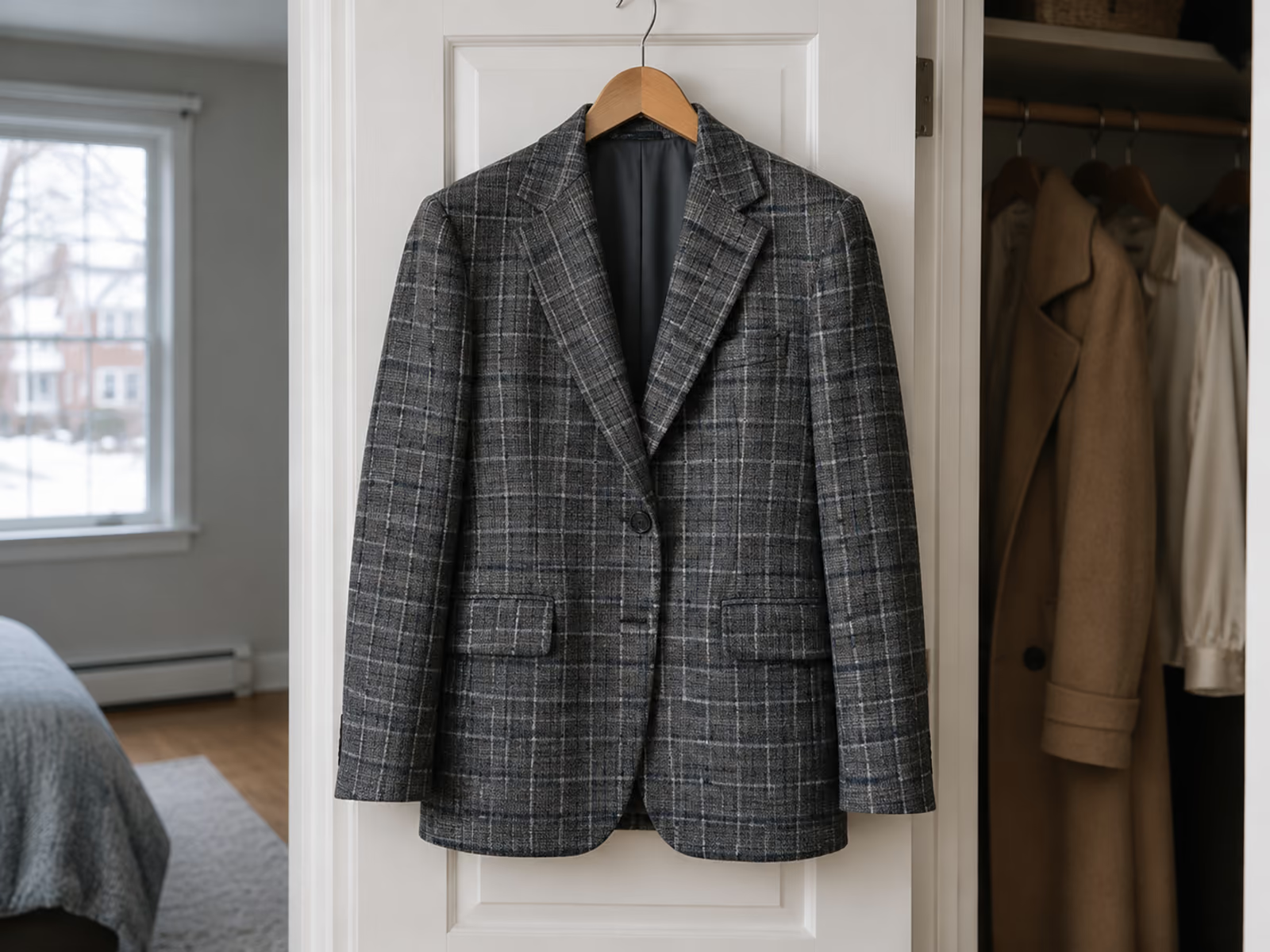
Read the guide
Keep the guide open while the Laundryless route stays clear.
Use the 9 jump links to move through this guides article without losing your place. On wider screens the dispatch rail stays beside the Ottawa laundry guide while the body keeps the original blog typography.
Guides
Quick answer
Choose dry cleaning for anything labelled dry clean only, plus tailored suits and blazers, wool coats, silk, and pieces with beading or leather trim. Most cotton and synthetic everyday clothes wash safely. Dry cleaning is priced per item at published prices.
Dry cleaning is not a luxury reserved for the wealthy or the fussy. For certain garments, it is the only cleaning method that does not damage the fabric. The confusion most people carry is not whether dry cleaning exists but whether their particular wardrobe actually needs it, and if so, how to get garments cleaned without rearranging a weekday around a trip to the cleaner.
That confusion has a cost. People machine-wash a wool blazer and watch the shoulders warp. They tumble-dry a silk blouse and find the colour has dulled permanently. They avoid cleaning a winter coat for an entire season because the effort of driving to a cleaner, parking, waiting, and returning days later to collect feels disproportionate to the task. The result is the same either way: garments deteriorate faster than they should, or they sit unworn in a closet because the cleaning step feels like too much trouble.
This guide answers the two questions that sit underneath all of that. First, which items in a typical Ottawa wardrobe genuinely require dry cleaning rather than a standard wash. Second, how dry cleaning pickup and delivery works in practice, so that the convenience barrier disappears entirely. By the end you will know exactly which garments to separate, what the process looks like from your door to the return trip, and what a typical order costs without any guesswork.
What dry cleaning actually does
The name itself is slightly misleading, because dry cleaning is not dry in the sense of using no liquid at all. The process uses a solvent, typically perchloroethylene or a newer hydrocarbon alternative, instead of water. The garment is submerged and agitated in that solvent, which dissolves oils, grease, and certain stains without causing the fibre damage that water would inflict on sensitive materials.
Water is the enemy of many natural and structured fabrics for reasons that have nothing to do with cleanliness. When wool absorbs water, the fibres swell unevenly and can felt together, which is why a machine-washed wool sweater often shrinks and stiffens into something unwearable. Silk reacts to water by losing its sheen and developing water spots that no amount of ironing will remove. Structured garments like blazers and suit jackets contain layers of interfacing, canvas, and shoulder padding that are held in shape by dry adhesives and careful pressing. Submerge those layers in water and the adhesive softens, the canvas warps, and the garment loses the silhouette it was built around.
Solvent-based cleaning avoids all of that. It penetrates the fabric, lifts soil and oil from the fibres, and evaporates cleanly without swelling, shrinking, or distorting the weave. The garment keeps its shape, its colour, and its drape because the cleaning agent was never capable of attacking those properties in the first place. This is not a gentler version of washing. It is a fundamentally different mechanism that targets different kinds of soil through a different chemistry.
After the solvent cycle, the garment goes through a finishing stage that includes steam pressing, shaping, and inspection. Pressing is not the same as home ironing. Professional pressing uses shaped forms that restore the garment to its intended silhouette, smoothing seams and lapels in a way a flat iron cannot replicate. For suits and structured dresses, this finishing step is half the value of the service, because it returns the garment to the state it was in when you first bought it rather than merely making it smell clean.
The combination of solvent cleaning and professional finishing is what makes dry cleaning appropriate for garments that represent a significant investment, whether that investment is financial or sentimental. A wool suit that cost several hundred dollars deserves a cleaning method that preserves its construction. A silk dress with hand-finished seams deserves a process that will not attack the very fibres that make it beautiful. Understanding that dry cleaning is a preservation method, not merely an alternative to washing, is the shift that helps people use it correctly rather than either overusing it on items that would be fine in a machine or underusing it on items that are quietly deteriorating.
Items that need dry cleaning
Not every garment in your closet needs dry cleaning, and thinking so is one of the most common reasons people avoid the service entirely. The real list is shorter than you might expect, but the items on it are typically the ones you care about most. These are the pieces where water-based washing would cause visible, often irreversible damage to the fabric, the construction, or both.
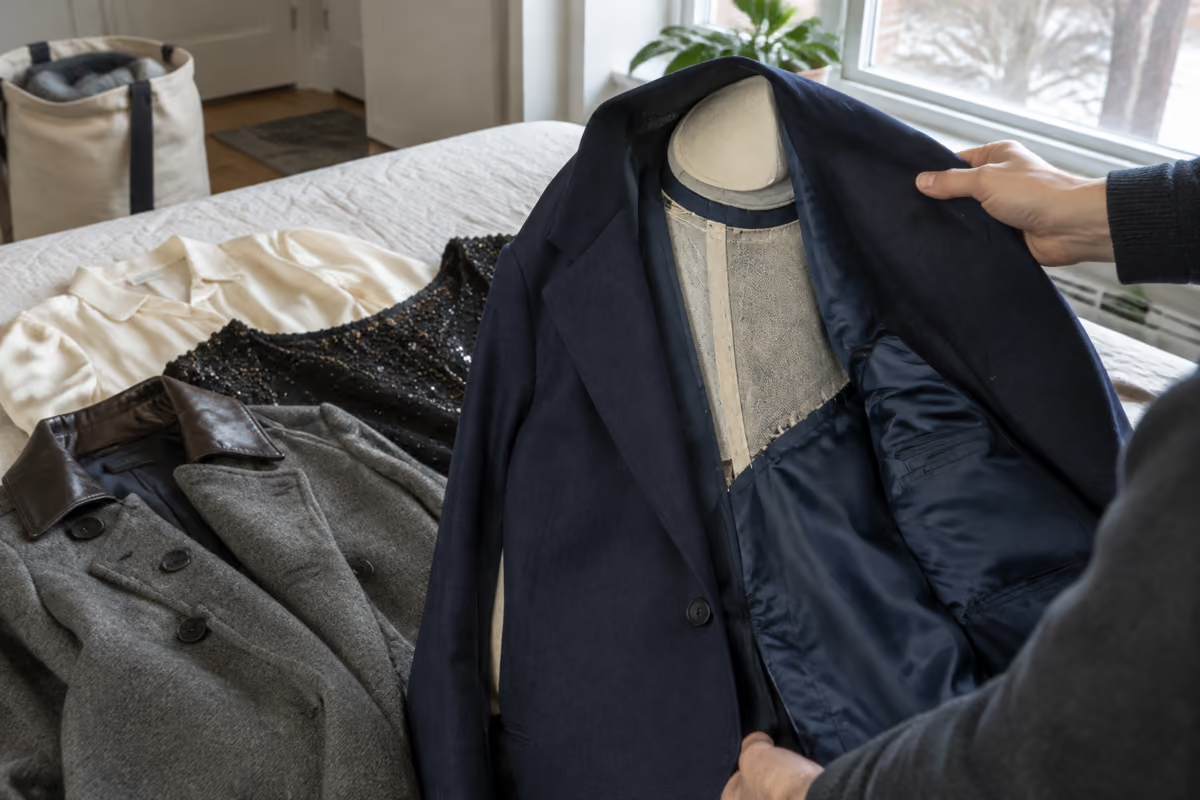
The common thread across all of these items is structure or delicacy. A garment needs dry cleaning when it contains fibres that swell or distort in water, adhesives or interfacing that dissolve when wet, embellishments that would snag or corrode in a washing machine, or construction so fine that mechanical agitation would pull seams apart. If an item ticks any of those boxes, dry cleaning is not an upgrade. It is the baseline.
Suits and blazers
Layered interfacing and canvas lose shape in water.
Wool coats
Fibres felt and shrink when exposed to water and heat.
Silk dresses
Water spots and sheen loss are permanent on silk.
Structured blazers
Shoulder padding and fused linings warp in a wash cycle.
Leather-trimmed items
Leather stiffens and cracks when soaked in water.
Beaded or sequined pieces
Embellishments catch, loosen, and corrode in machines.
Wedding dresses
Delicate fabrics and layered construction demand solvent care.
Vintage garments
Aged fibres and dyes are too fragile for water agitation.
Suits and blazers are the most common dry cleaning items in Ottawa, and for good reason. A modern suit jacket is not a single layer of fabric. It contains an outer shell, a chest canvas or fused interfacing, a lining, shoulder pads, and sometimes a half-dozen internal tapes and stays that give the jacket its drape. Water destabilizes that entire assembly. The canvas puckers, the shoulder pads absorb water and dry unevenly, and the result is a jacket that hangs differently than it did before the wash. Dry cleaning preserves the internal engineering because the solvent does not interact with the adhesives or swell the canvas.
Wool coats fall into the same category but for a different reason. Wool fibres have microscopic scales that, when exposed to water and agitation, lock together in a process called felting. Once a wool coat felts, it cannot be unfelted. The fabric becomes denser, stiffer, and smaller. Dry cleaning sidesteps felting entirely because the solvent does not trigger the scale-locking mechanism that water does. This is especially relevant in Ottawa, where a heavy wool overcoat might be the most expensive single garment a person owns and wears daily for five months of the year.
Silk dresses and blouses are water-sensitive for yet another reason. Silk fibres lose their lustre when wet, and the protein structure of the fibre can be permanently altered by water exposure, leaving the fabric feeling rougher and looking duller. Water spots on silk are not stains in the traditional sense. They are areas where the fibre structure has changed, and no amount of re-washing will return the original sheen.
Leather-trimmed garments, beaded or sequined pieces, wedding dresses, and vintage items each have their own vulnerability, but the principle is the same: the materials or construction cannot tolerate water, agitation, or both. For anyone building a wardrobe with investment pieces, understanding which items belong in the dry cleaning category is a form of garment preservation that pays for itself many times over in extended garment life.
If you own delicate clothing that sits between categories, the care label is your definitive guide, and we will cover how to read those labels later in this post.
Dry clean vs wash: the decision matrix
The question most people actually have is not "what is dry cleaning" but "does this specific item need it, or can I just throw it in the wash?" The answer depends on the fabric, the construction, and the care label, but for the majority of a typical wardrobe, the decision can be made quickly once you know the patterns.
The table below covers the most common items people wonder about. The key insight is that fabric type matters more than garment type. A cotton blazer can often be washed; a wool blazer cannot. A polyester dress can handle a machine cycle; a silk dress cannot. Construction matters too: anything with structured shoulders, fused interfacing, or multiple bonded layers should go to the dry cleaner regardless of the outer fabric.
| Item | Verdict |
|---|---|
| Cotton dress shirt | Wash on warm, hang to dry. Machine-safe. |
| Wool suit (two-piece) | Dry clean. Water damages canvas and interfacing. |
| Silk blouse | Dry clean or very gentle hand wash in cold. Machine will damage. |
| Polyester blazer (unstructured) | Wash on cold, reshape while damp. Generally safe. |
| Cashmere sweater | Dry clean. Hand wash in cold is possible but risky. |
| Linen pants | Wash on cold. Expect natural wrinkling. |
| Down jacket | Wash with care on gentle, tumble dry low with tennis balls. |
| Leather jacket | Dry clean with leather specialist. Never machine wash. |
A few patterns emerge from this table that are worth naming explicitly. Natural animal fibres (wool, cashmere, silk, leather) almost always need dry cleaning. Plant fibres (cotton, linen) are almost always machine-safe. Synthetics (polyester, nylon) are generally machine-safe unless the garment has structured construction. Blends follow the most sensitive fibre in the blend: a cotton-silk blend should be treated like silk.
The "hand wash" middle ground deserves a word of caution. Many care labels offer hand washing as an alternative to dry cleaning, and it is technically possible for items like cashmere and silk. But hand washing requires cold water, no agitation, no wringing, flat drying, and a level of attention that most people do not realistically provide on a busy weeknight. If you have the patience and technique, hand washing works. If you are honest that you will probably rush it, dry cleaning is the safer path and the one that consistently protects the garment.
For Ottawa professionals who commute in suits five days a week or keep a rotation of structured blazers for client meetings, the practical takeaway is simple: everything with structure or animal fibre goes to the dry cleaning service, and everything else goes in a regular wash and fold order. The two are separate bookings, but you can pick the same pickup window for both and keep the garments apart from the laundry bag.
How dry cleaning pickup works in Ottawa
The traditional dry cleaning experience involves two trips: one to drop garments off, and another to collect them days later. Both trips happen during business hours, which means carving time out of a workday or rushing to a storefront on Saturday morning before it closes at noon. For anyone whose schedule is already full, those two trips are the reason garments accumulate on a hook rather than getting cleaned when they need it.
Dry cleaning pickup removes both trips entirely. The process runs on the same infrastructure as a regular laundry pickup and delivery order, which means you are not learning a second system or managing a separate account. The garments leave your door and return to your door, cleaned and pressed, without you driving anywhere or adjusting your schedule around someone else's hours.
Add dry cleaning items to your booking
During a regular booking, select the garments that need dry cleaning by type: suits, dresses, coats, blouses, or other items. The per-item pricing is visible before you confirm.
Note any specific concerns
If a garment has a stain you want flagged, a loose button, or a care preference, add it in the booking notes. Specific notes mean specific attention at the cleaning stage.
Leave garments for pickup
Hang items on a door hook, place them in a garment bag, or set them in your agreed pickup spot. If you also send wash and fold, book it as its own order in the same pickup window and keep the two bags apart.
Items are cleaned and pressed
Garments are solvent-cleaned, inspected, steam-pressed on shaped forms, and returned on hangers or folded per your preference. Standard turnaround is 48 hours, or 24 hours with rush.
Delivery back to your door
Finished garments are returned in the next delivery window, pressed and ready to wear or hang directly in your closet.
The simplicity of this process is the point. You are not coordinating with a storefront's hours, not finding parking on a busy street, not remembering to return during a narrow pickup window days later. The garments go out when your regular laundry goes out, and they come back ready to wear. For people who have been putting off dry cleaning because the logistics feel like too much effort, the pickup model removes the effort entirely and leaves only the decision of which items to include.
One detail worth emphasizing: you do not need to wait for a dedicated dry cleaning day. Dry cleaning books as its own order, and you can pick the same pickup window as your regular wash and fold order. Keep your dry cleaning items on a hanger or in their own bag, apart from the laundry bag, so each order is easy to tell apart at the door. If a dry-clean-only piece does end up in the wash and fold bag, we set it aside, tell you the dry cleaning price, and clean it only if you say yes. This matters because it means dry cleaning stops being a separate errand with its own logistics and becomes part of an existing routine you already have.
Dry cleaning runs on the same 48-hour standard turnaround as wash and fold, with a 24-hour rush option for time-sensitive items. Solvent cleaning, drying, pressing on shaped forms, and inspection all fit inside that window because each garment is handled on its own schedule rather than waiting for a full load. For most people the timeline is invisible, because the garments they send for dry cleaning are rarely needed back the same day. A suit picked up on Monday is back by Wednesday, or by Tuesday with rush, ready for the rest of the week. When a specific event is close, book the rush option and the timing takes care of itself.
For readers who want more detail on how to prepare garments before a pickup, particularly around checking pockets, noting stains, and deciding what to flag versus what to trust the sorters to catch, we wrote a companion piece on preparing items for professional cleaning that covers the preparation step in depth.
Reading care labels correctly
Care labels are the manufacturer's cleaning instructions, sewn into the garment at the seam or neckline. They use a set of standardized symbols that look cryptic until you know the system, at which point they become a quick two-second check before anything goes into a wash bag or a dry cleaning pile. Learning the handful of symbols relevant to dry cleaning saves garments from damage and saves you from guessing.
The dry cleaning symbol is a circle. A plain circle means the garment can be dry cleaned with any solvent. A circle with a letter inside (P, F, or W) specifies which solvent type the cleaner should use. A circle with a single horizontal line beneath it means gentle dry cleaning with reduced agitation. A circle with an X through it means do not dry clean at all, meaning the garment must be washed with water or spot-cleaned only.
The wash symbol, a small tub of water, tells you whether the alternative to dry cleaning is safe. A tub with a number inside (30, 40, 60) indicates the maximum water temperature in Celsius. A tub with a hand reaching into it means hand wash only. A tub with an X through it means do not wash with water at all, which almost always means dry cleaning is the required method.
When the label is unclear or missing
Older garments, vintage pieces, and items bought abroad sometimes have faded or non-standard labels. When you cannot read the symbols clearly, or when a garment has no label at all, the safest path is to photograph the item and include the photo in your booking notes. The cleaning team can assess the fabric visually and route it to the appropriate process rather than guessing. This is especially important for sentimental pieces where a wrong choice is irreversible.
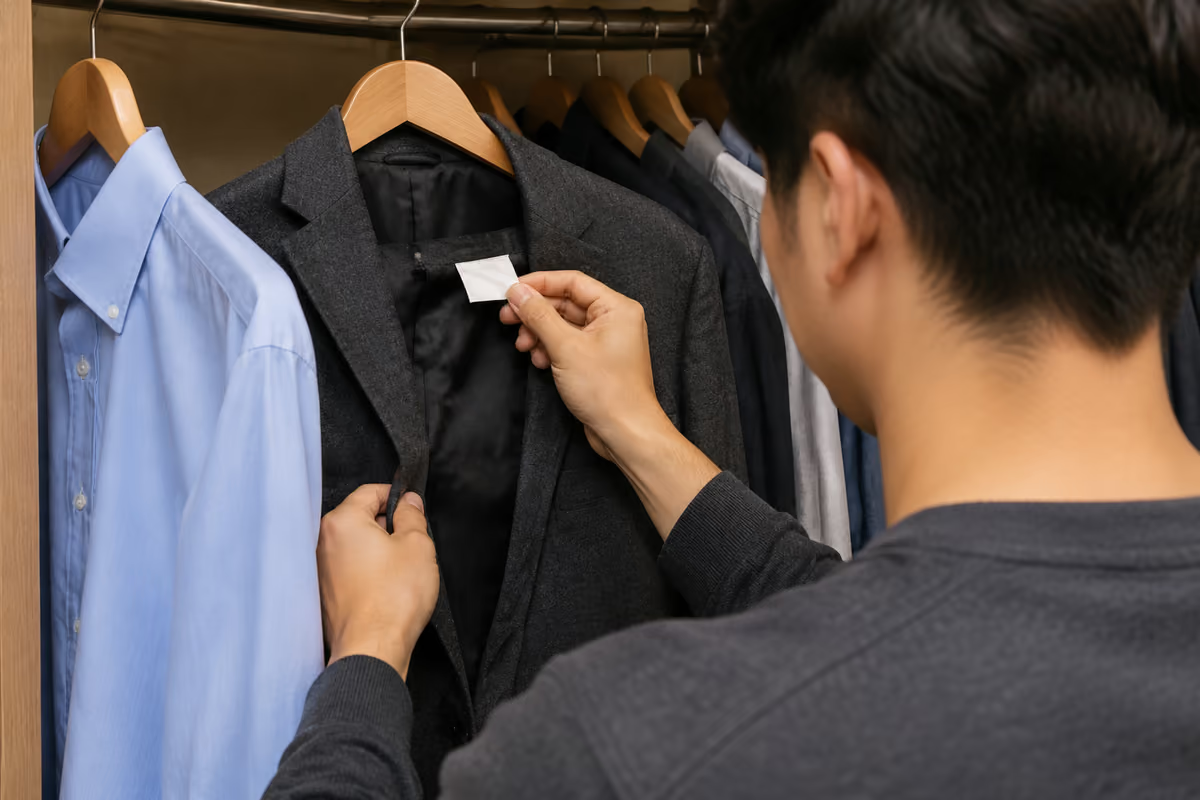
A few common label scenarios and what they mean in practice. A wool suit will almost always show a circle (dry clean) and a tub with an X (do not wash). Follow both: dry clean it, do not put it in water. A cotton dress shirt will typically show a tub with 40 (machine wash at 40 degrees) and no circle, meaning dry cleaning is unnecessary. A silk blouse often shows both a circle and a tub with a hand, meaning you can either dry clean it or hand wash it gently, and either method is safe. A polyester blazer frequently shows a tub with 30 and a circle with an X, meaning wash it on cold and do not dry clean it, because the solvent could damage the synthetic finish.
The triangle symbol refers to bleaching and the square symbol refers to drying, both of which matter for wash items but not for dry cleaning. The iron symbol (a small iron shape with dots inside) indicates pressing temperature. These are worth knowing but not central to the dry-clean-or-wash decision, so we will not cover them in depth here.
The practical takeaway is small: before putting any garment into your laundry bag or your dry cleaning pile, flip to the care label and look for a circle or a crossed-out tub. Either of those tells you the item belongs in the dry cleaning stream. If you see a tub with a temperature and no circle, the item is safe to wash normally. Once you have checked labels a few times, the pattern becomes automatic and you stop thinking about it altogether.
For items that fall into the "could go either way" category, like a cashmere sweater with both a circle and a hand-wash tub, the decision comes down to your confidence level and the garment's value. If it is an everyday piece you are comfortable hand-washing carefully, the water route is fine. If it is expensive or sentimental and you would rather not risk an error, dry cleaning is the safer choice. There is no penalty for choosing the more cautious route, and for high-value garments the small per-item fee is trivial compared to the replacement cost.
The relationship between care labels and the laundry pickup and delivery workflow is straightforward: when you book a pickup that includes both regular laundry and dry cleaning items, the sorting step at our facility checks every label before processing. Items marked dry-clean-only are routed to solvent cleaning regardless of where you placed them in the bag. This safety net means that even if you miss a label, the garment still gets the correct treatment. It is not a reason to skip checking labels yourself, because your notes help us prioritize and flag special concerns, but it does mean that a single oversight is caught rather than becoming a disaster.
Typical dry cleaning costs in Ottawa
Dry cleaning is priced per item rather than per pound, because different garments require different handling times, different solvent volumes, and different finishing work. A shirt that needs light pressing is a different job from a structured overcoat that requires careful steaming and reshaping. Per-item pricing reflects that reality honestly rather than averaging everything into a single rate that overcharges simple items and undercharges complex ones.
The table below shows the published per-item rates for the most common dry cleaning categories. These are starting prices for standard items in good condition. Heavily soiled garments, items requiring specialized stain treatment, or pieces with unusual construction (heavy beading, leather panels, extensive pleating) may carry an additional charge, which is communicated before cleaning begins rather than added as a surprise on the invoice.
Dry cleaning per-item rates
- Shirt or blouse
- $5.00 CAD
- Pants or skirt
- $7.00 CAD
- Dress
- $14.00 CAD
- Jacket or blazer
- $12.00 CAD
- Two-piece suit
- $20.00 CAD
- Coat or overcoatIncludes heavy winter coats
- $25.00 CAD
- Tie
- $4.00 CAD
Prices are per item. Pickup and delivery included at no extra charge.
For context, a typical professional who dry cleans two suits and three dress shirts monthly is looking at a predictable recurring cost that is easy to budget. The per-item model means you pay only for what you send, above a $20.00 CAD minimum order. If you also use wash and fold, book it as a separate order and pick the same pickup window, so both are on the same day.
The cost of dry cleaning is best understood in relation to the cost of replacing the garment it protects. A wool suit that retails for several hundred dollars will last years longer when dry cleaned on a sensible schedule rather than neglected or machine-washed. A silk evening dress that cost a meaningful amount deserves a cleaning method that will not destroy the very qualities you paid for. Viewed through that lens, the per-item fee is not a cost of cleaning but a cost of preservation, and it is a small fraction of the replacement value it protects.
Ottawa pricing for dry cleaning tends to sit in the mid-range for Canadian cities. The rates above are competitive with storefront dry cleaners in Centretown, the Glebe, and Westboro, with the added value that you never need to make the drive, find parking, or remember to pick up. The pickup and return are included in the per-item price, not charged as a delivery premium, which makes the effective cost lower than it appears when compared to the time and fuel a storefront visit would require.
One point worth making explicit: there is no minimum item count for dry cleaning, only a $20.00 CAD minimum order. A coat or a suit clears it on its own, and lighter pieces like shirts and ties add up after a few. The flexibility matters because it means you do not need to accumulate a pile before acting on a cleaning need. If a coat picks up a stain on Monday, you can have it collected Tuesday rather than waiting until you have enough items to justify the effort.
Common dry cleaning questions
People considering dry cleaning pickup for the first time tend to ask the same cluster of questions, and the answers are straightforward once you hear them plainly. The questions below come from actual conversations with Ottawa customers who were weighing whether to try the service or continue making the drive to a storefront cleaner.
The most common hesitation is not about price or quality but about trust. Handing over a garment that cost several hundred dollars to a process you cannot see requires a level of confidence that only builds through transparency. The answers below are written to provide that transparency rather than to sell the service, because an informed customer makes a better decision than a persuaded one.
Is dry cleaning safe for all fabrics?
No. Dry cleaning is safe for most natural and structured fabrics including wool, silk, cashmere, and lined garments. However, some materials react poorly to solvent, particularly certain synthetic coatings, rubberized fabrics, and some types of faux leather. The care label is the definitive guide. If a label says "do not dry clean," we follow that instruction. If a garment has no label, we assess the fabric before proceeding and will contact you if there is any uncertainty.
How often should I dry clean a suit?
For a suit worn once or twice a week in an office setting, every three to four wears is a reasonable rhythm. Over-cleaning shortens fabric life unnecessarily, while under-cleaning allows body oils to break down fibres over time. If you rotate between two or three suits, each one needs cleaning less often because it gets time to air between wears. Spot cleaning between dry cleaning visits extends the interval further.
Can you remove old stains that have already set?
Many set stains respond to professional solvent treatment that a home wash cannot replicate. Success depends on the stain type, the fabric, and how long the stain has been there. Oil-based stains respond well even after weeks. Tannin stains like wine or coffee are more difficult once they have oxidized. We assess each stain before cleaning and will let you know if a particular mark is unlikely to lift completely, so you can make an informed decision.
What about the chemical smell some dry cleaning has?
That smell comes from residual solvent that was not fully removed during the drying and aeration stage. Properly finished dry cleaning should not carry a noticeable chemical odour. If a garment arrives with any residual scent, it fades within hours of hanging in open air. Modern solvents and thorough finishing cycles have made this largely a non-issue compared to the dry cleaning of twenty years ago.
Do you press and hang everything?
Yes. Every dry-cleaned garment goes through a finishing stage that includes steam pressing on shaped forms and hanging on appropriate hangers. Suits are returned on broad-shouldered hangers that maintain the jacket shape. Dresses and blouses are hung on padded hangers to prevent shoulder marks. Pants are creased and hung or folded depending on your preference, which you can specify in your order notes.
Can I combine dry cleaning with a regular wash pickup?
Yes, as two orders. Each booking covers one service, so book dry cleaning and wash and fold separately and pick the same pickup window for both. Keep dry-clean garments apart from the laundry bag. If a dry-clean-only piece ends up in the wash and fold bag, we set it aside and ask before we clean it or charge for it.
What if I disagree with the price for a specific item?
Per-item prices are published and visible before you book, so there should be no surprise. If a garment requires additional work beyond the standard rate due to heavy staining, unusual construction, or specialty fabric, we communicate that before cleaning begins rather than adding charges after the fact. You can approve or decline the additional work before we proceed.
The theme running through those answers is that dry cleaning pickup works best when communication is clear in both directions. You tell us what you need through order notes and care label photos. We tell you what we find during assessment and what the work will involve. That loop is what makes the process feel safe rather than opaque, and it is the reason most people who try a single pickup continue with the service rather than reverting to the storefront drive.
Keywords Ottawa residents search for
When Ottawa residents look for dry cleaning options online, the searches tend to cluster around a few practical themes: finding a service nearby, understanding what items qualify, and learning whether pickup is available so they can skip the drive. The phrases below reflect those real search patterns, and each one connects to a part of this guide or a related service page where the answer lives.
dry cleaning pickup Ottawa
Door-to-door service across covered postal codes.
suit dry cleaning Ottawa
Two-piece suits cleaned and pressed on shaped forms.
dry cleaning pickup delivery
Same pickup loop as wash and fold.
when to dry clean clothes
Fabric and label determine the right method.
dry cleaning near me pickup
No trip required when pickup comes to your door.
dry cleaning cost Ottawa
Published per-item prices, no hidden fees.
wool coat dry cleaning
Solvent protects structure that water would warp.
dry cleaning service Ottawa
Book a window and the garment leaves your door.
silk dry cleaning
Preserves sheen and colour that water would dull.
dry clean vs wash
The decision depends on fabric, not formality.
dress dry cleaning pickup
Dresses returned pressed and ready to wear.
dry cleaning pickup delivery Ottawa
Collected and returned within the same week.
When dry cleaning pickup makes sense
The decision to use a dry cleaning pickup service comes down to a simple calculation: how much is the trip worth to you, and how many garments are quietly waiting because the trip has not happened. Most people who own suits, wool coats, or silk pieces already know those items need dry cleaning. The barrier is not knowledge. It is logistics. Finding a cleaner with decent hours, driving there, parking, waiting for the garment to be ready days later, driving back, parking again. For a single shirt that sequence might take an hour of real time spread across two separate trips. For a household with multiple garments accumulating over a season, the logistics compound until the whole category simply gets deferred.
Pickup removes that entire sequence. The garments leave your door on a scheduled morning and return within the same week, cleaned and pressed, without a single trip on your part. The convenience is not a luxury surcharge layered on top of the cleaning. It is the standard delivery model, included in the per-item price you already see published. There is no extra fee for the pickup itself, no delivery charge tacked on at checkout, and no membership required to access the door-to-door loop.
The people who benefit most from dry cleaning pickup tend to share a few characteristics. They own garments that genuinely require solvent cleaning, whether that is a professional wardrobe of suits and blazers, a collection of wool outerwear for Ottawa winters, or a closet that includes silk, cashmere, or structured dresses. They have limited free time during business hours, which is when most storefront cleaners operate. And they have noticed that the friction of the trip has caused them to defer cleaning longer than they should, which means garments are wearing out faster or staying in the closet unworn.
If that description fits your situation, the practical next step is straightforward. Check your postal code falls within the service area, review the per-item prices on the dry cleaning service page, and book a pickup window that suits your week. The first order is the only one that ever feels unfamiliar. After that, the rhythm of bagging garments and leaving them for collection becomes as routine as putting out recycling.
For items that do not need dry cleaning but still need professional washing, book a wash and fold order alongside it. Each booking covers one service, so the two are separate orders, but you can pick the same day and pickup window for both through laundry pickup and delivery. Keep the dry cleaning apart from the laundry bag so each order is easy to hand over.
Ready To Book
Hand off the laundry in under two minutes.

Reader handoffCopy, email, print, or return to the archive.
Share or save
Send this Ottawa laundry guide to someone who needs it.
Share the ottawa laundry guide with a roommate, property contact, or teammate before pickup notes get messy. The controls stay local to this page: no tracking widgets, no third-party script, just practical laundry tips Ottawa readers can pass along.
Services that pair with this guide
Services that pair with this guide.
Use the related services below when these laundry tips Ottawa readers need to turn a guides note into a pickup, a wash and fold order, or a question about specialty handling.


Related laundry searches.
Ottawa laundry guides continue from a real service page. Every search below lands on a live route.

Done reading?
Use the guide, then hand off the laundry.
This guide should leave you with a clearer next step. Book a pickup when the load fits standard laundry, or contact us when care labels, volume, bedding, or business needs deserve review first.