How to Handle Delicate Everyday Clothing in the Laundry
Practical care for delicate everyday clothing: silk, wool, lace, and embellished pieces, plus when a service or dry cleaner makes more sense than home wash.
- Duong Quan Nguyen
- Updated May 12, 2026
- 20 min read
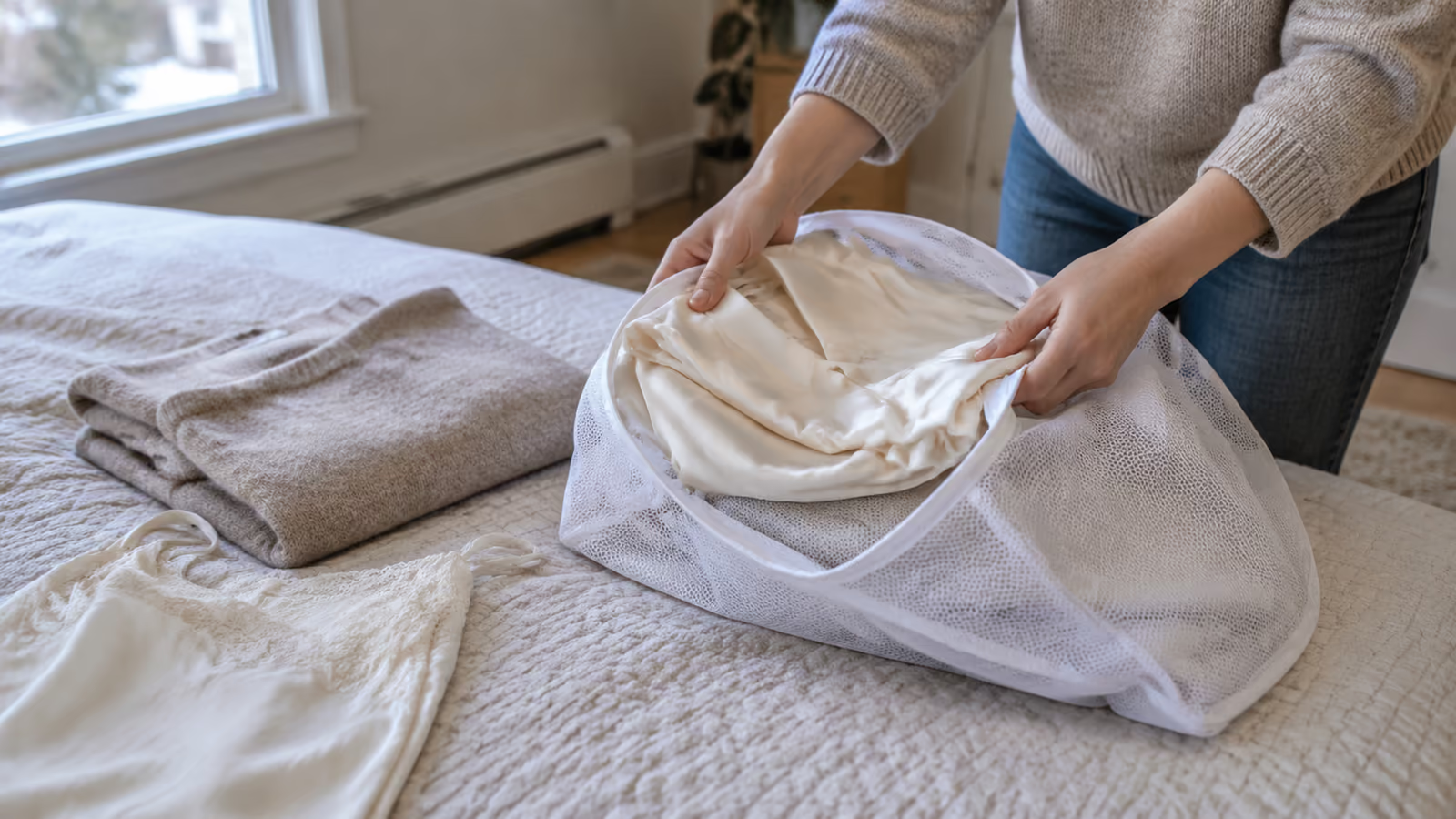
Read the guide
Keep the guide open while the Laundryless route stays clear.
Use the 5 jump links to move through this tips article without losing your place. On wider screens the dispatch rail stays beside the Ottawa laundry guide while the body keeps the original blog typography.
Tips
Quick answer
Wash everyday delicates like silk, wool, and lace in cold water on the gentlest cycle, inside a mesh bag, with about half the usual detergent. Never wring them; press the water out with a towel and dry them flat. Send dry-clean-only or beaded pieces to a dry cleaner.
The clothes you love most are usually the ones the washer hates. That silk blouse you reach for on Mondays, the cashmere pullover that gets you through Ottawa winters, the lace-trimmed camisole you wore to every dinner last year: these are the pieces that earn the most wear and demand the most care. Delicate clothing care is not about treating your wardrobe like a museum collection. It is about keeping the things you actually wear looking the way they did when you first pulled them from the rack.
What counts as delicate clothing
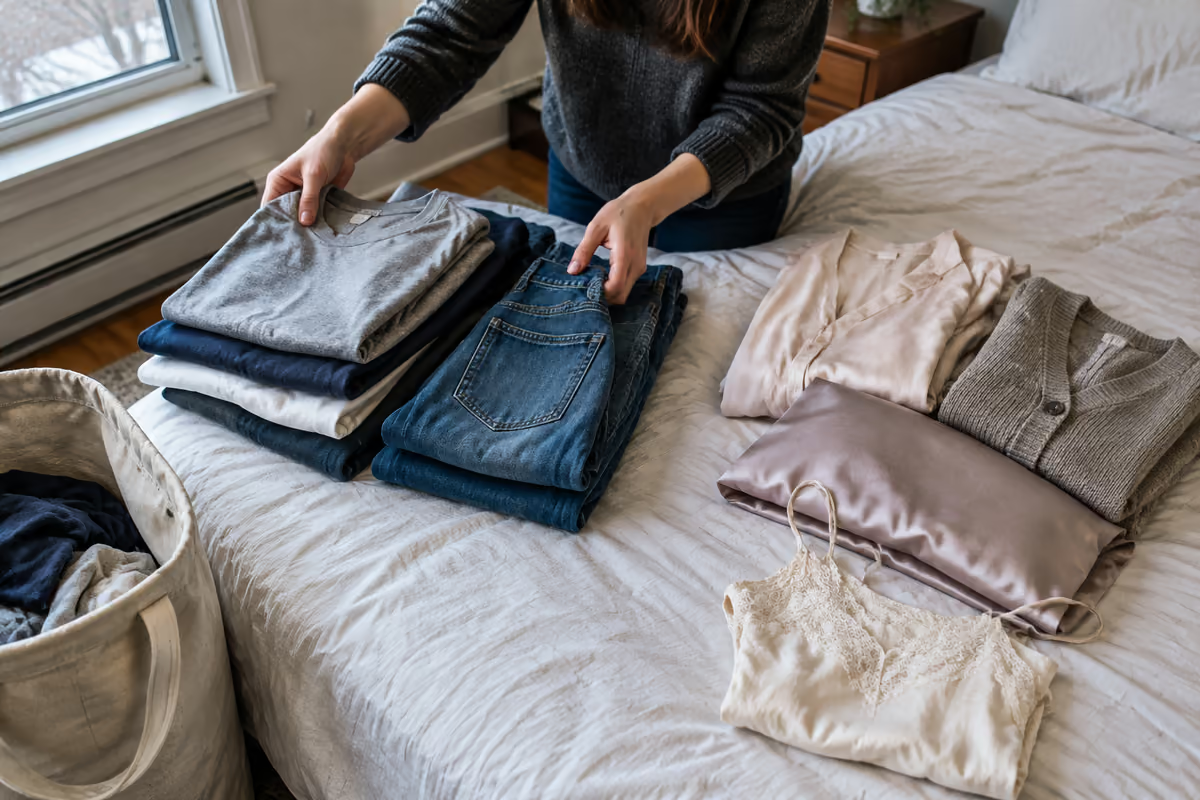
Most people think of delicates as a care label instruction, that little tag that reads "hand wash only" or shows the single-bar symbol beneath a basin. But delicate clothing is broader than a label. It includes any garment whose fabric, construction, or embellishment makes it vulnerable to the three forces a washing machine applies: agitation, heat, and chemical strength. A blouse with no care tag at all can still be delicate if its weave is loose enough to snag or its dye is unstable enough to bleed at warm temperatures.
The reframe matters because plenty of Ottawa wardrobes contain delicates their owners have never identified. A rayon shell that looks like a simple tee is delicate. A wool-blend cardigan from a fast-fashion brand is delicate. A satin pillowcase you toss in with the bedding is delicate. These are not couture pieces locked behind glass. They are everyday items that happen to need gentler treatment than the cotton and polyester that surrounds them in the drum. Once you start seeing delicates as a property of the fabric rather than a price tier, the category grows quickly, and so does the number of garments in your closet that deserve a second thought before you drop them into a standard load.
The practical test is simple. If the garment would look visibly worse after a normal hot cycle with regular detergent, it qualifies. That might mean pilling on a merino sweater, shrinkage on a viscose dress, snagging on a lace panel, or bead loss on an embellished top. The damage does not have to be catastrophic to count. A slight loss of drape on a silk shell, a faint fuzz on cashmere, a tiny pull in a knit: these are the early signs that a garment is being washed harder than it can tolerate, and once they accumulate past a threshold the piece stops looking like itself. Catching that early, by recognizing the garment as delicate before the first wash rather than after the tenth, is the whole point of this section.
There is a cost dimension here too, though it is not the one people expect. Delicate care is not reserved for expensive clothing. A high-street rayon blouse and a designer silk shirt both need gentle handling, and the rayon piece is arguably harder to replace because the same cut may never come back in stock. The investment you are protecting is not always measured in dollars. Sometimes it is measured in fit, in the particular way a garment falls on your frame after you have broken it in, or in the simple fact that you reach for it three times a week and nothing else in the closet fills the same slot. That frequency of wear is what makes the care worthwhile, and it is why delicate clothing care belongs in a daily routine rather than a special-occasion ritual.
Seasonality adds another layer to the identification problem, especially in Ottawa where the wardrobe rotates dramatically between winter and summer. A merino base layer that lives in your drawer from April through October can easily be forgotten as a delicate when you pull it out in November and toss it into the first cold-weather load without thinking. Similarly, a silk-lined summer blazer that spent the winter on a hanger re-enters rotation feeling unfamiliar, and familiarity is what usually triggers the gentle-handling instinct. The solution is to treat the seasonal swap itself as a sorting checkpoint: every garment that comes out of storage gets a quick fabric check before it rejoins the active rotation, which takes thirty seconds per piece and prevents the kind of accidental rough washing that happens when muscle memory overrides fabric awareness.
If you are unsure whether a garment counts, the safest assumption is that it does. Washing something gently when it did not strictly need it costs you nothing beyond a slightly longer cycle. Washing something roughly when it needed gentle handling costs you the garment. That asymmetry should guide every sorting decision, and it is the reason professional dry cleaning exists as a backstop for the pieces where even a gentle home cycle feels like a gamble.
Eight fabric types that need gentle handling
Not all delicates are delicate for the same reason. Some are vulnerable to heat, some to agitation, some to both. Understanding the specific weakness of each fabric type lets you choose the right approach rather than applying a single blanket rule to everything that feels soft.
Silk
Weakened by heat and alkaline detergent. Loses lustre when agitated wet.
Wool
Felts and shrinks in hot water. Fibres lock permanently when agitated.
Cashmere
Finer than standard wool. Pills rapidly with friction. Loses shape when hung wet.
Lace
Open weave snags on zippers and hooks. Tears under mechanical stress.
Rayon and viscose
Weakens dramatically when wet. Shrinks and warps with heat or wringing.
Satin
Surface snags easily. Watermarks if dried unevenly. Sensitive to high heat.
Embellished knits
Beads, sequins, and appliques detach under drum agitation.
Lingerie and structured bras
Underwires bend, elastic degrades, and cups lose shape in a standard cycle.
Each of these fabrics shows up in everyday Ottawa wardrobes far more often than people think. Silk is not just evening blouses; it appears in lightweight scarves, pillowcases, and hair accessories. Wool is not just winter coats; it lines summer-weight blazers and shows up in dress socks. Lace is not just formal wear; it trims camisoles, bralettes, and even casual tees. The key is recognizing the fabric rather than the garment category, because the care requirement follows the fibre, not the occasion you bought it for. The same logic extends to household textiles that contain delicate fibres: a silk-filled duvet or a wool-blend throw needs the same respect as a garment made from identical materials, and oversized pieces like down comforters with delicate shell fabrics often benefit from professional comforter cleaning rather than a home machine that cannot accommodate their bulk without compressing the fill unevenly.
Silk deserves particular attention because its vulnerabilities are counterintuitive. It looks strong when dry, drapes confidently, and resists wrinkling better than most natural fibres. But wet silk loses roughly thirty percent of its tensile strength, which means the agitation that merely tumbles a cotton tee can actually tear a silk blouse at the seams. The alkaline pH of standard laundry detergent strips the sericin coating that gives silk its characteristic sheen, leaving it dull and slightly rough to the touch after repeated washes. These are not dramatic one-wash failures. They are cumulative losses that reveal themselves over months, which makes them easy to ignore until the garment is past saving.
Wool and cashmere share a felting risk that is unique among common fibres. The surface of a wool fibre is covered in microscopic scales, and when heat and agitation combine, those scales interlock permanently, a process called felting. Once wool has felted it cannot be reversed. The garment is smaller, thicker, and stiffer for good. Cashmere is simply a finer grade of the same family, which means it felts faster and pills more visibly because the individual fibres are thinner and more easily displaced. The practical takeaway is that any wool or cashmere piece should never see hot water and should never be wrung or twisted while wet, because both actions accelerate the scale interlocking that leads to irreversible shrinkage.
Rayon and viscose catch people off guard because they feel like cotton on the hanger. They drape well, breathe well, and take dye beautifully, which is why fast-fashion brands use them so heavily for warm-weather pieces. But rayon is a regenerated cellulose fibre that swells dramatically when wet, losing structural integrity in the process. A rayon dress that fits perfectly dry can emerge from a warm wash cycle half a size smaller and visibly warped at the seams. Viscose behaves almost identically. Both require cold water, minimal agitation, and flat drying to maintain their original dimensions.
Embellished knits and structured bras are delicate for a mechanical reason rather than a chemical one. The base fabric might be perfectly sturdy, but the attachments, beads glued or sewn to the surface, underwires threaded through channels, moulded cups held by thin stitching, cannot survive drum tumbling. A single cycle can pop beads loose, bend an underwire through its casing, or crush a bra cup into a shape it will never recover from. These items need either a mesh bag and a gentle cycle, or hand washing, and in many cases the mesh-bag-and-gentle-cycle route is entirely sufficient for keeping them intact wash after wash.
Beyond individual garments, larger household textiles can carry the same delicate vulnerabilities at a bigger scale. A down-filled duvet cover with a sateen weave, a silk-blend throw blanket, or a wool-filled comforter all demand the same respect for fibre fragility that a single cashmere sweater does, yet people routinely subject them to hot washes because they categorize them as bedding rather than as delicates. The difference is that when a king-sized comforter felts or loses loft from aggressive agitation, the replacement cost dwarfs anything in your clothing closet. For oversized pieces that cannot safely fit in a home machine without cramming, a dedicated comforter cleaning service handles the size constraint and temperature control together, which is often the only practical route for preserving both the fill integrity and the outer fabric.
Tools that make home washing safer
You do not need a specialized laundry room to handle delicates properly at home. A few inexpensive tools close most of the gap between a bare-bones wash and the kind of careful handling a professional service provides. The investment is small and the payback is immediate: fewer ruined garments, less anxiety on laundry day, and a routine that protects your clothes without requiring you to hand wash every single piece in the bathroom sink.
The mesh laundry bag is the single most effective tool for protecting delicates in a machine. It acts as a buffer between your garment and everything else in the drum, preventing zippers, hooks, and rough fabrics from snagging delicate weaves during the cycle. A medium-sized bag with a fine mesh works for most blouses, camisoles, and bras. Larger bags suit sweaters and dresses. The rule is one garment per bag when the item is genuinely fragile, and two or three per bag when the pieces are similar in weight and texture. Overstuffing a mesh bag defeats its purpose because the items inside still rub against each other under agitation.
A flat drying rack is the second essential. Heat is only half the damage equation for delicates; gravity is the other half. Hanging a wet wool sweater stretches the shoulders and distorts the body, sometimes permanently. Laying it flat on a mesh rack lets air circulate from both sides while the garment holds its shape under its own weight rather than pulling downward from two hanger points. The mesh surface also speeds drying compared to a solid countertop because moisture escapes from the underside. For Ottawa apartments without outdoor drying space, a foldable rack that fits in a bathtub or spare room works well through every season.
Gentle detergent matters more than most people credit. Standard laundry detergent is formulated for cotton and synthetics at moderate temperatures, which means it contains surfactants and enzymes strong enough to strip natural protein fibres like silk and wool of their protective coatings. A detergent labelled for delicates or wool typically uses milder surfactants, a neutral or slightly acidic pH, and no optical brighteners or bleach agents. The difference is not marketing. It is a genuine chemical distinction that preserves the hand feel, drape, and sheen of sensitive fabrics over dozens of washes rather than degrading them incrementally.
A sweater stone or fabric comb rounds out the toolkit for wool and cashmere owners. Pilling is inevitable on any protein fibre that experiences friction, even with gentle washing. The question is not whether pills will form but how you remove them without damaging the surface. A sweater stone, which is a lightweight pumice block, lifts pills away by catching them on its porous surface without pulling at the underlying yarn. A fabric comb does the same job with fine teeth. Both cost under ten dollars and extend the presentable life of a knit by years when used after every few washes. The key is to work gently in one direction rather than scrubbing back and forth, which can thin the fabric.
One tool that people overlook is a garment steamer, which solves the wrinkle problem for fabrics that cannot tolerate a hot iron. Silk, satin, and many synthetics smooth out beautifully under steam without any contact pressure. A handheld steamer takes up minimal storage space and replaces ironing for the majority of delicate garments. For Ottawa professionals who wear silk blouses to work regularly, a steamer eliminates the choice between wearing a wrinkled piece and risking scorch marks with an iron. The steam also freshens fibres between washes, which means you can extend the interval between laundry sessions for pieces that are not visibly soiled, reducing total wear on the fabric from repeated washing.
Together these five tools, mesh bags, a flat drying rack, gentle detergent, a sweater stone, and a handheld steamer, cost less than replacing a single ruined cashmere sweater. They turn a standard laundry setup into one that can handle the full spectrum of everyday delicates safely. The tools work together rather than independently: a mesh bag protects in the drum, gentle detergent protects the fibre chemistry, flat drying protects the shape, the sweater stone maintains the surface, and the steamer keeps pieces presentable between washes. Once you have all five in place, most delicates can move through a regular cold cycle without any special scheduling or extra handling steps, which is the practical goal: making delicate care easy enough that you actually do it consistently rather than treating it as an occasional exception to your normal routine. For readers whose closets contain more delicates than patience for shrinkage prevention rituals at home, outsourcing becomes the simpler path.
Your delicate-care starter toolkit
- Mesh laundry bag: buffers your garment from zippers, hooks, and rough fabrics in the drum. One fragile piece per bag.
- Flat drying rack: lets a wet sweater hold its shape under its own weight instead of stretching from two hanger points.
- Gentle detergent: milder surfactants and a neutral pH that preserve the coatings on silk and wool over dozens of washes.
- Sweater stone or fabric comb: lifts pills off wool and cashmere without pulling at the underlying yarn.
- Handheld garment steamer: smooths silk, satin, and synthetics without the scorch risk of a hot iron.
A five-step gentle home-wash flow
With the right tools in hand, the actual washing process for delicates follows a predictable sequence. This is not a special-occasion protocol. It is a repeatable flow you can run every week alongside your regular laundry without adding significant time or complexity. The key insight is that gentle washing is mostly about what you avoid rather than what you add. Fewer chemicals, less heat, less mechanical force, less wringing: remove those four aggressors and the wash itself becomes almost passive.
Read the care label twice
Check for temperature limits, cycle restrictions, and drying instructions before the garment goes anywhere near water. If the label says dry clean only and you are uncertain, trust it. If it says hand wash or delicate cycle, you have a choice.
Enclose the garment in a mesh bag
Place each delicate piece in its own mesh bag, or group two similar items together. Close the bag fully so nothing can slip out during the cycle. This single step prevents most snag and stretch damage.
Set cold water, delicate cycle, minimal detergent
Select the lowest agitation setting your machine offers. Use cold water exclusively. Measure half the normal detergent dose, or use a dedicated delicates detergent. More soap does not mean cleaner; it means residue trapped in fine fibres.
Never wring; press water out flat
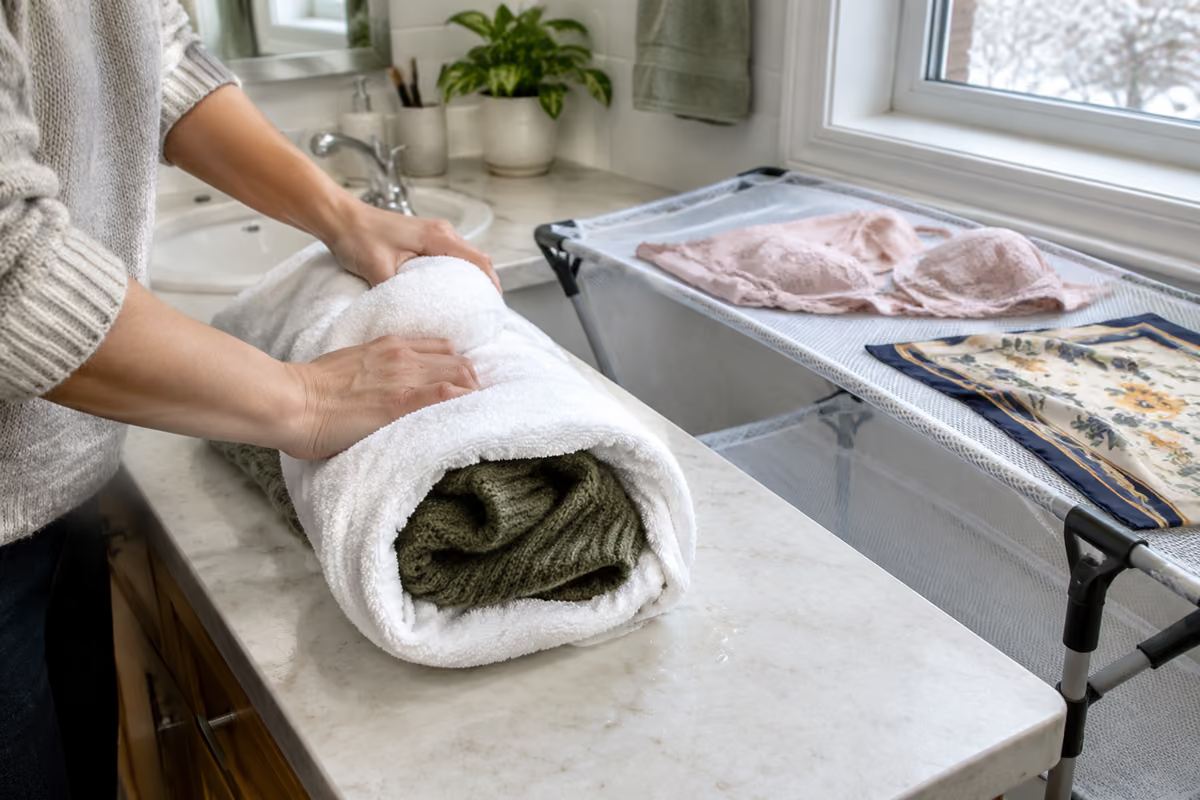
When the cycle finishes, remove the mesh bag and lay the garment on a clean towel. Roll the towel gently to press out excess water. Never twist or wring, especially wool or cashmere, because the twisting motion is what triggers felting and permanent distortion.
Lay flat to dry on a rack or towel
Reshape the garment to its original dimensions and lay it flat on a drying rack or a fresh dry towel. Avoid hanging anything that stretches under its own wet weight. Air circulation matters more than heat; a fan or open window speeds drying without risk.
The sequence above works for the large majority of everyday delicates: silk blouses, wool sweaters, cashmere scarves, rayon shells, lace camisoles, and satin pieces. It does not work for heavily structured garments like tailored blazers, beaded evening wear, or leather-trimmed coats, which belong in a different category that we will address later in this guide.
The cold water step deserves emphasis because it does most of the protective work on its own. Cold water prevents shrinkage in wool and rayon, prevents dye bleeding in silk and satin, and prevents the heat-activated felting that ruins cashmere irreversibly. If you change nothing else about how you wash your delicates, switching from warm to cold is the single highest-value adjustment. The cold wash defaults that apply to standard laundry service loads exist for exactly this reason: cold protects more fabrics more reliably than warm, and the cleaning penalty is negligible for everyday soil levels.
The detergent dose is the second most common error point. People assume that delicates need extra cleaning because they are handled less often, and compensate by adding more detergent. The opposite is true. Fine fibres trap detergent residue more easily than coarse ones, and that residue builds up over repeated washes, dulling colours, stiffening drape, and irritating skin. Half the normal dose, or a single pump of a concentrated delicates formula, is enough for a mesh bag holding one or two lightly soiled garments. If the item is genuinely stained, pre-treat the stain with a dab of the same gentle detergent before the cycle rather than compensating with volume in the drum.
Timing matters less than people think. A delicate cycle on most modern machines runs between fifteen and twenty-five minutes, which is shorter than a normal cycle. Combined with the lower spin speed, this means your delicates spend less time under mechanical stress and emerge damper than a standard load. That extra dampness is a feature, not a flaw, because it is what you absorb with the towel-press step rather than subjecting the garment to a high-speed spin that could stretch or distort it. Planning your laundry so the delicates go in first and come out while the regular load is still running is one way to integrate the flow without adding a separate laundry session to your week.
For households with a high proportion of delicates, the five-step flow eventually becomes the default rather than the exception. Once you realise that cold water, gentle detergent, mesh bags, and flat drying are kinder to all clothing, not just the officially delicate pieces, the standard hot-and-tumble cycle starts to look like overkill for everything except heavily soiled towels and bedding. Many people who start by treating three or four items as delicates end up treating most of their wardrobe that way, simply because the results are better and the effort is nearly identical.
Mistakes that ruin delicates fast
Knowing what to do is half the equation. The other half is knowing what to stop doing, because the most common damage to delicate clothing comes not from neglect but from well-intentioned habits that happen to be wrong for the fabric. These are the most common errors that leave delicate garments compromised, and every one of them is avoidable once you know to watch for it.
Five habits that shorten the life of delicate clothing
Tumble drying anything with an elastic component, including bras, swimwear, and stretch lace. The heat degrades elastic polymers exponentially faster than air drying, turning a two-year garment into a six-month one.
Wringing or twisting wet wool. The fibres interlock under torsion and felt irreversibly. Press water out flat between towels instead.
Using chlorine bleach on coloured silk. Even diluted bleach dissolves silk protein fibres on contact. The damage shows as brittle patches that tear under normal wear.
Ironing synthetics and silk at cotton temperature. Most irons default to a cotton setting that exceeds the melting or scorch point of polyester, nylon, acetate, and silk. Always check the dial before contact, or use a pressing cloth as a heat buffer.
Storing damp garments in a closed hamper or drawer. Mildew colonises damp fabric within forty-eight hours in a closed environment, and protein fibres like wool and silk are particularly hospitable hosts. Always ensure a piece is fully dry before storing.
The tumble-dryer mistake deserves its own paragraph because it accounts for more premature garment failure than all the other errors combined. Modern dryers are efficient at removing moisture, which means they run hot and long, exactly the conditions that degrade protein fibres, dissolve adhesives holding embellishments, and bake set-in stains to the point where they become permanent. The damage is subtle at first: a slight stiffening of silk, a gradual loss of stretch in elastic, a barely perceptible shrinkage in wool that you attribute to weight gain rather than the dryer. By the time the damage is visible, dozens of cycles have accumulated and the garment is past recovery.
The ironing error is almost as common and equally preventable. Silk scorches at roughly 150 degrees Celsius, while cotton requires 200 or above to smooth properly. An iron left on its cotton setting will burn a silk blouse in seconds of direct contact, leaving a shiny, brittle patch that cannot be repaired. The same is true for acetate linings, polyester blends, and satin finishes. The safe practice is to iron delicates on the lowest setting with a pressing cloth between the iron and the fabric, or better still, to skip the iron entirely in favour of a garment steamer that never touches the surface.
Bleach on silk is mercifully rare because most people understand bleach as aggressive, but it still happens when a white silk blouse gets tossed into a whites load that includes bleach as a matter of course. The protein structure of silk is chemically similar to human hair, and bleach degrades it in the same way: the fibre becomes brittle, loses its lustre, and eventually breaks. Once this process begins there is no reversal. The blouse might look fine for one or two more wears before the weakened areas start tearing under normal movement.
Storing garments damp is the error most people never think about because it happens after the wash is supposedly finished. A piece pulled from a short spin cycle or air-dried in a poorly ventilated Ottawa apartment during winter may feel dry to the touch but retain enough moisture at the seams and folds to support mould growth in a closed drawer. Wool is particularly susceptible because its fibres absorb moisture without feeling wet, a property that makes it comfortable to wear but treacherous to store prematurely. The fix is patience: leave delicates on the drying rack until they are genuinely, unambiguously dry, not just surface-dry.
For wardrobes heavy in delicates, the accumulated time cost of avoiding all these mistakes starts to add up. The sorting, the mesh bags, the flat drying, the careful ironing, the patience before storage: each step is individually small but collectively they can turn laundry from a single evening into a multi-day project. This is the practical reason many Ottawa professionals hand their delicates to a wash and fold service that honours delicate flags in booking notes. The service absorbs the time cost while applying the same care protocols you would use at home, which means your garments receive gentle handling without requiring your personal attention at every stage.
Wash and fold with delicate flagsHand off your delicates and let the same cold-water, gentle-detergent, flat-dry protocols run without your personal attention at every stage. Professional dry cleaningA backstop for the pieces where even a gentle home cycle feels like a gamble, from structured blazers to beaded evening wear.The seasonal dimension compounds the challenge in Ottawa specifically. Winter months bring cashmere, merino base layers, and wool-blend outerwear into weekly rotation, all of which need cold water and flat drying. Spring introduces lighter rayon pieces and silk scarves that bleed dye if exposed to warm water. Summer means linen blends and embellished holiday tops. Autumn cycles back to layered knits and structured blazers. Each season shifts the proportion of delicates in your laundry basket, and the transition periods, when you are pulling stored garments back into rotation, are the moments when damage is most likely because you are relearning each piece's requirements after months of absence. Building a consistent gentle-wash habit that persists year-round, rather than switching between careful and careless modes as the temperature changes, is the single most reliable way to protect a mixed wardrobe across all four seasons.
Ready To Book
Hand off the laundry in under two minutes.

Reader handoffCopy, email, print, or return to the archive.
Share or save
Send this Ottawa laundry guide to someone who needs it.
Share the ottawa laundry guide with a roommate, property contact, or teammate before pickup notes get messy. The controls stay local to this page: no tracking widgets, no third-party script, just practical laundry tips Ottawa readers can pass along.
Services that pair with this guide
Services that pair with this guide.
Use the related services below when these laundry tips Ottawa readers need to turn a tips note into a pickup, a wash and fold order, or a question about specialty handling.


Related laundry searches.
Ottawa laundry guides continue from a real service page. Every search below lands on a live route.

Done reading?
Use the guide, then hand off the laundry.
This guide should leave you with a clearer next step. Book a pickup when the load fits standard laundry, or contact us when care labels, volume, bedding, or business needs deserve review first.