Cold Wash vs Warm Wash: Which Is Better for Clothes
When to wash on cold and when warm makes sense, by fabric and stain type, with energy and fabric-care notes from a wash and fold service in Ottawa.
- Duong Quan Nguyen
- Updated September 24, 2026
- 31 min read
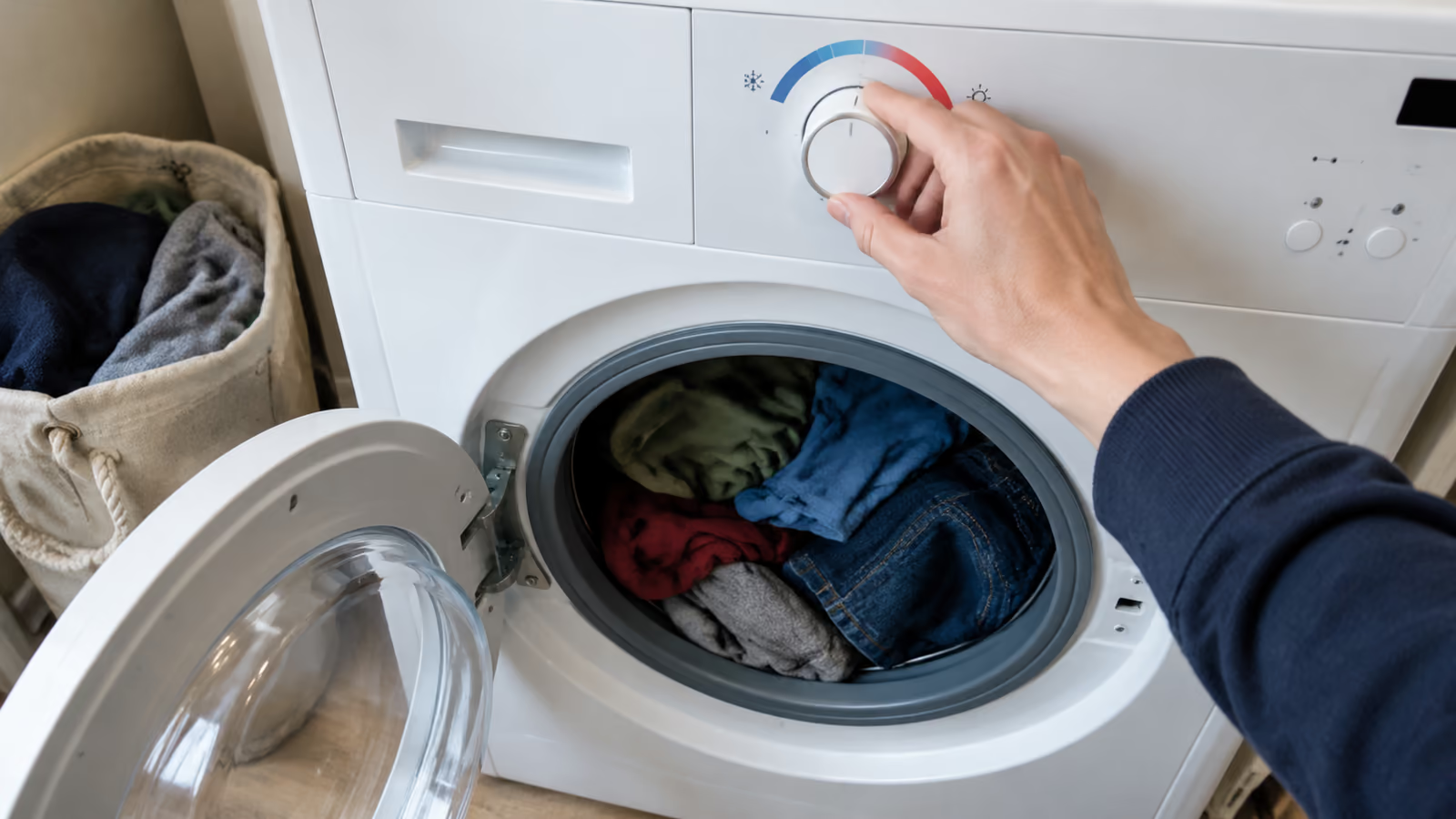
Read the guide
Keep the guide open while the Laundryless route stays clear.
Use the 10 jump links to move through this tips article without losing your place. On wider screens the dispatch rail stays beside the Ottawa laundry guide while the body keeps the original blog typography.
Tips
Quick answer
Cold water is the better choice for most everyday loads because it protects colours, limits shrinking, and uses less energy. Save warm water for oily towels, greasy workwear, heavy gym clothes, and bedding after an illness.
The cold wash vs warm wash question sits at the centre of nearly every laundry decision you make, whether you think about it consciously or not. Every time you turn that dial or tap a setting on a digital panel, you are choosing between fabric protection and cleaning power, between lower energy bills and marginally brighter whites. The good news is that cold water is the right answer roughly ninety percent of the time. The other ten percent matters, though, and knowing exactly when warm earns its place is what separates careful laundering from guesswork.
This guide breaks the decision down by fabric, stain type, and practical cost, so you can stop second-guessing the dial. We run a wash and fold service in Ottawa, and our default is cold water for a reason. By the end of this post, you will understand that reason and know precisely when to override it.
Why cold water became the laundry default
A generation ago, hot water was the assumption. Detergent formulations expected heat to activate, machines heated water as a matter of course, and the energy cost barely registered against cheaper electricity rates. That world no longer exists. The shift toward cold water washing happened because three things changed at once, and each one reinforced the others.
First, detergent chemistry caught up. Modern cold water detergents use enzymes and surfactants engineered to dissolve soil at temperatures as low as fifteen degrees Celsius. The formulations that line grocery store shelves in Ottawa today are not the same powder your parents measured into a top-loader in the nineties. They do not need heat to work, and in many cases heat actually degrades their enzyme activity, making a warm cycle marginally less effective at protein-based stain removal than a cold one using the same product.
Second, fabrics changed. Synthetic blends, performance knits, stretch denim, and microfibre textiles now dominate the average wardrobe. These materials respond poorly to heat. Polyester pills faster when agitated in warm water, elastane loses its recovery, and bonded prints crack or peel. Cold water keeps these fabrics in their comfort zone, preserving the stretch and finish that made you buy them in the first place.
Third, the cost equation shifted. Natural Resources Canada data shows that heating water accounts for roughly ninety percent of the energy a washing machine uses per cycle. When electricity prices rise, as they have in Ontario over the past decade, the gap between a cold and a warm load becomes noticeable across a month of laundry. For a household running five to seven loads a week, switching from warm-default to cold-default can trim the annual electricity bill by a meaningful margin, not a fortune, but enough to notice on a budget.
These three forces, better detergent, heat-sensitive fabrics, and higher energy prices, converged to make cold the sensible baseline. It is not a trend or an overcorrection. It is the rational default once you accept that warm water no longer earns its cost for the majority of everyday loads. The question is no longer whether cold works. It is which specific situations still justify the warmth.
There is a fourth factor that rarely gets mentioned but matters in Ottawa specifically: inlet water temperature. In summer, cold tap water in this city runs around fifteen to eighteen degrees Celsius, which is well within the activation range of modern enzyme detergents. In winter, the same tap can drop below ten degrees as the municipal supply draws from colder sources. At those very low inlet temperatures, some detergents dissolve more slowly and enzyme activity slows. This does not mean winter laundry requires warm water, but it does mean dissolving your detergent fully before adding clothes, or using a liquid rather than a powder, becomes slightly more important in January than in July. The cold-default still holds; it just benefits from a small adjustment in technique during the coldest months.
The transition happened gradually enough that many people never noticed. Appliance manufacturers quietly shifted the default cycle on new machines from warm to cold over the past fifteen years. Detergent brands reformulated without changing their packaging enough to announce it. The result is that millions of households already wash on cold without having made a conscious decision to do so, simply because the machine and the soap conspired to make it the path of least resistance. If you have been washing on cold without thinking about it, you have been doing the right thing by accident. If you have been manually selecting warm out of habit, this is the moment to ask whether that habit still serves you.
One more, quieter factor reinforced the shift: machine design. Front-loading washers, which now outsell top-loaders in Canada, use less water per cycle and rely on tumbling action rather than a full tub of water to clean. When the water volume drops, heating it costs less in absolute terms, but the mechanical cleaning action also becomes more effective at cold temperatures because the repeated lifting and dropping of garments against the drum creates friction that substitutes for thermal energy. Modern machines are designed around the assumption of cold water in a way that the agitator-driven top-loaders of the previous generation simply were not.
Cold vs warm: a head-to-head comparison
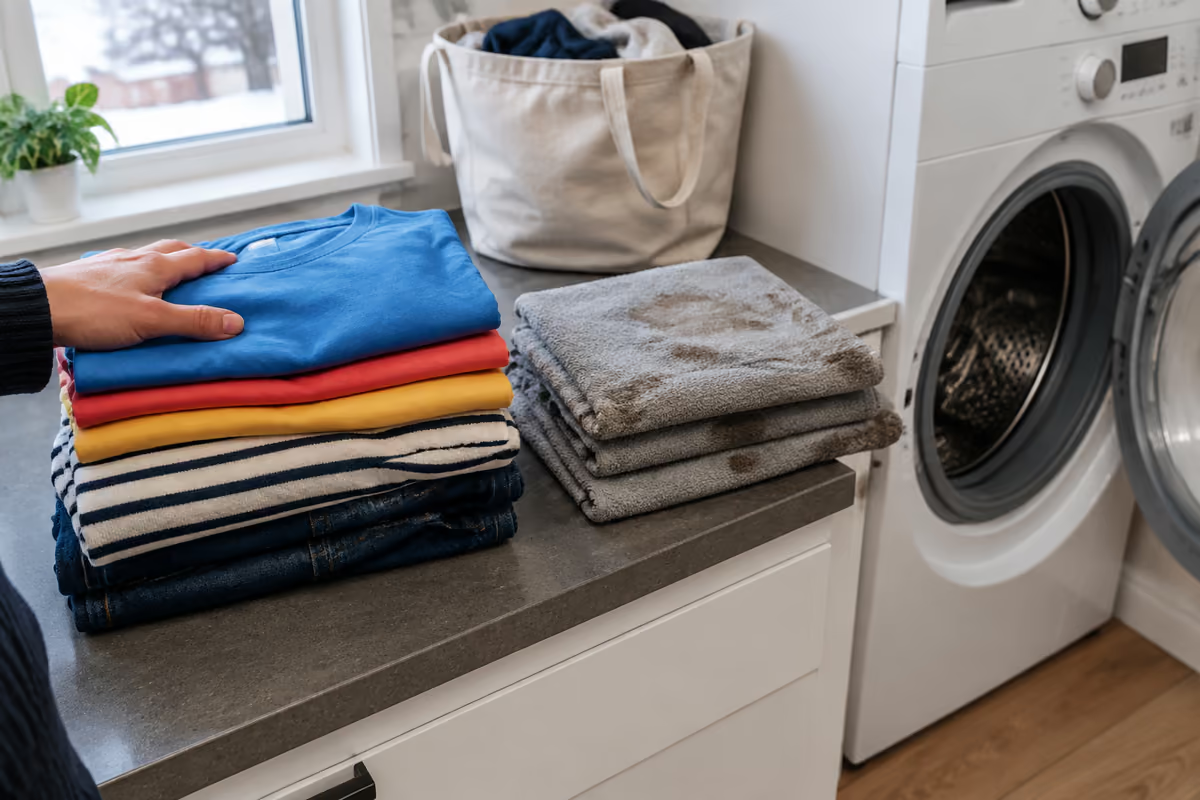
It helps to see the two settings side by side across the dimensions that actually matter. The table below compares cold and warm on the criteria most people weigh, whether they name them explicitly or not.
| Cold wash | Warm wash |
|---|---|
| Uses minimal energy per cycle | Uses significantly more energy to heat water |
| Preserves fabric structure and elasticity | Can weaken fibres over repeated cycles |
| Prevents colour bleeding and fading | May accelerate dye release in some fabrics |
| Less effective on oily or greasy stains | Dissolves oil-based soils more readily |
| Better for protein stains (blood, sweat) | Can set protein stains permanently |
| Neutral effect on brightness | Mildly improves whitening with oxidizers |
| Does not sanitize at household temps | Only sanitizes above 60 degrees Celsius |
A few rows deserve extra context. The stain distinction is the one that surprises people most. Protein-based stains, blood, egg, milk, and perspiration residue, respond better to cold water because heat denatures the protein and bonds it into the fibre. Once a blood stain has been through a warm cycle, it is often permanent. Grease and oil work the opposite way: warm water helps surfactants emulsify the fat molecules, which is why a mechanic's coveralls genuinely benefit from a warmer setting.
The sanitizing row is important to read correctly. Warm water in a domestic machine, typically thirty to forty degrees Celsius, does not kill bacteria or dust mites. Genuine sanitizing requires sustained temperatures above sixty degrees, which most home machines label as a hot or sanitize cycle, not merely warm. If your goal is disinfection after illness, warm is not enough. You need hot, and even then a dryer cycle at high heat is often the more reliable kill step.
The colour-preservation advantage of cold is cumulative rather than dramatic. A single warm wash will not ruin a dark garment, but fifty warm washes over a year will leave it noticeably duller than fifty cold washes would have. Dyes are more soluble at higher temperatures, and each cycle leaches a small amount. Over the life of a garment, that adds up. If you have ever compared a year-old black t-shirt to the same shirt fresh from the shop, the difference you noticed was largely temperature-driven.
Energy cost deserves its own section further down, but the short version is simple: cold uses the machine's motor and nothing else, while warm adds a heating element that draws substantially more power. For a single load the difference is modest, roughly the equivalent of running a light bulb for an hour. Across a year of household laundry, five to seven loads per week, that modest difference multiplies into a sum that shows up clearly on an electricity bill. In a city like Ottawa where time-of-use pricing means midday loads cost more per kilowatt-hour, the financial argument for cold becomes even sharper for anyone running machines during peak periods. The compounding effect is what catches people off guard: five loads a week at warm versus cold adds up to hundreds of extra kilowatt-hours annually, which in Ontario's tiered pricing structure translates directly into higher monthly bills during peak consumption periods.
It is also worth noting that the comparison table above reflects real-world domestic conditions, not laboratory ideals. Laboratory stain tests use standardized swatches and controlled temperatures. Your laundry is messier, more varied, and subject to the imprecision of a home machine that heats water to an approximate target rather than a precise one. In practice, this means the advantages listed under cold are slightly more pronounced in daily life than in lab testing, because home machines rarely achieve a stable warm temperature, often oscillating between lukewarm and cold throughout the cycle. Cold, by contrast, is consistently cold, which means the detergent can work in a predictable environment from start to finish.
There is also a longevity dimension that the table does not capture because it plays out over months rather than single cycles. Clothes washed consistently on cold tend to hold their shape, colour, and surface texture longer than clothes washed on warm. The difference is not visible after one wash or five, but after fifty or a hundred cycles it becomes obvious. A cotton t-shirt washed on cold for a year will feel softer, look darker, and fit more true to size than the same shirt washed on warm for the same period. This is the compounding effect of temperature: small per-cycle advantages that accumulate into a meaningful difference in how long your wardrobe actually lasts before it needs replacing.
Best temperature by fabric type
The right temperature depends less on the colour of the load and more on what the load is made of. Each fabric has a comfort zone, and staying inside it is how clothes last longer without extra effort. The grid below maps common fabric types to their ideal wash temperature and the reasoning behind it.
Cotton
Cold default. Warm only for heavily soiled whites.
Polyester
Always cold. Heat sets wrinkles and accelerates pilling.
Wool
Cold with a delicate or hand-wash cycle. Never warm.
Silk
Cold, hand wash preferred. Heat damages protein fibres.
Denim
Cold inside-out. Preserves indigo and prevents shrinkage.
Linen
Cold to warm. Tolerates warmth but wrinkles more.
Towels
Warm is fine. Helps remove body oil and mildew odour.
Bedding
Warm if visibly soiled or after illness. Cold otherwise.
Cotton is the fabric people most often overwash with unnecessary heat. Modern cotton weaves, especially ringspun and combed varieties, clean beautifully at cold temperatures because the open fibre structure lets detergent penetrate without thermal assistance. The exception is heavily soiled white cotton, where a warm cycle with an oxygen-based brightener genuinely lifts embedded grime that cold alone leaves behind. Even then, hot is rarely needed. Warm at forty degrees handles the job.
Polyester and synthetic blends deserve special attention because they dominate activewear, work uniforms, and budget basics. Heat is the enemy of polyester in two distinct ways. First, it softens the fibre surface enough for micro-abrasion to create pills, those tiny bobbles that make a six-month-old gym shirt look three years old. Second, it sets wrinkles into the weave, which is why a polyester dress shirt pulled from a warm dryer often needs more ironing than one washed and dried on cool settings. Cold water with a liquid detergent and a shorter spin cycle is the combination that keeps synthetics looking new longest.
Wool and silk share a vulnerability: both are protein-based fibres, and heat causes protein fibres to contract and felt. A single warm wash can shrink a wool sweater by a full size, and the damage is not reversible. Cold water on a gentle or hand-wash cycle is non-negotiable for these materials. If you want a deeper discussion on preventing heat damage to delicates, our post on shrinkage prevention covers the mechanics in detail.
Denim is a fabric that benefits from less washing in general, and cold water specifically. Raw and dark denim loses its character when washed warm because indigo dye is particularly soluble at higher temperatures. Turning jeans inside-out and washing on cold preserves the fade pattern you have built through wear rather than creating a uniform, washed-out pallor. If your denim has visible stains, spot-treat the stain and still wash on cold. The spot treatment does the lifting; the water temperature simply needs to not undo it.
Linen occupies a middle ground. It tolerates warm water without structural damage, but warm water makes linen wrinkle more aggressively during the spin cycle. If you plan to iron linen anyway, warm is fine. If you prefer a relaxed, slightly rumpled linen look, cold wash with a gentle spin preserves that texture. Either choice is valid; the decision hinges on your relationship with the iron more than on the fabric's health.
Towels and bedding are the two categories where warm water has a genuine and defensible role in routine laundering. Both accumulate body oils that cold water alone struggles to fully emulsify, and both are thick enough that detergent needs thermal help to penetrate the interior layers. A warm cycle every second or third wash keeps towels smelling fresh and sheets genuinely clean, while alternating with cold cycles extends the life of the cotton pile. This is the balanced approach: warm when needed, cold as the default, and hot reserved for illness or visible contamination.
When professional care beats temperature math
Some garments and some situations sit outside the temperature question entirely. No dial setting, cold or warm or hot, will safely clean a structured wool blazer, a beaded evening dress, a leather jacket, or a garment with a dry-clean-only care label. These items need a solvent-based process rather than water immersion, and forcing them through any water temperature risks permanent damage. The care label exists precisely to flag these cases, and the instruction "dry clean only" is not a suggestion or a conservative hedge by the manufacturer. It means water of any temperature will interact with the construction, the adhesives, the interfacing, or the dye in ways that produce irreversible results.
The distinction matters because people often conflate temperature with gentleness. They assume that cold water on a delicate cycle is gentle enough for anything, and for most fabrics that is true. But for garments where the construction itself is vulnerable to water, the gentlest cold wash in the world still saturates the fabric, still agitates it against other items, and still subjects it to a spin cycle that pulls water through the fibres under force. A structured blazer's shoulder pads, canvas interfacing, and fused chest piece are all assembled with adhesives and shaping that water degrades over repeated exposure. Cold water slows the damage but does not prevent it. The only prevention is keeping water out of the equation entirely.
The overlap between temperature confusion and dry-clean items is where people most often ruin things. A silk blouse with a perspiration stain seems like it should tolerate a gentle cold wash, and sometimes it does, but the risk of watermark staining or colour bleed on certain dye processes means the safe path is professional dry cleaning rather than a hopeful experiment at home. The cost of a single dry-clean cycle is always less than the cost of replacing a garment you gambled on.
Temperature is a tool for everyday laundry, the cotton, polyester, and linen that fills most of your hamper. Once you step outside that everyday territory into structured garments, embellished pieces, or fabrics that water itself can damage, the temperature dial becomes irrelevant and the correct question changes entirely. It shifts from "cold or warm" to "water or solvent," and the answer for these items is always solvent.
There is also a practical middle ground that many people overlook. If your weekly laundry includes both everyday items and a few dry-clean pieces, you do not need to make two separate trips. Book the dry cleaning as its own order and pick the same pickup window as your wash and fold. The dry-clean items travel a different process path, and your everyday wash-and-fold runs through the water cycle at the appropriate temperature.
The broader lesson here is that temperature is only one axis of garment care, and it is not always the most important one. Agitation speed, spin force, cycle duration, and detergent choice all interact with temperature to determine the outcome. A cold wash on an aggressive spin can still damage a delicate knit, just as a warm wash on a gentle cycle can safely clean a moderately soiled cotton without harm. Temperature is the most visible variable because it is the one you select explicitly, but it works as part of a system rather than in isolation. When that system is managed by someone who thinks about all the variables together, the outcome is better than optimizing temperature alone.
The broader point is that temperature is a tool with a specific range of usefulness. Within that range, it matters a great deal which setting you choose. Outside that range, choosing between cold and warm is like choosing between two wrong answers. A leather jacket does not belong in water at any temperature. A sequined cocktail dress does not belong in a drum cycle regardless of what the dial says. Recognising the boundary between "this is a temperature question" and "this is not a water question at all" is the judgment that prevents expensive mistakes, and it is one of the reasons people delegate specific garments to professional care rather than experimenting at home.
Energy and water cost: the real numbers
The energy difference between cold and warm is not a vague talking point. It is measurable, and the measurement matters more in Ontario than in many other provinces because of how electricity is priced here. Ontario operates on time-of-use pricing, which means a load of laundry run during peak hours costs substantially more in electricity than the same load run overnight or on weekends. When you add water heating on top of peak-hour rates, the per-load cost climbs in a way that is invisible per cycle but obvious on a monthly bill. Natural Resources Canada estimates that water heating accounts for approximately ninety percent of the energy consumed by a standard washing machine per cycle. When you select cold, that ninety percent effectively disappears from the equation.
90% (NRCan)
of washer energy goes to heating water
For an Ottawa household running six loads per week, the annual difference between cold-default and warm-default washing is roughly equivalent to running a refrigerator for two additional months. That comparison sounds modest in isolation, but consider that it requires no behaviour change beyond turning a dial one position to the left. You do not need to buy new equipment, change detergent brands, or reduce how often you wash. The saving arrives passively, week after week, simply because the heating element stays off. Over a five-year period in a household with children, where seven to ten loads per week is common, the cumulative saving becomes genuinely noticeable on an annual budget. It compounds with other efficiency choices like shorter dryer cycles, fuller loads, and off-peak timing.
The water cost itself does not change between cold and warm. Municipal water rates in Ottawa are the same regardless of temperature, so the saving is purely on the electricity side. However, cold water cycles are often slightly shorter in total run time because the machine does not need a heating phase before agitation begins, which means marginally less water used per cycle on some models. The effect is small but real.
To put it in concrete terms for an Ottawa household: if you run six mixed loads per week and switch four of those from warm to cold, the annual electricity saving lands somewhere in the range of eighty to one hundred and twenty kilowatt-hours depending on your machine's efficiency rating and your hot water source. That is not a rounding error. It is equivalent to powering a laptop for an entire year, or roughly two months of LED lighting for a typical apartment. The saving arrives silently on every bill without any change to the cleanliness of your clothes, which is why it ranks among the simplest efficiency gains available to any household. You give up nothing and gain a small but compounding reduction in both cost and carbon output. For people on time-of-use billing in Ontario, the combination of cold water and off-peak scheduling creates a double efficiency layer that neither change achieves alone. Running cold loads during off-peak hours means you are using less electricity and paying a lower rate per kilowatt-hour for what you do use.
It is worth noting that the energy argument is strongest for people who do their own laundry at home, because they pay the electricity directly. When you use a laundry pickup and delivery service, the energy cost is embedded in the per-pound rate rather than appearing on your utility bill. Our machines run on cold by default regardless, because it protects fabric and produces better results on mixed loads, so the energy efficiency is built into the service whether you think about it or not. You benefit from the fabric-care advantages and we absorb the energy consideration on our end through high-efficiency commercial equipment that uses less power per pound than a residential machine.
The environmental framing matters to some readers and not others, so we will state it plainly without moralizing. Cold water washing reduces household carbon emissions from laundry by a proportion roughly matching the energy saving, because Ontario's grid still draws on natural gas during peak hours. Choosing cold is one of the lowest-effort changes available to a household that wants to reduce its footprint without disrupting its routine. It costs nothing, requires no new equipment, and produces no sacrifice in cleanliness for the large majority of loads.
For Ottawa households specifically, the energy consideration has a seasonal dimension worth noting. In winter, cold inlet water from the municipal supply can drop below ten degrees Celsius, which means the heating element works harder to reach a warm setting than it does in summer when inlet water arrives closer to fifteen or eighteen degrees. The energy gap between cold and warm is therefore larger in January than in July, which makes the cold-default choice even more valuable during the months when electricity bills are already elevated by heating. Conversely, in summer the inlet water is warm enough that cold cycles clean slightly more effectively without any temperature boost, because the baseline is already above the threshold where most enzymes activate fully.
There is also a longevity dimension to the energy conversation that rarely gets mentioned. Heating elements in residential washing machines are one of the most failure-prone components, and frequent hot or warm cycling shortens their lifespan. A machine that defaults to cold stresses its heating element far less often, which means fewer service calls and a longer interval before replacement becomes necessary. This is not a primary reason to choose cold, but it is a secondary benefit that compounds over the years you own the appliance.
For households on time-of-use billing in Ottawa, which is most residential accounts, the energy saving from cold water washing is amplified during on-peak hours when electricity costs the most. Running a warm or hot cycle during the evening peak means paying the highest rate for the heating element's draw. Running cold at any hour costs virtually the same because the motor draw is modest and does not vary with the time-of-use tier. This makes cold water not just an energy choice but a cost-timing choice as well. If you must run warm for towels or bedding, shifting that load to an off-peak window captures some of the savings back. But cold water sidesteps the question entirely because it barely touches the heating element regardless of when you run it.
How our service handles water temperature
Because we process a high volume of mixed-fabric loads every week, our temperature protocol is deliberate rather than one-size-fits-all. It starts from a cold-water default and escalates only when the specific load justifies it.
Our temperature policy by load type
Cold water is the default for all standard wash-and-fold loads. Warm cycles run for towels, heavily soiled sheets, and loads flagged for body-oil removal. Hot cycles (above 60 degrees Celsius) run only on explicit request, typically after illness in a household, and require confirmation at booking because of the shrinkage risk to mixed loads.
The cold-water default exists because it protects the widest range of fabrics with the least risk. When a service washes for many households, the contents of any given bag are unpredictable. A bag might contain cotton basics, a synthetic gym set, a linen shirt, and a delicate knit in the same load. Cold water is the one setting that will not damage any of those items, which makes it the only rational starting point for a service that takes accountability seriously.
Warm cycles earn their place for specific categories. Towels accumulate body oils that cold water alone does not fully dissolve, and after several cold-only washes a towel can develop a musty smell that people mistakenly attribute to mildew when it is really just oil buildup that has not been flushed. Running towels on warm every second or third wash breaks that cycle. Similarly, sheets that have been slept on through a fever or that carry visible soil benefit from the extra thermal energy that warm provides.
The escalation to hot is rare and intentional. Hot water above sixty degrees genuinely sanitizes, killing bacteria and dust mites that survive at lower temperatures. But hot also shrinks cotton, sets certain stains, and degrades elastic. We never run a hot cycle without explicit confirmation from the customer, because the sanitizing benefit only makes sense when the customer has weighed it against the risk to specific items in the load. A household recovering from a stomach virus might want bedding sanitized regardless of the shrinkage risk. A household doing a routine weekly wash almost certainly does not.
If you have a preference that differs from our default, you can note it in your booking and it stays on your account for every future order. Some customers want towels washed warm every time. Others want everything on cold without exception, including towels, because they value fabric longevity above all else. Both are valid instructions, and both override the default without you needing to repeat yourself. Our wash and fold service is built around honouring stated preferences, not imposing a single protocol regardless of context.
The relationship between temperature and detergent matters here too. We use cold-water-formulated detergent as our standard, which means the enzymes and surfactants are optimized for lower temperatures. When a load runs warm, the detergent still performs, but the enzyme activity peaks at cold and tapers slightly as temperature rises. This is counterintuitive for people who grew up associating heat with cleaning power, but it reflects how modern detergent chemistry actually works. The warmth helps with oil dissolution; the detergent handles everything else independent of temperature.
For readers interested in our detergent approach more broadly, including the fragrance-free default and hypoallergenic options, our post on fragrance-free wash covers the full protocol.
When to actually use warm water
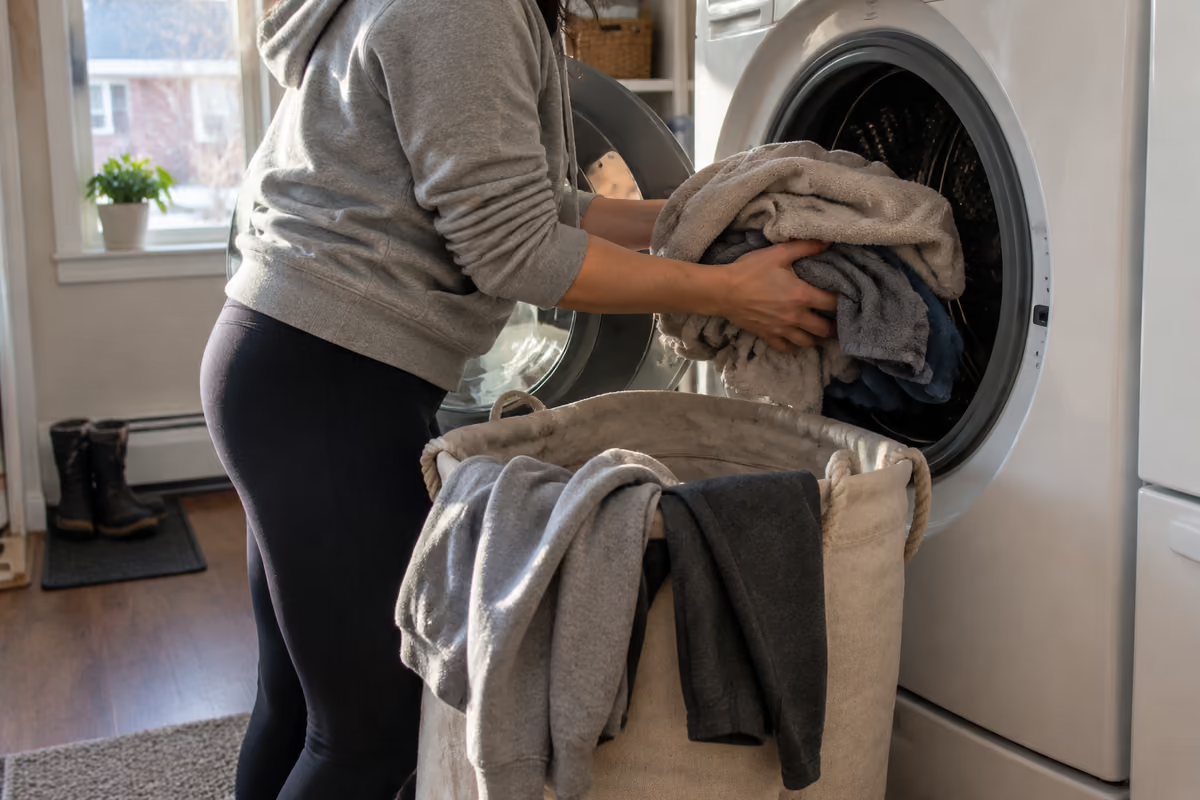
Cold is the default, but defaults exist to be overridden when the situation warrants it. The following situations are the ones where warm water genuinely produces a better result than cold, and where the slight trade-off in energy and fabric wear is justified by the outcome.
Situations that justify a warm cycle
- Towels with a lingering mildew or musty smell from oil buildup
- Sheets and pillowcases after illness in the household
- Heavy gym fabrics saturated with body oils and sweat
- Workwear with embedded greasy or mechanical stains
- Cloth diapers requiring a sanitize-level cycle above 60 degrees
Towels are the most common warm-water candidate in a typical Ottawa household. The combination of thick terry pile and daily exposure to body oils creates a buildup that cold water alone cannot fully flush. If you wash towels exclusively on cold, you will notice a gradual smell that develops over weeks, not mildew in the biological sense, but accumulated oil that harbours odour-causing bacteria. A warm wash every second or third use dissolves that oil layer and resets the towel to a genuinely clean state. Alternating warm and cold rather than running warm every time extends the terry pile's lifespan while keeping odour under control.
Sheets after illness are a clear case for warm or hot. When someone in the household has had a fever, a stomach virus, or any infectious illness, the bedding carries a bacterial or viral load that cold water does not address. A warm cycle at forty degrees reduces the microbial load significantly, and a hot cycle above sixty degrees provides genuine sanitization. In this specific scenario, the risk of minor shrinkage to cotton sheets is a reasonable trade against the public health benefit of actually cleaning pathogens from the fabric rather than merely removing visible soil.
Heavy gym fabrics present a particular challenge because the synthetic materials that wick sweat during exercise also trap body oils in their fibre structure. Cold water can remove surface sweat but often leaves the oil component behind, which is why gym shirts can smell clean out of the wash and then develop odour within an hour of wear. A warm cycle with a sport-specific or enzyme-heavy detergent breaks that oil-odour cycle more effectively. The trade-off is slightly faster wear on the synthetic fibres, but most people replace gym clothes on a shorter cycle anyway, so the practical impact is minimal.
Workwear with mechanical grease, kitchen oil, or industrial soil belongs in a warm cycle because these stains are too viscous for cold-water surfactants alone. A mechanic's coveralls, a restaurant cook's apron, or a landscaper's work pants all carry oil-based soil that needs thermal energy to emulsify. Cold water will remove the dirt but leave a greasy shadow that sets over repeated cycles. Warm water gives the detergent enough energy to lift the oil out of the weave in a single pass.
Cloth diapers are the edge case where hot water is genuinely necessary. The sanitization requirement for reusable diapers is not about cosmetic cleanliness. It is about eliminating fecal bacteria from a fabric that will sit against an infant's skin. Most cloth diaper care guides specify a hot wash above sixty degrees with a cold pre-rinse to remove solids before the thermal cycle. This is one of the very few domestic laundry scenarios where hot water is not merely helpful but genuinely required for safety.
For readers in Ottawa dealing with winter-specific temperature considerations, seasonal factors like frozen pipes, cold inlet water below ten degrees, and heavy outerwear that needs occasional warmth, our post on winter laundry tips covers those edge cases in detail.
Common temperature questions
The questions below come up repeatedly in the broader laundry temperature discussion. The answers focus on everyday loads rather than theoretical laboratory conditions. Many of these questions stem from conflicting advice that circulates online, where one source insists warm is always better and another claims cold handles everything. The truth, as with most practical matters, sits in the middle and depends on context. We have distilled the most common confusions into direct answers based on how fabrics respond to different temperatures over time.
Does cold water actually clean as well as warm?
For everyday soil, yes. Modern cold-water detergents use enzymes that break down organic matter, sweat residue, and light stains without thermal assistance. The gap between cold and warm cleaning performance is negligible for routine household laundry. The exceptions are oil-heavy stains and heavily soiled loads where warmth helps the surfactants emulsify grease.
Why does my detergent say it works at all temperatures?
Because it does, but not equally at all tasks. Enzyme-based detergents peak in effectiveness at cold to lukewarm temperatures for protein stains. The surfactant component that handles oil improves with warmth. The label is accurate but lacks nuance. Cold handles most loads, warm handles oil, and hot is for sanitizing rather than cleaning.
Should I pre-rinse before a hot cycle?
Yes, especially for protein stains. A cold pre-rinse removes blood, milk, egg, and sweat residue before the hot main cycle. Without a pre-rinse, hot water sets protein stains into the fibre permanently. This is the most common laundry mistake people make when trying to sanitize: skipping the cold rinse and baking stains in.
Will warm water shrink everything?
Not everything, but it shrinks some things. Natural fibres like cotton and wool are vulnerable to heat-induced shrinkage, with wool being the most extreme. Synthetic fabrics do not shrink from warm water but may warp or pill. The risk is fibre-specific, not universal, which is why temperature should be chosen by fabric type rather than applied uniformly.
What temperature actually kills bacteria?
Sustained exposure above 60 degrees Celsius for the duration of a wash cycle kills most common household bacteria and dust mites. Warm water at 30 to 40 degrees reduces bacterial counts but does not achieve true sanitization. For illness recovery or allergen control, you need either a hot cycle above 60 degrees or a high-heat dryer cycle, or both.
Does cold wash actually prevent colour fading?
Yes, measurably over time. Dyes are more soluble at higher temperatures, and each warm or hot cycle leaches a small amount of colour from the fabric. A single wash makes no visible difference, but over dozens of cycles the cumulative effect is obvious. Dark garments washed exclusively on cold retain their depth noticeably longer than those washed on warm, which is why cold-wash fade prevention is one of the easiest garment-care wins available.
The keyword phrases people search when learning about laundry temperature
The questions above cover the most common concerns, but people arrive at the temperature topic from many different angles. Some start from a desire to save money, others from a ruined garment, and still others from a vague sense that they should be doing something differently without knowing what. The phrases below represent the variety of searches that lead to the same fundamental decision: cold or warm, and when. Each one reflects a slightly different entry point into the same core question, and the answer for nearly all of them circles back to the principles covered in this guide.
water temperature laundry
The core variable that shapes every wash outcome.
cold water laundry guide
How to wash effectively without heating water.
warm water laundry
When warmth genuinely improves cleaning results.
hot wash sheets towels
Sanitizing bedding and bath textiles after illness.
cold wash energy savings
The measurable cost reduction of skipping the heating element.
cold water detergent
Enzyme formulations designed for low-temperature cleaning.
warm wash for stains
Oil and grease removal that benefits from thermal energy.
laundry temperature by fabric
Matching the dial setting to what the garment is made of.
eco friendly laundry temperature
Reducing household energy use through cold-default washing.
laundry tips temperature
Practical rules for everyday temperature decisions.
cold wash fade prevention
Protecting dark colours from cumulative dye loss.
warm wash whites
Mildly lifting brightness with oxidizing agents on warm.
The short version: rules you can remember
The temperature question is simpler than it feels when you are standing in front of the machine. The rules reduce to a handful of principles that cover nearly every load you will ever run.
If you have read this far, you know more about water temperature and laundry than most people will ever need. The practical takeaway is that cold water protects your clothes, saves energy, and cleans effectively for the vast majority of loads. Warm water earns its place for specific, identifiable situations: oily stains, towels with buildup, bedding after illness, and heavy workwear. Hot water is a tool for sanitization, not routine cleaning, and it always carries a risk that needs to be weighed against the benefit.
The simplicity of the decision is what makes it powerful. You do not need to memorize a chart or check a reference before every load. You just need to internalize one habit: default to cold, and only reach for warm when you can name the specific reason. If you cannot articulate why warm would help this particular load, cold is the right choice. That single mental test covers ninety percent of the laundry decisions you will face in a given week, and it takes less than a second to apply.
Our operation in Ottawa runs on exactly these principles. Cold by default, warm when justified, hot only on explicit request with confirmation. The machines we use are commercial-grade, high-efficiency units that extract more cleaning power from cold water than a typical residential washer can, because the agitation patterns, water volume, and cycle timing are optimized for the temperature they run at rather than treating cold as a compromise setting. If you prefer to hand the temperature decision to someone who thinks about it professionally rather than standing in front of your own machine weighing the options every time, our wash and fold service handles that judgment call on your behalf, load by load, based on what is actually in the bag rather than a single setting applied to everything.
The temperature dial is a small decision that compounds into a large effect over the life of your wardrobe. A year of cold-default washing means colours that stay deeper, elastic that retains its stretch, and an electricity bill that reflects the restraint. Getting it right is not complicated. It just requires knowing the rules, and now you do.
One final thought for people who feel paralysed by the choice: the stakes are lower than they seem. Cold water will never ruin a load. The worst outcome of washing something on cold that would have benefited from warm is a slightly less thorough clean, easily fixed by running it again or spot-treating the offending stain. The worst outcome of washing something on warm that needed cold is a shrunken sweater or a permanently set stain, which cannot be undone. That asymmetry is the entire argument for defaulting to cold. When one direction carries reversible consequences and the other carries permanent ones, the rational choice is always the reversible path unless you have a specific, named reason to take the other. That framing alone is enough to resolve ninety percent of the decisions you will face in front of the washing machine for the rest of your life.
Most people who arrive at this question are standing at a machine with a full basket, wanting a quick answer before the cycle starts. Here is the quickest version: if it is everyday clothing, cold. If it is towels that smell or sheets after a sick day, warm. If it is wool, silk, or dark denim, cold always, no exceptions. If it is something structured or labelled dry-clean-only, keep it out of the water entirely. That four-sentence summary covers ninety-five percent of the decisions you will ever face. The detail above exists for the remaining five percent, and for the peace of mind that comes from understanding why the rules work rather than just following them on trust.
Most people who arrive at this question are looking for permission to stop overthinking. Here it is: cold water is the safe, effective, energy-efficient choice for the overwhelming majority of your laundry. The handful of exceptions, towels with oil buildup, sheets after sickness, greasy workwear, cloth diapers, are identifiable by smell or visible soil rather than guesswork. If the load looks and smells like normal everyday laundry, cold is correct. If it smells off or carries visible grease, warm earns its place. That two-sentence rule covers nearly every load you will ever run, and everything else in this post is context for the rare edge cases that fall outside it.
Ready To Book
Hand off the laundry in under two minutes.

Reader handoffCopy, email, print, or return to the archive.
Share or save
Send this Ottawa laundry guide to someone who needs it.
Share the ottawa laundry guide with a roommate, property contact, or teammate before pickup notes get messy. The controls stay local to this page: no tracking widgets, no third-party script, just practical laundry tips Ottawa readers can pass along.
Services that pair with this guide
Services that pair with this guide.
Use the related services below when these laundry tips Ottawa readers need to turn a tips note into a pickup, a wash and fold order, or a question about specialty handling.


Related laundry searches.
Ottawa laundry guides continue from a real service page. Every search below lands on a live route.

Done reading?
Use the guide, then hand off the laundry.
This guide should leave you with a clearer next step. Book a pickup when the load fits standard laundry, or contact us when care labels, volume, bedding, or business needs deserve review first.