Best Apartment Laundry Alternatives Without a Washer
Renting an Ottawa apartment with no washer? Compare laundromats, building laundry rooms, portable washers, and pickup services with real costs and time math.
- Duong Quan Nguyen
- Updated September 24, 2026
- 24 min read

Read the guide
Keep the guide open while the Laundryless route stays clear.
Use the 9 jump links to move through this guides article without losing your place. On wider screens the dispatch rail stays beside the Ottawa laundry guide while the body keeps the original blog typography.
Guides
Quick answer
Without an in-suite washer, your real options are a building laundry room, a laundromat, a portable washer, or a pickup service. The building room is usually cheapest per load, while pickup saves the most time and skips winter trips.
Roughly thirty percent of Ottawa renters live without an in-suite washer or dryer. If you are one of them, you already know the routine: hauling a basket down narrow stairs, feeding coins into a machine that may or may not finish its cycle, and losing an evening to a chore that people with their own machines barely think about. The question is not whether apartment laundry alternatives exist. They do. The question is which one actually saves you the most time and money over the course of a year, and that answer depends on your building, your schedule, and how much you value a free evening. This guide compares the four realistic options available to Ottawa renters, with real costs and real time math, so you can make the decision once and stop thinking about it.
A laundry pickup and delivery service is one of those four options. We will give it the same honest treatment as the others, because the goal here is clarity rather than a sales pitch. Some readers will finish this guide and decide a portable washer is their best path. Others will realize the laundromat two blocks away is good enough. Both of those are fine answers. What matters is that you choose with numbers rather than guesses.
Why apartment laundry is harder than it sounds
People with in-suite machines rarely appreciate how different the equation is for renters without them. The gap is not just about owning a washer. It is about a cascade of small frictions that compound every single week, and those frictions are invisible to anyone who has never lived with them.
The first friction is transport. A full load of laundry weighs somewhere between twelve and twenty pounds, and carrying that weight down three flights of stairs, across a parking lot, or six blocks to the nearest laundromat is a physical task that gets old fast, particularly in a Canadian winter when the sidewalks are icy and you are also managing a coat, keys, and detergent. If you do not own a car, the weight problem doubles on the return trip because wet-to-dry laundry does not get lighter.
The second friction is time. A single load takes roughly ninety minutes from start to finish when you factor in the walk, the wait, and the fold. Two loads push that past three hours. An evening that started with the ambition of also cooking dinner and reading a chapter quietly becomes an evening defined by the laundromat schedule. The hours do not scale linearly either. If a machine is taken when you arrive, which is common in shared building rooms with only two or three units, your ninety minutes stretches past two hours before you have folded a single shirt.
The third friction is weather and season. Ottawa's winters are long and genuinely cold, and the walk to a laundromat that felt easy in September becomes a miserable errand in February. Ice, wind, and the sheer inconvenience of bundling up for a chore you did not choose makes the winter months the point where most renters start quietly searching for alternatives. Summer is kinder, but summer also brings humidity that makes shared basement laundry rooms smell stale, and the wait for a free dryer gets longer when everyone in the building is washing at the same time.
The fourth friction is shared-space politics. Building laundry rooms are communal, and communal spaces come with unwritten rules, passive-aggressive notes taped to dryers, loads left sitting for hours, lint traps nobody cleans, and the occasional mystery puddle. None of these are catastrophic, but collectively they turn a neutral chore into a mildly adversarial experience. You are not just doing laundry. You are navigating the social dynamics of a shared resource, and that emotional weight sits on top of the physical and temporal weight you are already carrying.
When you stack these four frictions together, apartment laundry without an in-suite washer is not merely inconvenient. It is a recurring time tax that quietly shapes your week around its demands. Recognizing that is the first step toward deciding whether you want to keep paying it or redirect the cost somewhere else.
The four common alternatives

If you rent an apartment in Ottawa without your own washer, your realistic options collapse to four. Each has a different cost profile, a different time demand, and a different set of tradeoffs. Before we get into the detailed comparison, here is the short version of what each option looks like in practice.
Building laundry room
Coin-op or card machines in the basement or a shared floor. Low cost per load, high time cost per week.
Neighbourhood laundromat
Walk or drive to a self-serve facility. More machines available, but the trip adds transport time.
Portable or countertop washer
A compact unit that hooks to your kitchen or bathroom tap. No dryer included in most models.
Pickup and delivery service
A service collects your bag, washes and folds everything, and returns it to your door within 48 hours.
The building laundry room is the default for most renters, not because it is the best option but because it is the one that came with the lease. You walk downstairs, load a machine, wait, transfer to the dryer, wait again, fold, and carry everything back up. The per-load cost is low, typically three to five dollars in coins or card taps for a wash-and-dry cycle. The time cost is the real expense: sixty to ninety minutes of fragmented attention per load, often stretched by occupied machines or broken units that nobody has reported yet. In older Ottawa buildings, particularly in Sandy Hill, Centretown, and the Glebe, shared rooms often have only two washers for an entire floor, which means peak hours on weekends create genuine bottlenecks.
The neighbourhood laundromat solves the capacity problem. A commercial facility has dozens of machines, so you rarely wait. You can run multiple loads simultaneously, which compresses the calendar time even if the total machine time stays the same. The tradeoff is the trip itself. If the nearest laundromat is a ten-minute walk, that is twenty minutes of transport plus whatever time you spend inside. In winter, that walk becomes a significant deterrent, especially when you are carrying a heavy bag on icy sidewalks. Costs are comparable to a building room on a per-load basis, but you may also pay for a cart, detergent from the vending machine, or parking if you drove.
A portable or countertop washer is the option that sounds ideal in theory and reveals its limits in practice. These compact units hook to a kitchen or bathroom tap, run a small load with modest agitation, and drain into the sink. They genuinely wash clothes. The catch is volume and drying. Most portable washers handle two to four pounds per cycle, which means a week of laundry for one person requires three or four runs. There is no matching dryer in most setups, so you are hanging clothes on a rack in your apartment, which works in summer but turns a small condo into a humid cave in January when the windows stay closed. The upfront cost ranges from two hundred to five hundred dollars, and the savings only materialize if you would have spent more than that at a laundromat over the same period.
A pickup and delivery service removes the chore entirely. You bag your laundry, leave it at your door or lobby, and it comes back clean and folded within 48 hours. The per-pound cost is higher than a coin-op machine on a load-by-load basis, but the time cost is essentially zero. There is no walk, no wait, no folding, and no weather to contend with. For renters whose evenings are scarce, the math often favours this option once you account for the hourly value of the time you recover. We will run the full annual numbers later in this guide.
Each of these four paths is legitimate. None of them is universally best. The right choice depends on how much time you have, how much laundry you generate, whether your building has decent shared facilities, and how much the winter walk bothers you. The next sections break down the Ottawa-specific factors that tilt the scale one way or another.
Ottawa-specific considerations
Ottawa has quirks that make apartment laundry harder than it would be in a newer, warmer, or flatter city. These factors do not apply equally to everyone, but they are worth naming because they shift the math for a meaningful number of renters.
Winter is the most obvious factor and the one that deserves the most space. Ottawa's winters run from late November through early April, with stretches of minus twenty and sidewalks that alternate between ice and slush for weeks at a time. If your laundromat is a ten-minute walk in September, it is a fifteen-minute ordeal in January, and the return trip with a heavy bag on an icy sidewalk is genuinely unpleasant. This is not a comfort complaint. It is a safety concern for anyone carrying a twenty-pound bag without a car, particularly older renters or anyone with mobility limitations. The cold also affects drying if you use a portable washer at home: hanging clothes indoors in winter means competing with low humidity and closed windows, which stretches dry times to a full day or more and raises the indoor moisture level in ways that older buildings handle poorly.
Building age matters more in Ottawa than in cities with newer housing stock. A significant share of rental apartments in Centretown, Sandy Hill, Old Ottawa South, and the Glebe were built in the 1960s and 1970s, before in-suite laundry connections were standard. Many of these buildings have never been retrofitted with modern plumbing that would allow a washer hookup even if the landlord agreed. The shared laundry rooms in these buildings are often in the basement, accessed by stairs rather than an elevator, and equipped with machines that date from the previous decade. Some buildings have only two or three units for an entire floor of twenty apartments, creating peak-hour queues that stretch a simple chore into a scheduling puzzle.
Stairs change the calculation
If your building has stairs and no elevator, factor the carry weight into your decision. A full laundry bag weighs fifteen to twenty pounds. Carrying that down three or four flights every week, and back up again, is a real physical demand that compounds over months. It is one of the most common reasons Ottawa renters in walk-up buildings switch to a pickup service or invest in a portable unit.
Elevator buildings have their own friction. Shared laundry rooms in high-rises often sit in a sub-basement, meaning a long elevator ride, a walk through a parking garage, and a room that can feel isolated at night. The machines themselves are better maintained on average, but the distance from your unit to the room and back still consumes time, and the queue problem persists because large buildings have many tenants competing for the same limited machines.
Transit access to laundromats is another Ottawa-specific consideration. The city is spread out compared to Toronto or Montreal, and not every neighbourhood has a self-serve laundromat within walking distance. If you live in Vanier, Hintonburg, or Lebreton, you likely have options nearby. If you are in a newer development in Barrhaven, Orleans, or Kanata, the nearest laundromat may require a car or a bus transfer. The distance changes the cost equation because a trip that involves transit fare or parking adds several dollars to what otherwise looks like a cheap per-load price.
Finally, lease restrictions on portable washers are common in Ottawa rentals. Many landlords prohibit them outright due to concerns about water damage, particularly in older buildings with aging plumbing. Even where they are technically allowed, the setup requires a compatible tap and adequate drainage, and many Ottawa kitchens and bathrooms in older stock simply do not have the right fittings without modification. This means the portable washer option, while genuinely useful for some renters, is not available to everyone, and it is worth checking your lease and your plumbing before investing several hundred dollars in a unit you may not be able to use.
Head-to-head comparison
The four options look different depending on which lens you use. Cost per load favours the building room. Time per load favours pickup. Weather resilience eliminates the laundromat in winter. Bedding capacity eliminates the portable washer entirely. The table below lays the criteria side by side so you can weight them according to what actually matters in your week.
| Criteria | Building room |
|---|---|
| Cost per load | Low (coins/card) |
| Time per load | 60-90 min |
| Weather impact | Low (indoor) |
| Stairs/carry | High (basement trips) |
| Bedding/duvets | Limited capacity |
| Reliability | Variable (breakdowns) |
A few things become clear when you read across the rows rather than down the columns. No single option wins every category, which is why the decision is genuinely personal rather than obvious. But the pattern that emerges for time-constrained renters is consistent: the building room and laundromat both demand significant weekly hours, the portable washer demands even more hours spread across multiple tiny loads, and pickup demands almost none.
Cost per load is the metric most people reach for first, and it is the one that most misleads. A building laundry room charges three to five dollars per wash-and-dry cycle, which looks cheap until you multiply it by the number of loads per week and add the time you spent. A laundromat is comparable in dollar cost but adds transport time and potential transit fare. A portable washer has no per-load cost after the initial purchase, but the time cost per load is the highest of all four because of the tiny capacity and the manual drying step. Pickup costs more per pound than any of the self-serve options, but the time cost is effectively zero, which means the real comparison is not dollars-to-dollars but dollars-plus-hours to dollars-plus-hours.
Time per load is where the gap widens dramatically. A building room load takes sixty to ninety minutes of fragmented attention. A laundromat load takes a similar amount plus the round-trip walk or drive. A portable washer load takes thirty minutes of machine time but only handles two to four pounds, so a full week of laundry means three or four cycles plus hours of air-drying. Pickup takes the two minutes it requires to bag your clothes and leave them at the door. For a renter generating fifteen to twenty pounds of laundry per week, the annual time difference between the cheapest option and pickup can exceed a hundred hours. That is not a rounding error. That is two and a half full work weeks recovered.
Weather impact separates the options cleanly. The building room is indoor, so weather is irrelevant to the act of washing, though it may affect your willingness to go to the basement on a cold night. The laundromat requires an outdoor trip, which makes it weather-dependent in a city where winter lasts five months. The portable washer is indoor but its drying step is weather-sensitive because indoor humidity in winter stretches dry times. Pickup is completely weather-independent because the service comes to your door regardless of what is happening outside.
The stairs and carry row matters more than people admit. If you live on the third floor of a walk-up in Centretown, carrying a twenty-pound bag down and back up every week is a real physical effort. The building room requires two trips per load (down with dirty, up with clean). The laundromat requires the same plus the outdoor walk. The portable washer eliminates the carry entirely. Pickup eliminates it as well, since you leave the bag at your door and the clean return arrives at the same spot.
Bedding and duvets are the category where the portable washer drops out completely. A king-size duvet or a set of queen sheets simply does not fit in a countertop unit. The building room can handle them if the machines are large enough, but many older buildings have compact units that struggle with bulky items. A laundromat with commercial-size front-loaders handles them easily. Pickup handles them as standard, since the wash and fold service is built to accommodate bedding alongside everyday clothes.
Reliability is the final row and it favours options with accountability. Building laundry rooms break down, and repairs depend on your landlord's responsiveness. Laundromats are generally well-maintained but you have no control over their hours or closures. A portable washer depends on your own maintenance and the integrity of your tap connection. A pickup service has a named operator accountable for every order, which means problems get resolved rather than ignored.
When pickup is the practical winner
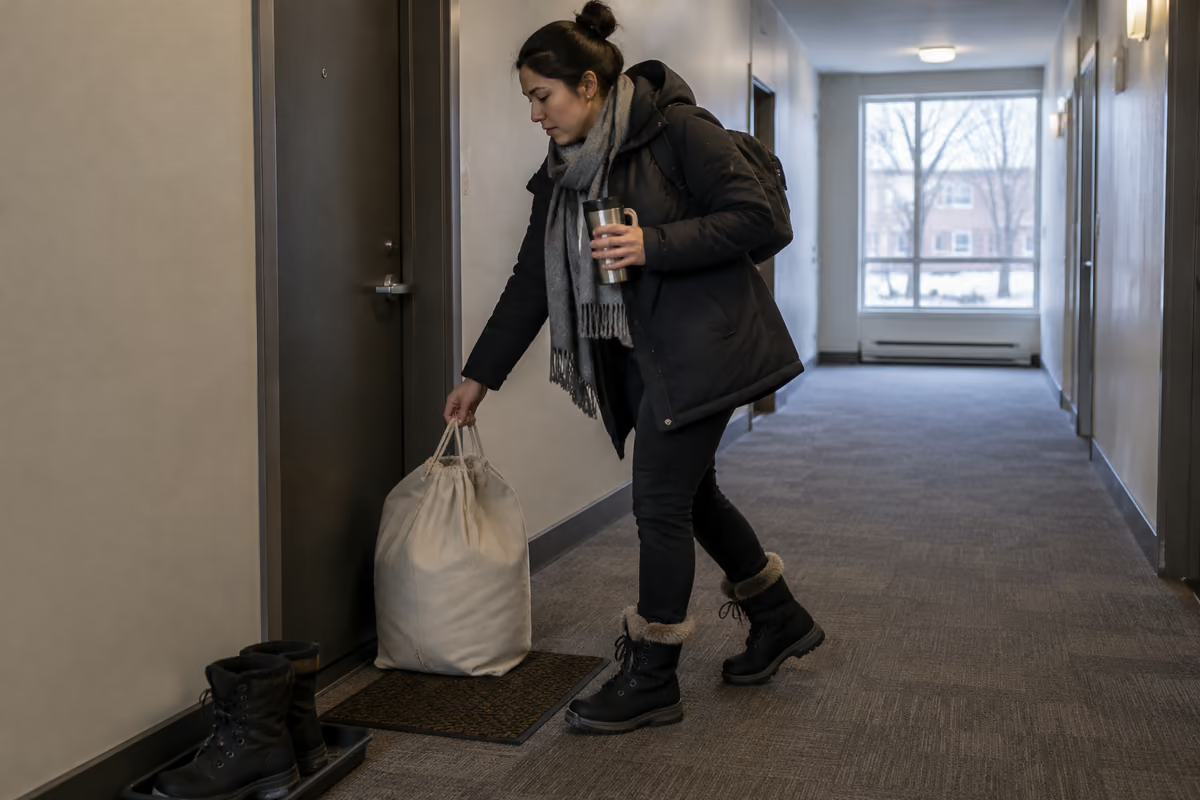
Not every renter needs pickup. If you live in a building with a well-maintained laundry room on the same floor, and you genuinely do not mind spending ninety minutes there on a Sunday evening, the building room is a perfectly rational choice. The economics work, the time cost is manageable, and the convenience gap is small enough that you may never feel the pinch. Pickup becomes the practical winner when one or more of the following conditions is true, and for many Ottawa renters, several apply simultaneously.
The first condition is a demanding schedule. If you work long hours, commute across the city, or juggle shift work with caregiving responsibilities, the sixty-to-ninety-minute time block that building laundry demands simply does not fit cleanly into your week. You end up doing laundry late at night, on your only free morning, or not at all until the pile becomes urgent. Pickup eliminates the scheduling problem entirely because it happens while you are at work, at dinner, or asleep. You do not need to be present for any part of the process, which means it occupies zero slots on your calendar.
The second condition is a walk-up building with no elevator. Carrying a heavy bag down three or four flights of stairs is manageable once. Doing it fifty-two times a year, in all weather, with a bag that weighs fifteen to twenty pounds, crosses the line from minor inconvenience to genuine physical strain. Renters in these buildings often let laundry accumulate longer than they should because the trip itself is unpleasant, which creates a cycle of larger, heavier loads that are even harder to carry. Pickup breaks that cycle by meeting you at your door, whether that door is on the ground floor or the fourth.
The third condition is winter aversion. This is not about disliking cold weather in the abstract. It is about the specific experience of walking ten minutes to a laundromat on an icy sidewalk in minus fifteen, carrying a bag that throws off your balance, and then doing the same walk in reverse with clean clothes you are trying to keep dry. For five months of the year, that trip is genuinely unpleasant, and for some renters it is unsafe. A pickup service operates the same way in January as it does in July, which means your laundry routine does not degrade with the seasons.
The fourth condition is mixed-fabric or delicate wardrobes. If your closet includes items that need special handling, such as dress shirts, wool sweaters, or garments that benefit from professional dry cleaning, then a single pickup can address both your everyday wash-and-fold and your more delicate pieces in one trip. A building laundry room or portable washer gives you no option for items that cannot go through a standard cycle, which means those pieces either pile up or require a separate trip to a cleaner. Consolidating everything into one pickup simplifies the logistics and ensures nothing sits unwashed because you did not have time for a second errand.
The fifth condition is volume. If you generate more than fifteen pounds of laundry per week, whether because of a larger household, active lifestyle, or job that requires frequent uniform changes, the time math tips decisively toward pickup. Two loads per week in a building room means three hours of attention. Three loads means four and a half. At those volumes, the annual time cost exceeds a hundred and fifty hours, which is nearly four full work weeks spent on a single recurring chore. Pickup converts all of that time to zero regardless of volume, because the service scales with the size of the bag rather than with the number of machine cycles you personally supervise.
The pattern across all five conditions is the same: pickup wins when the non-dollar costs of self-service laundry are high. If your time is scarce, your building is inconvenient, your winter tolerance is low, your wardrobe is mixed, or your volume is large, the per-pound premium of pickup is offset by the hours and friction it eliminates. For renters who tick two or more of those boxes, and many Ottawa renters tick three or four, pickup is not a luxury. It is the option that makes the rest of the week possible.
Annual cost worked example
Numbers make the decision concrete, so let us run a realistic scenario for a single Ottawa renter generating about fifteen pounds of laundry per week. That is roughly two standard loads in a building machine, which is average for one person who changes clothes daily and washes sheets every two weeks.
Annual cost for one renter, fifteen pounds per week
- Building laundry roomTwo $4 wash-and-dry cycles weekly, plus roughly 156 hours of your time
- ~$416/yr cash
- Neighbourhood laundromatSimilar machine fees plus transit or parking, roughly 208 hours including travel
- ~$600/yr cash
- Portable washerOne-time unit plus ~$50/yr utilities, but 200+ hours across tiny loads and air-drying
- ~$350-400 upfront
- Pickup and deliveryHigher cash cost, but under 3 hours of your time across the whole year
- Per-pound weekly fee
Illustrative figures for a single-person household. Time valued separately from cash; assign your own hourly rate to compare.
With a building laundry room, each wash-and-dry cycle costs approximately four dollars in coins or card taps. Two loads per week means eight dollars, and over fifty-two weeks that totals four hundred and sixteen dollars. The time cost is roughly ninety minutes per load, or three hours per week, which adds up to a hundred and fifty-six hours across the year. If you value your free time at even fifteen dollars an hour, that hidden cost is two thousand three hundred and forty dollars, making the true annual cost of building laundry closer to two thousand seven hundred and fifty dollars when you combine the cash and the time.
A neighbourhood laundromat has similar per-load pricing but adds transport costs. If you walk, the dollar cost is comparable. If you drive or take the bus, add two to four dollars per trip for parking or fare. Let us assume a two-dollar average transport cost per trip, which adds roughly two hundred dollars over the year, bringing the cash cost to around six hundred dollars. The time cost is higher because each trip includes a round-trip walk or drive on top of the machine time. Call it two hours per visit, twice per week, for a total of two hundred and eight hours annually. The combined cost in dollars and time is comparable to the building room, with the added weather exposure as a penalty.
A portable washer has a one-time purchase cost of roughly three hundred to four hundred dollars, plus electricity and water that add perhaps fifty dollars to your utility bills annually. The upfront investment pays off over two to three years compared to coins, but the time cost is the highest of all four options because of the tiny load capacity and the manual drying step. Four cycles per week at forty-five minutes each, plus hanging and retrieving from drying racks, easily consumes four to five hours weekly. Over a year, that is over two hundred hours dedicated to running a miniature laundry operation in your kitchen.
A laundry pickup and delivery service charges per pound. At current rates, fifteen pounds per week comes to a predictable weekly fee that you can budget for in advance. Over fifty-two weeks, the annual cash cost is higher than the coin-op options. But the time cost is functionally zero. You spend two minutes bagging your clothes and another minute bringing the clean bag inside when it returns. That is less than three hours total for the entire year, compared to a hundred and fifty-six hours or more with any self-service option. The difference is staggering when you see it on paper, and it explains why renters who try pickup for even a month rarely go back to the alternatives.
The key insight from this worked example is that the cheapest option in dollar terms is never the cheapest option in total terms. Every hour you spend on self-service laundry is an hour you cannot spend on work, rest, cooking, exercise, or time with people you care about. Whether that hour is worth ten dollars or thirty depends on your personal situation, but it is never worth zero. Once you assign any value at all to your time, the gap between self-service and pickup narrows dramatically, and for many renters it inverts entirely.
Lifestyle difference: before and after
The numbers matter, but the felt difference is what actually changes behaviour. Here is what a typical week looks like for a renter in a Centretown walk-up before and after switching from a building laundry room to a pickup service.
Building laundry room
- Sunday evening lost to hauling, waiting, and folding in a dim basement
- Two and a half hours of fragmented attention per week
- Occupied machines stretch the wait past your planned schedule
- Meal prep and downtime crowded out; takeout by default
Pickup and delivery
- A bag left at the door on the way to work, folded and back within 48 hours
- Under three minutes of your involvement per week
- No machine queue, no timer, no basement trips
- Sunday evening returned for cooking, calls, and rest
Before: Sunday evening starts with the realization that you have no clean work shirts for Monday. You gather the laundry, stuff it into a bag, haul it down three flights, and find both washers occupied. You wait twenty minutes, start your load, go back upstairs, set a timer, return to transfer to the dryer, wait again, fold in the dim basement, and carry everything back up. Two and a half hours have passed. The evening you planned to use for meal prep and a phone call with a friend is gone. You eat takeout instead, feeling vaguely frustrated that a chore consumed your only free block.
After: On Wednesday morning, you drop a bag by your apartment door on your way to work. Within a day or two, a neatly folded bag is waiting. Sunday evening is now open. You cook, call your friend, read a chapter, and go to bed early. The laundry simply happened without requiring your presence, your attention, or your evening. The shift is not dramatic in any single week, but compounded over months it changes the texture of your life in ways that are difficult to appreciate until you experience them.
This is not a hypothetical contrast. It is the actual pattern reported by renters who make the switch, and the reason most of them describe pickup not as a luxury but as a correction. They were spending time on a chore that did not require their time, and once they stopped, they could not understand why they waited so long.
Renter FAQ
Renters asking about apartment laundry alternatives tend to have the same cluster of practical questions. These are the ones that come up most often, answered with the same honesty that runs through the rest of this guide.
Can my landlord stop me from using a portable washer?
In many cases, yes. Ontario leases frequently include clauses prohibiting appliances that connect to plumbing beyond their intended use. Even if your lease is silent on the matter, water damage from a portable unit can put your deposit at risk. Check your lease language and ask your landlord in writing before purchasing one.
Will a pickup service handle my delicates and specialty items?
Most services, including ours, sort garments by care label before washing. Items that need cold water, gentle cycles, or separate handling are treated accordingly. If you have pieces that require true dry cleaning rather than a water wash, book them as a dry cleaning order and pick the same pickup window as your laundry.
How much laundry do I actually generate per week?
The average single adult produces between ten and fifteen pounds per week. Couples typically generate twenty to twenty-five pounds. Households with children or active lifestyles can exceed thirty. If you have never weighed your laundry, fill a bag and step on a bathroom scale holding it, then step on without it. The difference is your weekly volume, and that number determines which option makes financial sense.
Is a laundromat really cheaper than pickup once I factor in my time?
On a pure dollar-per-load basis, yes. A laundromat load costs three to five dollars in machine fees. But if you value your free time at even fifteen dollars per hour, and each laundromat trip consumes ninety minutes including travel, the effective cost per load is over twenty-five dollars once you include the opportunity cost. Pickup removes the time component entirely, which means the per-pound fee is the total cost rather than just the visible portion of it.
What happens if something goes wrong with my order?
A named operator means accountability. If a garment is damaged, lost, or returned incorrectly, there is a specific person responsible for resolving the issue. Building laundry rooms and laundromats offer no such accountability. If a shared machine damages your clothes, there is no recourse beyond a vague complaint to property management.
Conclusion
Apartment laundry without an in-suite washer is a solvable problem, but the solution that fits depends on your building, your schedule, your budget, and your tolerance for winter errands. A building laundry room is cheap and adequate if your machines are reliable and your building has an elevator. A laundromat works well in warmer months and for renters who enjoy the ritual or live close to one. A portable washer suits single occupants in buildings that allow them, provided you accept the drying limitations. And a pickup service fits renters who would rather spend their evenings on something other than a laundry room, particularly in a city where five months of winter make every outdoor errand harder than it needs to be.
The numbers in this guide are real, and they favour different options depending on the weight you assign to time versus money. If you have read this far and realized that the annual time cost of self-service laundry is higher than you thought, that realization alone is worth the read. Whatever you choose, choose it deliberately, with numbers rather than habit driving the decision.
Ready To Book
Hand off the laundry in under two minutes.

Reader handoffCopy, email, print, or return to the archive.
Share or save
Send this Ottawa laundry guide to someone who needs it.
Share the ottawa laundry guide with a roommate, property contact, or teammate before pickup notes get messy. The controls stay local to this page: no tracking widgets, no third-party script, just practical laundry tips Ottawa readers can pass along.
Services that pair with this guide
Services that pair with this guide.
Use the related services below when these laundry tips Ottawa readers need to turn a guides note into a pickup, a wash and fold order, or a question about specialty handling.


Related laundry searches.
Ottawa laundry guides continue from a real service page. Every search below lands on a live route.

Done reading?
Use the guide, then hand off the laundry.
This guide should leave you with a clearer next step. Book a pickup when the load fits standard laundry, or contact us when care labels, volume, bedding, or business needs deserve review first.