Bag Pricing vs Per-Pound Laundry: Which to Choose?
Flat-rate bag pricing versus per-pound laundry: when each model wins, how to compare them for your household, and why we price wash and fold by the pound.
- Duong Quan Nguyen
- Updated September 24, 2026
- 10 min read
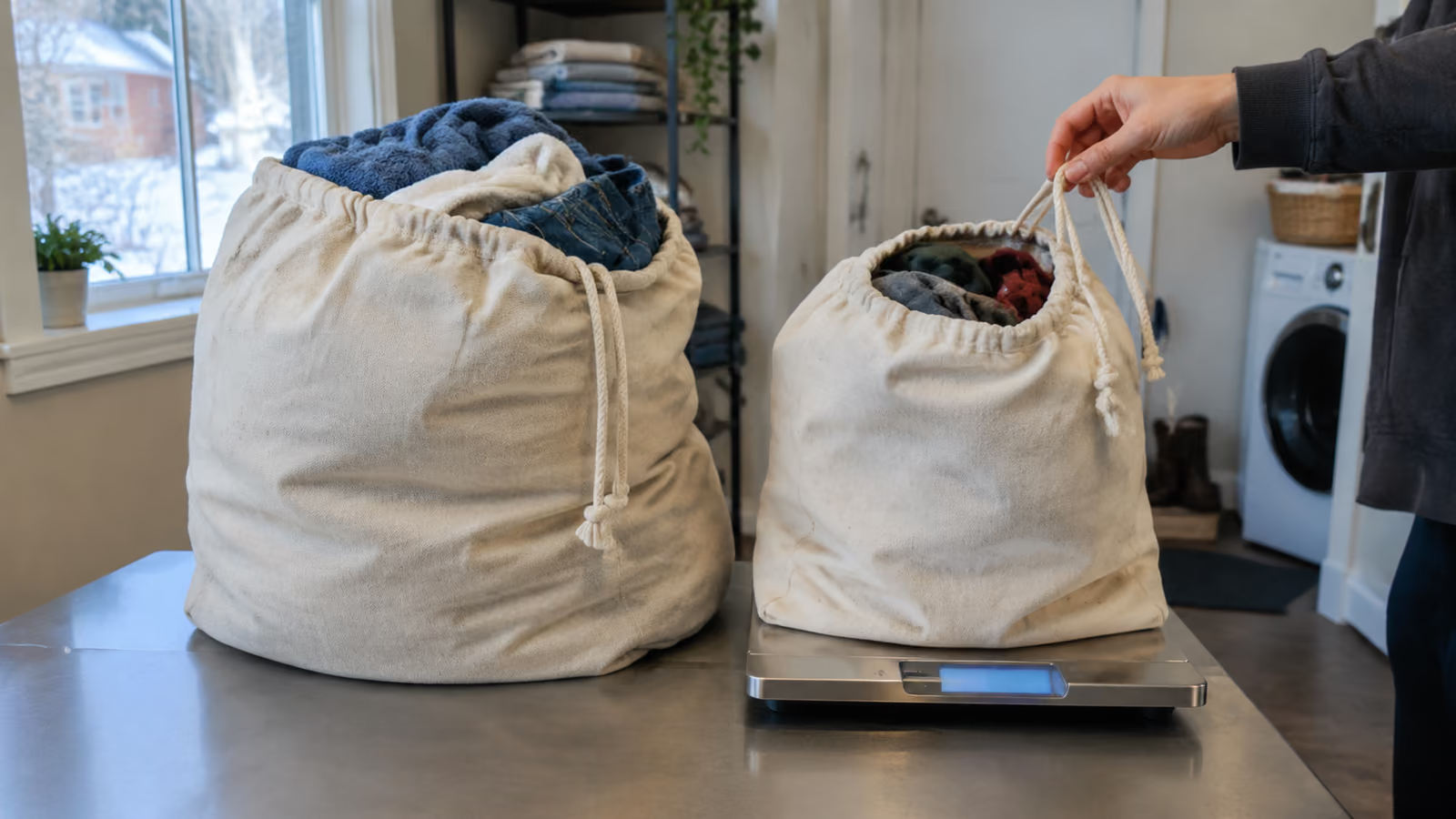
Read the guide
Keep the guide open while the Laundryless route stays clear.
Use the 11 jump links to move through this guides article without losing your place. On wider screens the dispatch rail stays beside the Ottawa laundry guide while the body keeps the original blog typography.
Guides
Quick answer
Flat-rate bags only pay off when you pack the same bag full every week. Per-pound pricing charges you less on light weeks, because you pay only for what your laundry weighs. We price wash and fold by the pound at a published rate.
Laundry pickup services charge in one of two ways. Some sell a flat-rate bag: one price for whatever fits inside. Others, including us, charge by the pound at a published rate. Both approaches can use the same machines, the same detergent, and the same folding standard. What changes is how the invoice is calculated, and that calculation favours different households depending on how much laundry they produce and how steady that amount is from week to week.
This guide explains both models plainly so you can compare services with real numbers instead of marketing. To be clear up front: we do not sell bag pricing. Every wash and fold order is weighed and billed at the published per-pound rate, and the sections below explain why we made that choice and when a flat-rate bag elsewhere might still suit you. For the full cost picture, including per-item bedding and dry cleaning, see how much laundry pickup costs in Ottawa.
How flat-rate bag pricing works
A flat-rate bag is the simpler model to explain. You pay one fixed price for one bag, and the bag is sized to hold a set amount of laundry, commonly somewhere around eighteen to twenty-two pounds depending on the service. The price does not change whether the bag weighs twelve pounds or twenty-one. You fill it, leave it out, and the invoice matches the number you saw before booking.
The appeal is predictability. You know the cost before the bag leaves your door, with no weighing and no arithmetic. For a household that fills the same bag to the brim every single week, the effective cost per pound can come out lower than a per-pound rate, because the bag is always full.
The catch is the other side of that coin. The bag price has to be set high enough to cover a bag stuffed with heavy towels, jeans, and sheets. A week when the bag holds only ten pounds still costs the full bag price, so you pay for capacity you did not use. A week that overflows the bag means buying a second one. Flat-rate bags reward one specific pattern, a full bag every time, and charge everyone else for the gap.
How per-pound pricing works
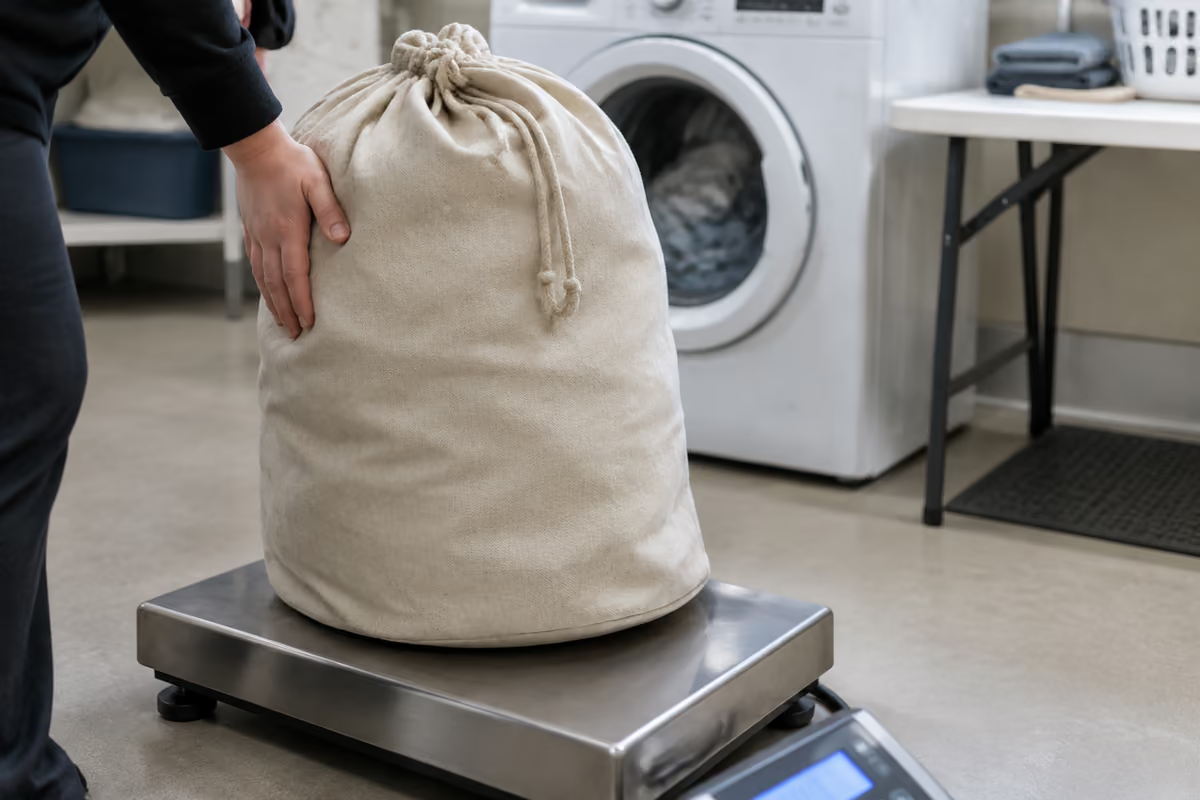
Per-pound pricing is exactly what the name says. You pay the published rate for every pound your laundry weighs. Our standard rate is $3.19 CAD per pound, and eligible students, teachers, healthcare workers, and seniors pay the special rate of $3.10 CAD per pound. There is a 15-pound minimum per order, so a lighter order is billed at the minimum. Above the minimum, the arithmetic scales in a straight line: eighteen pounds costs eighteen times the rate.
Your bag is weighed on a calibrated scale after pickup. You do not need a scale at home. Your card is saved when you book and nothing is charged at that point. Once the order is washed, folded, and delivered, it is invoiced at the weighed amount and the saved card is charged, with HST shown separately. The number on the scale is the number on your invoice.
The bag itself is just a container. Use any sturdy bag you like; its size does not affect the price, only the weight of what is inside does. If a heavy week needs two bags, send two bags and the order is still billed on its total weight. There is no penalty for a light week beyond the minimum, and no ceiling that forces you into a second purchase on a heavy one.
The minimum exists because every pickup involves a drive, a wash, a dry cycle, folding, and a return trip, and those fixed costs do not shrink when the load does. Pickup and delivery are included for every address in our served Ottawa area, with no delivery, fuel, or zone fee added on top, so the minimum is what keeps a small order worth running.
Head-to-head comparison
Neither model is better in every case. The table below lays out the factors that matter most when you compare a flat-rate bag service with per-pound pricing like ours.
| Flat-rate bag (other services) | Per-pound (how we price) |
|---|---|
| Price known before pickup, no weighing. | Price follows the weighed total, shown on the invoice. |
| A half-full bag still pays the full bag price. | A light order pays only for its weight, above the minimum. |
| A full, heavy bag can work out cheaper per pound. | Heavy orders cost proportionally more, pound by pound. |
| Overflow means buying a second bag. | Any number of bags, billed as one total weight. |
| Suits a household that fills the same bag every week. | Suits households whose volume changes week to week. |
| Bedding and dry cleaning are often priced separately. | Bedding and dry cleaning have their own published per-item prices. |
The pattern is straightforward. If your volume is high and perfectly steady, a flat-rate bag can reward that with a lower effective rate. If your volume is lower or swings from week to week, per-pound pricing removes the penalty for light weeks and the awkwardness of paying full price for half-empty space.
Judge this against your average month, not a single week. A heavy post-holiday week can make a flat bag look obviously right, while a quiet week alone makes per-pound look like the only sensible option. Neither snapshot tells the full story.
Two worked examples
Abstract comparisons only go so far, so here are two common Ottawa household shapes worked through at our published standard rate. Totals are before HST.
Example one: a four-person family
Two adults and two school-age children in a three-bedroom home produce steady laundry: school clothes, work clothes, towels cycled every few days, and sheets stripped on Sunday. Call it twenty-two pounds a week.
Four-person family, weekly pickup (per pound)
- Weekly weight
- 22 lb
- Standard rate per pound
- $3.19 CAD
- Pickup and delivery
- Included
- Weekly total before HST
- $70.18 CAD
A family that fills the same heavy bag every week is the one case where a flat-rate bag elsewhere can compete on price.
This is the household where a flat-rate bag service has its best case. If a competitor's bag holds twenty-two pounds and its bag price works out below twenty-two times our rate, the family would pay less there on a full week. The honest comparison is simple: multiply your typical weight by the per-pound rate and set it beside the bag price. Remember to check what the bag price leaves out, such as bedding, delivery, or a separate fee for heavy items, and whether your quieter weeks would still pay the full bag price.
Example two: a single condo dweller
Someone living alone in a one-bedroom condo in Centretown produces genuinely variable laundry: seven pounds on a quiet week, twelve after a trip, sometimes less. Booking every week would mean paying the 15-pound minimum on light loads.
Single condo dweller, pickup every two weeks (per pound)
- Two weeks of laundry
- 15 to 20 lb
- Billing basis
- Weighed total each pickup
- Minimum order
- 15 lb
- Total at the minimum, before HST
- $47.85 CAD
Letting laundry build to the minimum, instead of sending small weekly loads, keeps every pound billed at its real weight.
For this household the better move is cadence, not a different pricing model. Picking up every two weeks, or every four, lets the laundry reach the minimum naturally, so each order is billed on its actual weight. A flat-rate bag would charge the full bag price whether it held nine pounds or twenty, and for this person it would hold nine far more often than twenty.
The contrast shows why neither model wins everywhere. The family fills the bag; the condo dweller does not. Per-pound pricing is built for the second kind of week, which, for most households, is more common than a perfectly full bag.
Picking the right approach for your household
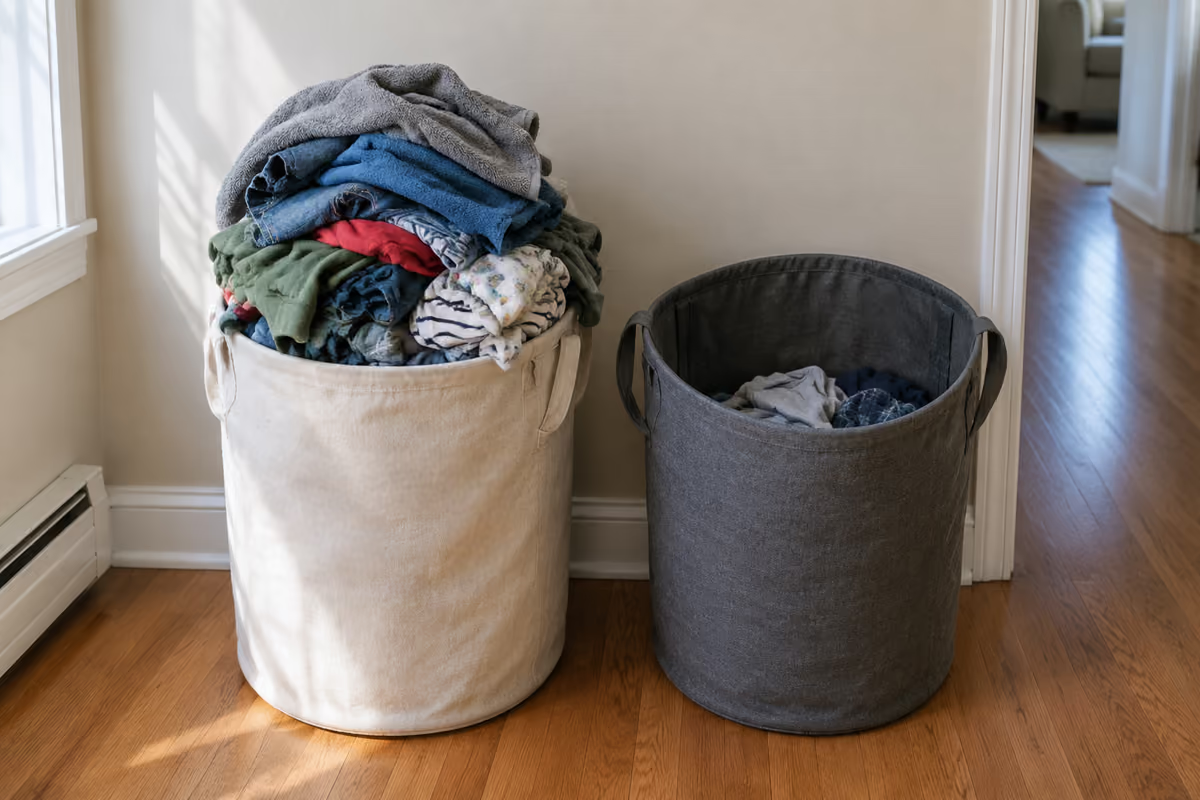
Most people do not weigh their laundry before booking, and they should not have to. The decision comes down to one question: is your laundry output predictable and heavy, or does it vary? That single distinction points you in the right direction more reliably than any calculator.
If your output varies by five or more pounds from week to week, per-pound pricing absorbs that swing without penalizing the light weeks. You are not paying for empty bag space when life gets quiet, and you are not buying extra bags when it gets busy. Pair it with a sensible pickup cadence and the invoice reflects reality every time.
If your household reliably packs the same heavy bag every week, compare honestly. Multiply your typical weight by $3.19 CAD and set that beside the bag price you are considering, then check what each price includes. Eligible students, teachers, healthcare workers, and seniors should use the special rate of $3.10 CAD for that math.
Before: paying for the bag
- I pay the full bag price even when it is half full.
- I skip weeks to save money, then scramble with a huge pile.
- I buy a second bag when a heavy week overflows.
- I am not sure what I pay per pound.
After: paying for the laundry
- I pay for the weight I actually send.
- I pick a pickup cadence that reaches the minimum.
- Heavy weeks go in two bags with no extra purchase.
- Every invoice shows the weight and the rate.
The pricing page lists the live per-pound rates alongside the per-item prices for bedding and dry cleaning, so you can run your own numbers before you book.
Quick checklist by household type
Some people just want a fast answer based on their household shape. The checked items below are the situations where per-pound pricing is the stronger fit; the unchecked ones are where a flat-rate bag service is worth comparing.
Is per-pound pricing the better fit for you?
- My laundry volume changes from week to week: per-pound fits.
- I sometimes send a light load or skip a week: per-pound fits.
- I want published per-item prices for bedding and dry cleaning too: per-pound fits.
- I pack the same heavy bag to the brim every single week: compare a flat-rate bag.
- I only want to know the exact price before pickup, whatever the weight: compare a flat-rate bag.
If most of your answers are checked, per-pound pricing will treat you fairly. If most are unchecked, run the comparison above with your own numbers before deciding.
Ottawa households with seasonal swings deserve a note. Winter output is heavier because of layered clothing, extra towels, and bulky sweaters, while summer loads of shorts and t-shirts weigh very little. Per-pound pricing follows that swing automatically. A flat-rate bag charges the same through both seasons, so a light summer costs as much as a heavy winter.
Does a recurring schedule change the price?
No. A recurring pickup, whether weekly, every two weeks, or every four weeks, is charged after each delivery at the same per-pound and per-item prices as a one-time order. There is no contract, no monthly fee, no prepayment, and no discount for committing. You can pause, skip, or cancel any pickup.
What a schedule does change is the rhythm. Without a standing pickup, laundry piles up until the pile becomes annoying enough to book, which often means one very heavy order. With a set cadence, the pile never gets out of hand, and you can choose the interval that brings each order to at least the minimum. The weekly laundry service guide covers how to pick that cadence in more detail.
Common mistakes when comparing pricing models
The first mistake is deciding from a single week. One heavy week makes a flat-rate bag look like a bargain, and one light week makes per-pound look like the only option. Look at a month.
The second is comparing unit rates instead of monthly totals. A flat bag can look cheaper per pound on paper, but only when it is full. Add up what you would actually pay across four weeks, light weeks included, and compare that figure.
The third is ignoring the minimum. If your weekly load sits well under 15 pounds, sending it every week means paying the minimum each time. Stretch the interval to every two or four weeks so each order is billed on its real weight.
The fourth is forgetting what a bag price leaves out. Check whether a flat-rate service charges separately for delivery, bedding, heavy items, or pickups outside a core zone. With us, pickup and delivery are included for every address in the served area, and bedding and dry cleaning have published per-item prices.
The last mistake is delaying altogether. The difference between pricing models on any single order is modest. The difference between handing off your laundry and doing it yourself is hours of your week.
Conclusion
Flat-rate bags and per-pound pricing each reward a different pattern. A flat bag pays off only when the same bag is packed full every week. Per-pound pricing charges light weeks less, never bills empty space, and flexes with the seasons, which is why we price wash and fold by the pound.
If you are comparing services, do the math with your own typical weight and your own cadence, and check what each price includes. When you are ready, book a pickup and your first invoice will show the weight and the rate in plain numbers.
Ready To Book
Hand off the laundry in under two minutes.

Reader handoffCopy, email, print, or return to the archive.
Share or save
Send this Ottawa laundry guide to someone who needs it.
Share the ottawa laundry guide with a roommate, property contact, or teammate before pickup notes get messy. The controls stay local to this page: no tracking widgets, no third-party script, just practical laundry tips Ottawa readers can pass along.
Services that pair with this guide
Services that pair with this guide.
Use the related services below when these laundry tips Ottawa readers need to turn a guides note into a pickup, a wash and fold order, or a question about specialty handling.


Related laundry searches.
Ottawa laundry guides continue from a real service page. Every search below lands on a live route.

Done reading?
Use the guide, then hand off the laundry.
This guide should leave you with a clearer next step. Book a pickup when the load fits standard laundry, or contact us when care labels, volume, bedding, or business needs deserve review first.