How Laundry Pickup and Delivery Actually Works in Ottawa
A clear walkthrough of laundry pickup and delivery in Ottawa: how booking works, what to bag, what we do, and when your clean clothes come back.
- Duong Quan Nguyen
- Updated September 24, 2026
- 19 min read
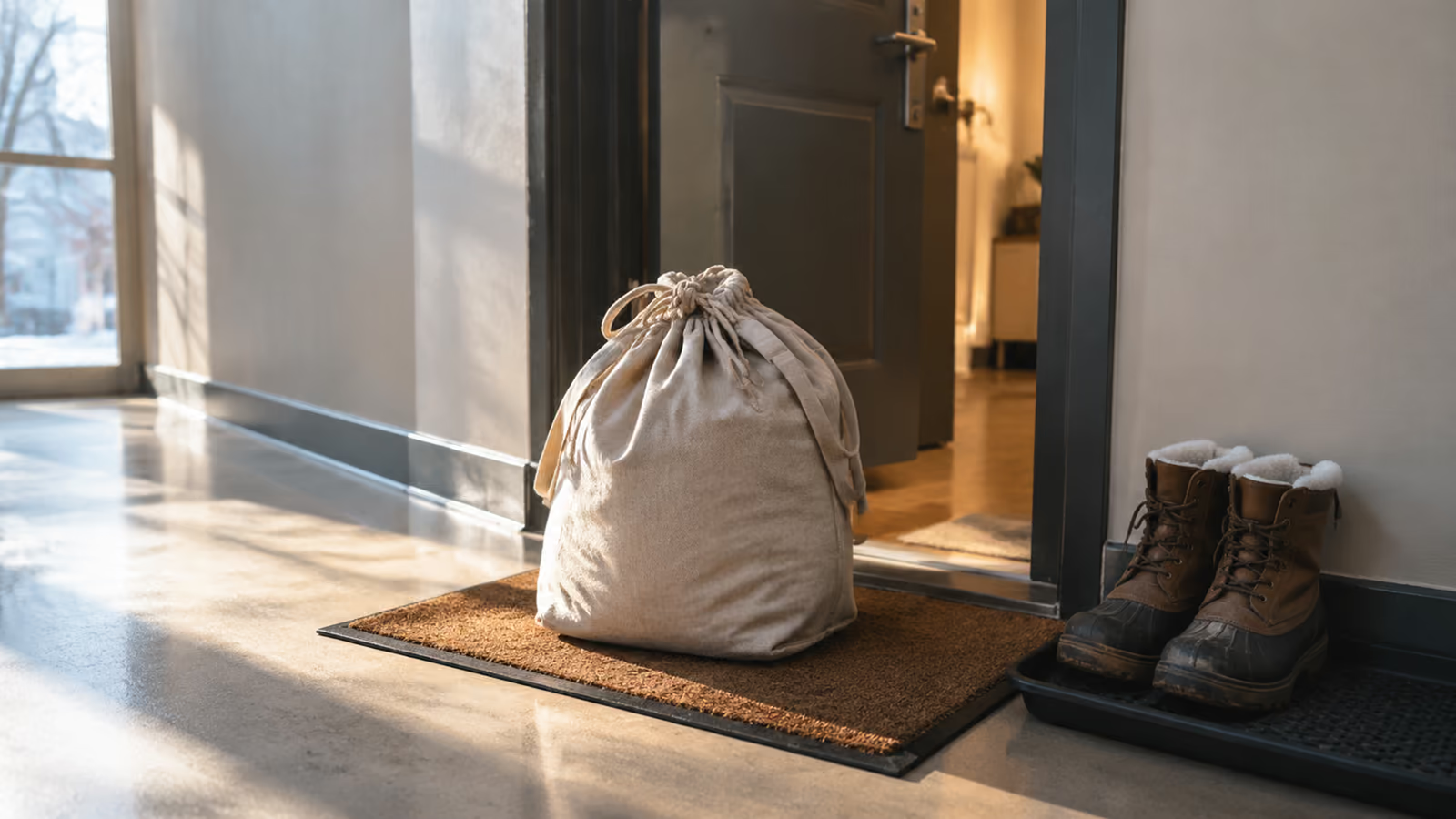
Read the guide
Keep the guide open while the Laundryless route stays clear.
Use the 9 jump links to move through this guides article without losing your place. On wider screens the dispatch rail stays beside the Ottawa laundry guide while the body keeps the original blog typography.
Guides
Quick answer
Book a pickup and leave your bag at the door. We weigh it on a calibrated scale, wash it on its own in cold water with fragrance-free detergent by default, fold it, and return it within 48 hours. Your saved card is charged after delivery for the actual weight.
It is Sunday night. The laundry pile has won. There is a basket in the bedroom, a smaller heap by the bathroom door, and a gym bag that you have been avoiding since Thursday. You have an early start tomorrow, the machines in your building are taken, and the idea of feeding coins into a dryer at ten at night has stopped being funny. This is the exact moment most people first wonder whether a service could simply take the problem away.
Laundry pickup exists for that moment, and most people in the city have never tried it. The picture in their head is either a luxury they do not need or a complicated handoff they do not trust. The reality sits between those two ideas, and it is calmer than both. A scheduled laundry pickup and delivery routine is straightforward once you have done it a single time. This guide walks through the whole arc: how booking works, what to put in the bag, what actually happens to your clothes while they are out of your hands, and when they come back.
How laundry pickup and delivery actually works
At its plainest, a pickup service collects your dirty laundry from your door, washes and folds it somewhere with proper machines, and returns it to the same door clean. You do not drive anywhere. You do not stand in a fluorescent room watching a drum spin. You do not ration quarters. The time you would have spent on the chore stays yours, and the clothes come back ready to put away.
It helps to compare it to the two things people already know. The first is the drop-off counter, where you carry your laundry to a shop, leave it, and come back later to collect it. Pickup removes both trips. The second is doing it yourself at home, which is essentially free in dollars but expensive in hours, especially if your building shares a small laundry room with a dozen other units. Pickup trades a per-pound fee for those hours back. Whether that trade is worth it depends entirely on how you value an evening, and only you can answer that.
The model itself has two touches. There is a pickup, when the laundry leaves, and there is a delivery, when it returns. In between, the work happens out of sight, which is the part that makes new customers nervous. We will spend most of this guide making that middle stretch visible, because once you can picture it, the nervousness tends to disappear.
It also helps to be clear about what pickup is not. It is not a membership you have to feed every month whether you use it or not, and it is not a contract that locks you into a year of weekly orders. You book when you have laundry and you skip when you do not. For most people the first booking is a single one-time order, a test run to see whether the loop actually closes the way the description promises. Only after that first bag comes back clean and folded do they decide whether to set a standing schedule. That order matters, because it means you can try the whole thing once, at the cost of one wash, before committing to anything resembling a routine.
One thing worth saying early, because it shapes everything else: we are the people who drive, wash, and deliver. There is no chain of vendors passing your clothes between strangers, and no app that quietly hands your order to whoever happens to be nearby. The same small operation that picks up your bag is the one that folds your shirts and brings them back. That continuity is the whole point, and it is why we can answer a question about your specific order without checking three systems first.
The single-operator model has a quieter benefit that is easy to miss until something needs attention. When one team owns the order from the curb to the fold table and back, accountability never gets diluted. If you ask why a shirt was handled a particular way, or whether a flagged stain was treated, the answer comes from the person who was actually there, not a script read by someone three handoffs removed from your laundry. Larger services route your bag through whoever is cheapest or closest that hour, which is efficient for them and opaque for you. We made the opposite trade on purpose, and it is the reason the rest of this guide can describe exactly what happens to your clothes rather than speaking in vague generalities.
Coverage and turnaround windows in Ottawa
Service runs across a defined set of city postal codes rather than an open-ended map. That boundary keeps routes tight, which is what keeps turnaround reliable in the first place. Before you plan around a pickup, it is worth a ten-second check that your address sits inside the zone, especially if you are on the outer edge of a neighbourhood or in a newer development that the maps have not fully caught up with.
Pickups happen in a morning window that you choose when you book. Standard turnaround returns your laundry within 48 hours of pickup, which means a bag that leaves this morning comes back folded and ready to shelve within a day or two. That reliable loop is not magic. It is the result of a fixed sequence of stations, each with enough time built in to do the work properly, so the wash, dry, fold, and drive never get compressed past a point that cuts corners we will not cut. If you need clothes back faster, an optional 24-hour rush turnaround is available.
Check your postal code first
Not sure if we cover your address? Run the postal code check on the service area page before you book. It takes a few seconds and saves you from planning an evening around a delivery that was never going to reach you.
None of this requires you to be home. The pickup window is when we come by, not when you must stand at the door. Most people leave the bag in an agreed spot and get on with their morning. We will get to the specifics of that handoff next, because the where and how of leaving a bag is the part people most often overthink.
A short word on why the service boundary exists at all, since it can feel like a restriction until you see the reasoning. A tight service area is what lets a single operation promise a reliable turnaround honestly. Spread the same routes across the entire region and the drive time alone would eat the hours the wash needs, and the standard turnaround would quietly stretch with an apology. Holding the zone tight is how the promise stays real. The same logic sets the rhythm of the pipeline: every bag has to clear each station, wash, dry, fold, and the return drive, within the standard turnaround window. These are not arbitrary fences. They are the visible edges of a schedule that has to physically hold to a dependable timeline.
Step-by-step on the day of pickup
The day of a pickup has a rhythm, and once you have felt it once you stop thinking about it at all. The whole sequence is built so that the only real effort happens the night before, when you are home anyway and not yet rushing. Here is the flow from the evening prep through the moment we collect the bag.
Bag your laundry the night before
Put bedsheets and towels in first, then softer everyday fabrics on top. You are not sorting by colour here, just loading the bag so heavier items sit at the bottom. Doing this at night means the morning needs nothing from you.
Close the bag
Tie or zip the bag shut so nothing spills on the way. Any sturdy bag works, and there is nothing to print or attach.
Confirm the pickup window
A quick confirmation in the customer app locks your morning slot. This is also where you leave any notes, like a buzzer code or the spot you will leave the bag.
Leave the bag where you said
Inside your door, in the lobby, with the concierge, wherever you noted. The bag does not need a person standing next to it. It just needs to be where you told us it would be.
We pick up, you carry on
We collect during the window and the bag is on its way. Your part is now finished until the clean laundry comes back within the standard turnaround.
That is genuinely the entire customer-side effort: load a bag, leave it, go about your day. If you want the finer detail on what to include, what to keep separate, and how to handle the occasional delicate item, we wrote a full companion piece on how to prepare your laundry so this guide can stay focused on the shape of the service rather than the contents of the bag.
It is worth naming the small fears that surface on a first pickup, because they are common and they are all answerable. People worry the bag will be missed, so we log every collection against your account and you can see the status rather than wonder. People worry about leaving a bag in a shared lobby, so we recommend a spot that suits your building, whether that is inside your door, with a concierge, or in a tucked-away corner you trust. People worry they will forget the window entirely, so the confirmation step exists precisely to take that memory off your plate. None of these are exotic problems. They are the ordinary friction of trying something new, and the process is shaped to absorb each one before it becomes a reason not to book.
What happens between pickup and delivery
This is the stretch that lives in the dark for most new customers, so let us turn the light on. From the moment the bag leaves your door to the moment it returns, your laundry moves through a fixed sequence of stations. Nothing about it is improvised. The timeline below is a representative run, the kind of schedule a pickup follows on its way through the facility and back to your door.
9:00 am
Pickup
The bag is collected from your door during the morning window and logged against your account.
10:00 am
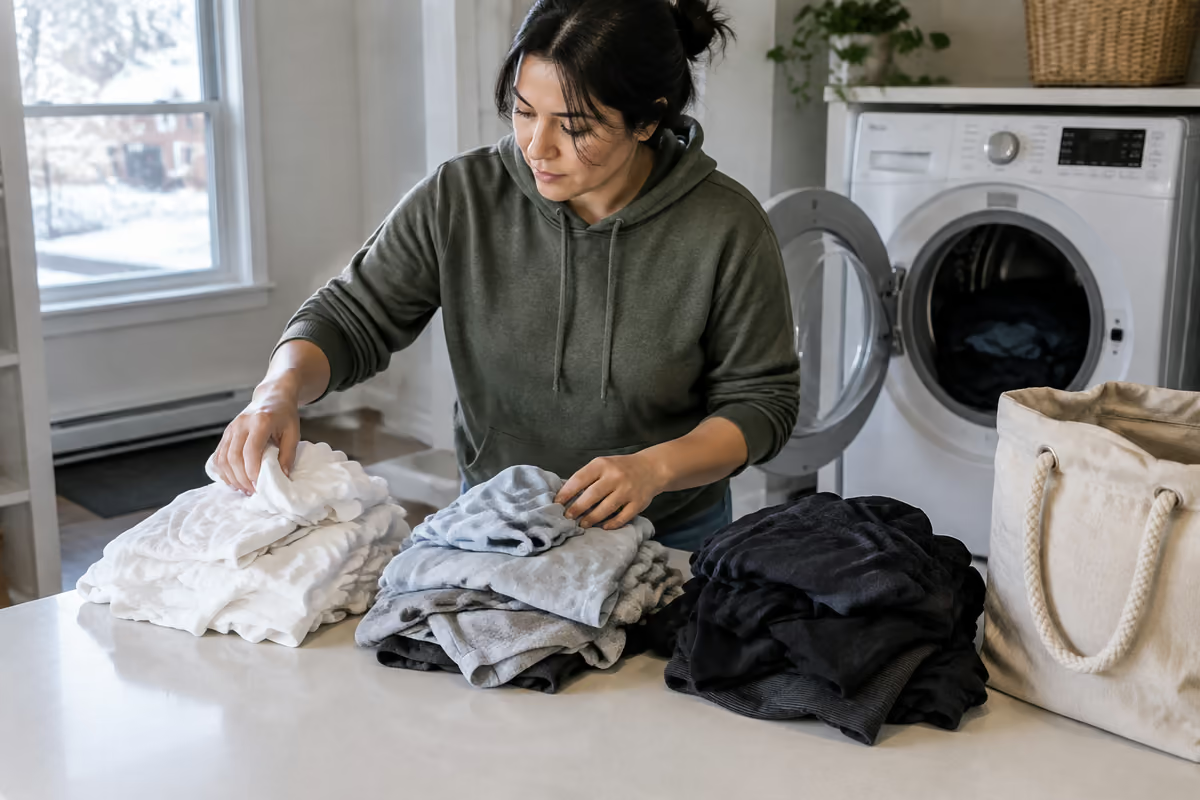
Sorted by colour and fabric
Whites, lights, and darks are separated, and anything needing special handling is pulled aside before a single machine starts.
11:00 am
Wash cycle begins
Loads run on settings matched to the fabric, cold water by default, warmer only where it genuinely helps.
1:00 pm
Dried with appropriate heat
Heat is matched to the load so cottons dry fully while synthetics and anything prone to shrinking get a gentler setting.
2:30 pm
Folding
Everything is folded by hand, with shirts and structured items handled so they are ready to put away rather than re-iron.
4:00 pm
Bagged for return
The finished order is sealed and queued for its delivery window, inside the standard 48-hour turnaround or 24 hours with rush.
The everyday clothing in that load moves through our wash and fold service, which runs on fragrance-free detergent and a cold-water default unless you have told us otherwise. The sorting step matters more than people expect. It is the difference between a red sock quietly ruining a load and that same sock being caught and rerouted before it ever touches your whites.
The timeline also explains why the standard turnaround takes the time it does. Each station takes the time it takes. A wash cycle cannot be rushed without leaving detergent in the fibres, a dryer cannot be hurried without either shrinking cottons or leaving synthetics damp, and folding by hand is simply slower than tipping a basket out. Stack those fixed durations end to end, add the return drive, and the standard promise of laundry back within 48 hours of pickup is what lets every step happen properly. If you need it sooner, the optional 24-hour rush moves your order to the front of the queue rather than cutting any stage short.
Not everything belongs in a wash-and-fold load, and the sorting station is where that gets decided too. Structured garments, anything with a dry-clean-only label, and delicate pieces that water would damage are routed to dry cleaning instead of going through the standard cycle. You do not have to pre-separate these yourself if you would rather not. Flag them in your booking notes, or trust the sort step to catch the obvious cases, and they will be handled on the right track rather than the convenient one.
What we wash by default
People assume a service must mean surrendering control over how their clothes are treated. The opposite is true, because the defaults are deliberately gentle and everything above the default is a choice you can make. Knowing the defaults is usually enough to feel comfortable handing over a bag for the first time.
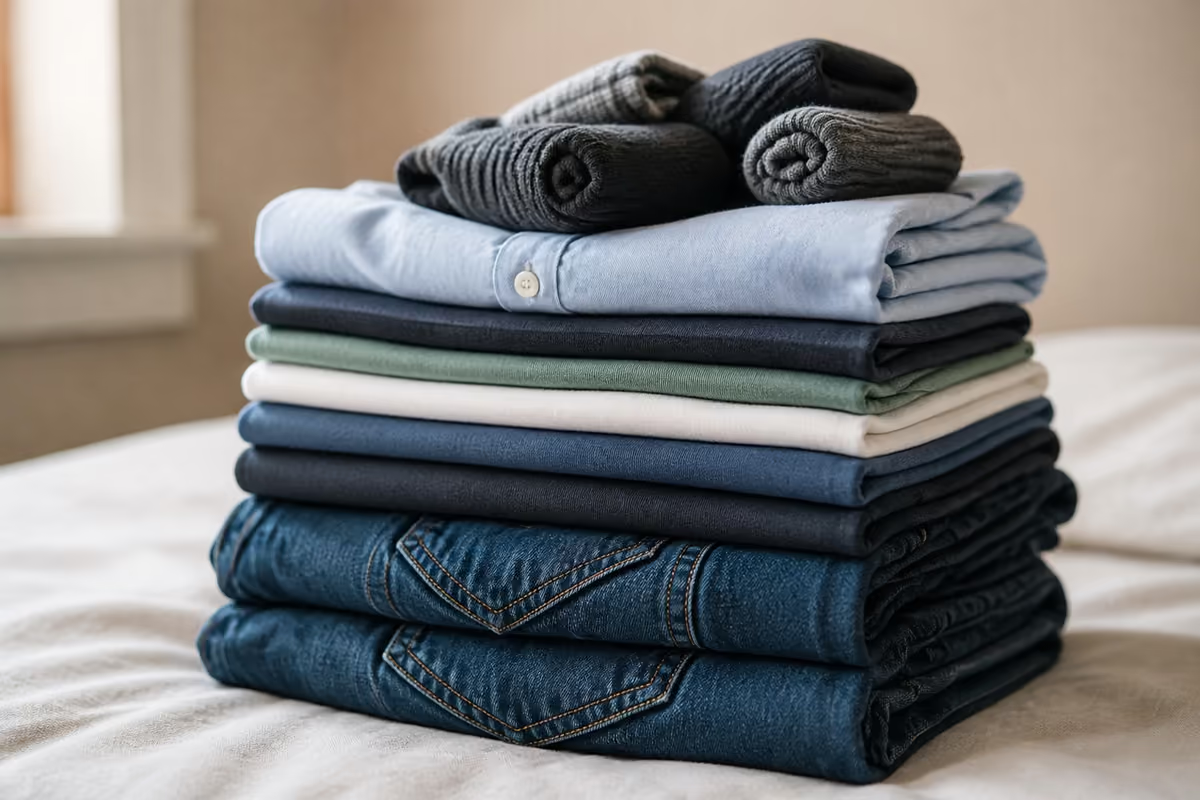
By default, we wash on cold. Cold water is kinder to colour and fabric, it sets fewer stains than people fear, and it uses less energy, so it is the right starting point for the large majority of everyday loads. We use a fragrance-free detergent as the standard, because a scent you did not ask for is harder to remove than one you chose. A hypoallergenic option is available for sensitive skin, and scented detergents are there for anyone who wants them. Whites, lights, and darks are separated as a matter of course, and business shirts run on a permanent-press cycle so they come back wearable rather than wrinkled into a ball.
Tell us your preferences once
If you have a strong preference, a warm wash for a specific load, a particular detergent brand, line-dry only for a few items, put it in the booking notes. We would rather follow your instruction than guess, and once it is on your account we keep doing it without you repeating yourself.
There is a reason the defaults lean gentle rather than aggressive. A service that does not know your wardrobe has to assume the cautious thing, because the cost of being wrong is not symmetrical. A cold wash that could have been warm simply leaves a load slightly less bright than its theoretical best, which nobody notices. A hot wash on something that needed cold can shrink a sweater or set a stain permanently, which everybody notices. Faced with that lopsided risk, the sensible policy is to protect first and brighten only when you ask, and that is exactly how the defaults are tuned. The result is that the safe choice and the easy choice are the same choice, which is how it should be.
The short version is that the defaults are chosen to protect your clothes when you say nothing, and every meaningful preference is one note away. You are never locked into a generic setting, and you never have to learn a menu of options to get a good result on the first try. Most people send their first few orders on the defaults alone and only add a preference once they notice something specific they want handled differently.
How much laundry pickup costs
Cost is usually the question sitting underneath all the others, so let us be plain about it. Everyday laundry is priced by weight, at a published per-pound rate, with a modest minimum so that very small orders still make sense to run. Nothing waits on a custom price, and there is no surprise at the end. The number you see is the number you pay.
$3.19 CAD
standard wash and fold, per pound
That standard rate covers the everyday wash-and-fold work, and a 15 pound minimum applies per order so the trip is worth making for a single light bag. Standard turnaround within 48 hours is included at that rate, not charged as a premium, because reliable turnaround is the service rather than an upsell. If you need clothes back faster, an optional 24-hour rush is available for a surcharge. Recurring pickups, the kind you set on a weekly or biweekly rhythm, are charged at the same rate as one-time orders, with no contract, no monthly fee, and no prepayment.
It helps to think in pounds rather than loads, because a pound is the unit you are actually charged on. A typical kitchen scale is enough to demystify it: a week of clothing for one person tends to land in the low teens of pounds, a couple's shared week often sits in the high teens to low twenties, and a family with young children can climb past that quickly once towels and bedding join in. You do not need to weigh anything yourself before booking. The point of the exercise is only to set a rough expectation, so the figure on your invoice reads as sensible rather than surprising. Bulky, light items like duvets weigh far less than people guess, while a single load of wet towels weighs far more, and both of those facts tend to even out across a normal order.
If you want the full arithmetic, including how a typical week of laundry translates into pounds and why we price by the pound rather than by the bag, we break down how pickup costs work in a dedicated post. For the live numbers across every service, the current per-pound and per-item pricing is always published in one place rather than hidden behind a form.
The reason the price is published up front deserves a sentence of its own, because it is a deliberate choice and not every service makes it. When a number is only revealed after a back-and-forth, the same laundry can cost two people two different amounts depending on how the conversation goes. We find that distasteful, and it is slow, so we do not do it. The rate is the rate, printed where anyone can read it before they commit a single dollar. You can do the math at your kitchen table, decide in private, and arrive at the booking already knowing roughly what the invoice will say. That transparency is worth more than it sounds, because the most common reason people hesitate over a new service is the quiet fear of an unknown bill, and a published rate simply removes that fear from the decision.
When pickup is and isn't right for you
A guide that only told you to book would not be worth your time. Pickup is genuinely better for some people than others, and the honest framing helps you decide accurately rather than talk yourself into or out of it.
It is a strong fit if your week is tight and your time is genuinely scarce, if you are running a household where laundry is a daily tide rather than a weekly task, or if you live in a condo or apartment without your own washer and dryer and dread the shared room down the hall. It suits anyone who has quietly decided they would rather buy the evening back than spend it sorting socks. For these readers the per-pound fee is not really a cost, it is the price of a recovered evening, and that math tends to feel obvious within the first order.
It is a weaker fit if you already enjoy doing your own laundry and find the rhythm of it calming, if your weekly load is genuinely tiny, or if you own a handful of pieces with very particular care needs that you trust to no one but yourself. There is no point pretending otherwise. If that describes you, the service might still be useful for the occasional heavy week, bedding, or seasonal cleanout, but it does not need to be your default.
The honest way to read those two lists is that pickup is a tool for buying back time, and the value of that tool depends entirely on how scarce your time currently is. A retiree with quiet weekday afternoons and a small wardrobe is solving a problem that mostly is not there, and there is no shame in saying so. A nurse working rotating shifts, a parent of two under five, a graduate student with a thesis and a part-time job, these are people for whom an evening is a genuinely rare resource, and for them the per-pound rate stops looking like a cost and starts looking like the cheapest hour they will buy all week. Most people already know which description fits them before they finish reading this paragraph. The goal here is not to push everyone toward booking. It is to help the people it genuinely serves recognise themselves, and to let the people it does not serve put the idea down without guilt.
There is also a middle path that gets overlooked in the rush to decide all-or-nothing. Plenty of people keep doing their own everyday loads and only hand off the parts they dislike most: the bulky bedding that barely fits a home machine, the towels that take two dryer cycles, the post-holiday mountain that builds up after guests leave. Using pickup selectively, rather than as a full replacement, is a perfectly sensible way to live with it. The service does not ask you to give up a habit you value. It is there for the loads that drain an evening you would rather spend on something else, and you are free to draw that line wherever it sits for you. Many long-term customers started exactly this way, with a single heavy week, and only widened the habit once it had earned their trust.
Common questions about laundry pickup
A few questions come up on almost every first booking. Here are honest answers to the common ones.
What if I have only a few items?
Small orders are welcome, though a per-order minimum applies so the pickup and delivery trip is worth running. If your load is genuinely tiny week to week, a less frequent schedule often makes more sense than a weekly one.
Are you insured if something gets damaged?
Yes. Orders are handled with care and we carry coverage for the rare case where something goes wrong. Because the same operation handles your laundry end to end, there is a clear point of contact rather than a finger-pointing chain.
How do you handle stains?
Visible stains are pre-treated before washing where the fabric allows. We cannot promise every stain lifts, since some are permanent by the time laundry reaches us, but flagging a stain in your notes meaningfully improves the odds.
Can you do dry cleaning at the same time?
Yes, as its own order. Each booking covers one service, so book dry cleaning separately and pick the same pickup window as your laundry. Keep dry-clean garments in their own bag, apart from the wash and fold bag.
What if no one is home for delivery?
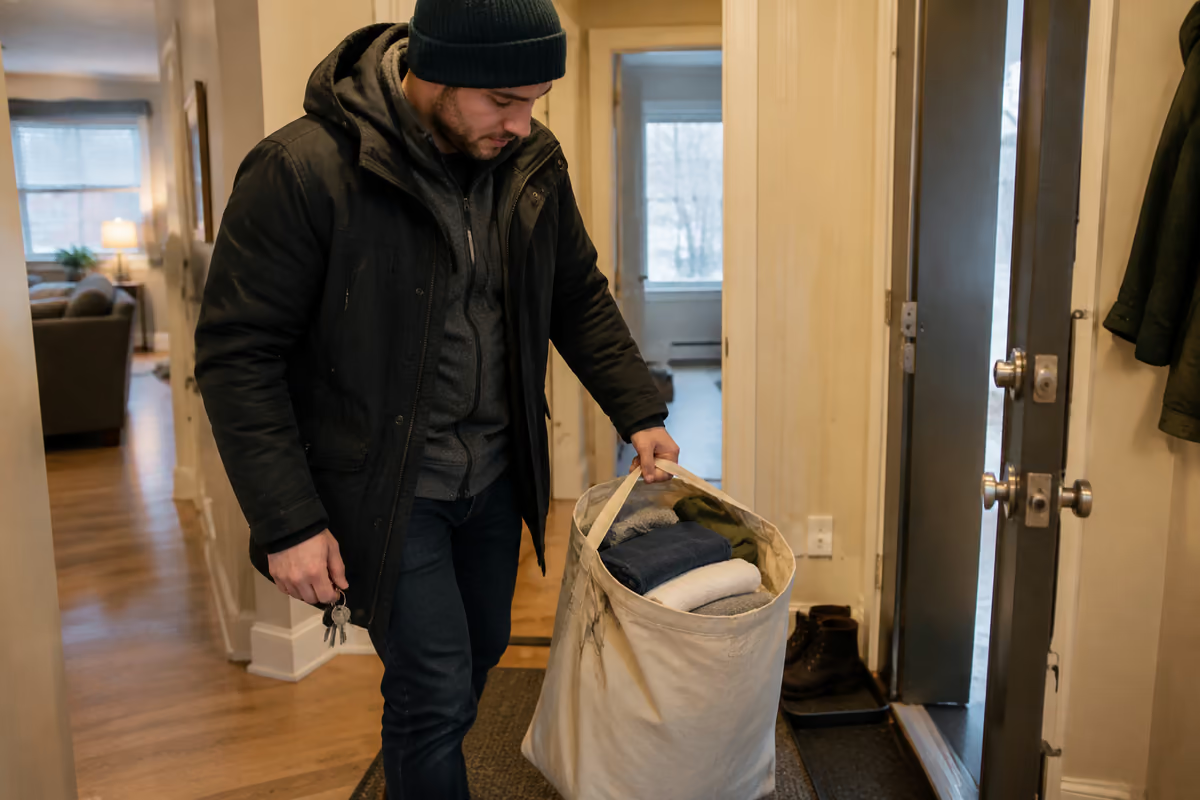
Delivery works the same way pickup does. We leave the finished order in your agreed spot, whether that is inside a door, a lobby, or with a concierge, so you do not need to be standing there at a precise minute.
Do you wash everything together or separate by household?
Each customer's laundry is washed as its own order. Your clothes are not mixed into a shared load with another household's, which is worth answering plainly.
Can I cancel a scheduled pickup?
Yes, with reasonable notice before the window. Recurring schedules can be paused or skipped for a week when you are travelling or simply do not have a full bag, without cancelling the whole plan.
If your question is not here, it is almost always faster to ask directly than to guess, and because one operation handles the whole order, the answer comes from someone who actually knows how your laundry was handled.
laundry pickup near me
Coverage across served city postal codes.
48-hour laundry Ottawa
Standard turnaround, rush available.
laundry pickup and delivery service
One operator, door to door.
door-to-door laundry pickup
Left and returned at your spot.
bag service laundry Ottawa
Load a bag, leave it, done.
per-pound laundry pickup
Published per-pound rate, no custom pricing.
laundry delivery service Ottawa
Returns within 48 hours.
wash and fold pickup
Folded and ready to shelve.
scheduled laundry pickup
Weekly or biweekly rhythm.
weekly laundry pickup Ottawa
Same rate, no contract or monthly fee.
drop-off vs pickup laundry
Skip both trips entirely.
laundry collection service
Pick a window that fits your day.
The simple version, and your next step
Strip away the detail and the model is small enough to hold in one breath: you load a bag, we collect it in the morning, your clothes move through a fixed sequence of sorting, washing, drying, and folding, and the finished order comes back to your door within 48 hours. The value is not really clean clothes, which you could manage yourself. The value is the evening you get to keep.
If you have read this far, the unknowns that usually hold people back, what happens to the bag, who touches it, what it costs, should be unknowns no longer. The honest test is simple. If your time is tight and a recovered evening is worth a published per-pound fee, this fits your week. If you genuinely enjoy the chore, it does not, and that is a fine answer too.
When you want to try it, you can start a booking in under three minutes, and the first one is the only one that ever feels unfamiliar.
Start a bookingPick a morning pickup window and hand off your first bag. Standard turnaround within 48 hours, with an optional 24-hour rush.Ready To Book
Hand off the laundry in under two minutes.

Reader handoffCopy, email, print, or return to the archive.
Share or save
Send this Ottawa laundry guide to someone who needs it.
Share the ottawa laundry guide with a roommate, property contact, or teammate before pickup notes get messy. The controls stay local to this page: no tracking widgets, no third-party script, just practical laundry tips Ottawa readers can pass along.
Services that pair with this guide
Services that pair with this guide.
Use the related services below when these laundry tips Ottawa readers need to turn a guides note into a pickup, a wash and fold order, or a question about specialty handling.


Related laundry searches.
Ottawa laundry guides continue from a real service page. Every search below lands on a live route.

Done reading?
Use the guide, then hand off the laundry.
This guide should leave you with a clearer next step. Book a pickup when the load fits standard laundry, or contact us when care labels, volume, bedding, or business needs deserve review first.