Laundry Service for Seniors in Ottawa: A Full Guide
How laundry pickup works for Ottawa seniors: door-to-door service, simple booking, family billing, and respectful handling for those with mobility challenges.
- Duong Quan Nguyen
- Updated September 24, 2026
- 22 min read
Read the guide
Keep the guide open while the Laundryless route stays clear.
Use the 10 jump links to move through this guides article without losing your place. On wider screens the dispatch rail stays beside the Ottawa laundry guide while the body keeps the original blog typography.
Guides
Quick answer
A pickup service takes laundry off a senior's hands: leave a bag at the door and it comes back washed and folded within 48 hours, with no stairs or heavy baskets. Seniors qualify for a lower per-pound rate, and there is no contract to sign.
Laundry is one of the first household tasks that becomes difficult with age. It does not have to be the one that forces a bigger conversation. For many families in Ottawa, the realization arrives quietly: a parent's clothes smell faintly unwashed, the hamper has not moved in two weeks, or a visit to their apartment reveals a pile that would have been unthinkable a few years ago. These are not signs of failure. They are signs that a physical task has outgrown a body that once handled it without thinking.
A laundry service for seniors exists precisely for this moment. Not as a last resort, not as a concession, but as a practical adjustment that preserves independence rather than undermining it. Door-to-door laundry pickup works for seniors the same way it works for anyone: a bag leaves the door dirty and comes back clean, folded, and ready to put away. The difference is in the details, the patience built into the process, the family billing that lets an adult child manage the account remotely, and the consistent routine that becomes something a senior can count on without having to remember or manage it themselves.
This guide is written for two readers at once. If you are the adult child noticing laundry slipping, it will show you how to set up a service that runs without your parent needing to do anything complicated. If you are the senior yourself, looking for a way to stop dreading the basement stairs or the heavy baskets, it will show you how simple the handoff actually is. Both readers deserve honesty about what this solves and what it does not, and that is the tone this guide keeps throughout.
Why laundry gets harder with age
The physical demands of laundry are easy to underestimate when your body cooperates without complaint. You lift a basket, carry it down a flight of stairs, bend to load the machine, reach overhead to hang items or pull them from a top-loading drum, stand for twenty minutes folding, and then carry the finished stack back up. None of these movements is strenuous in isolation for a healthy adult, but each one sits on a foundation of balance, grip strength, joint mobility, and sustained energy that erodes gradually after sixty and more sharply after seventy-five.
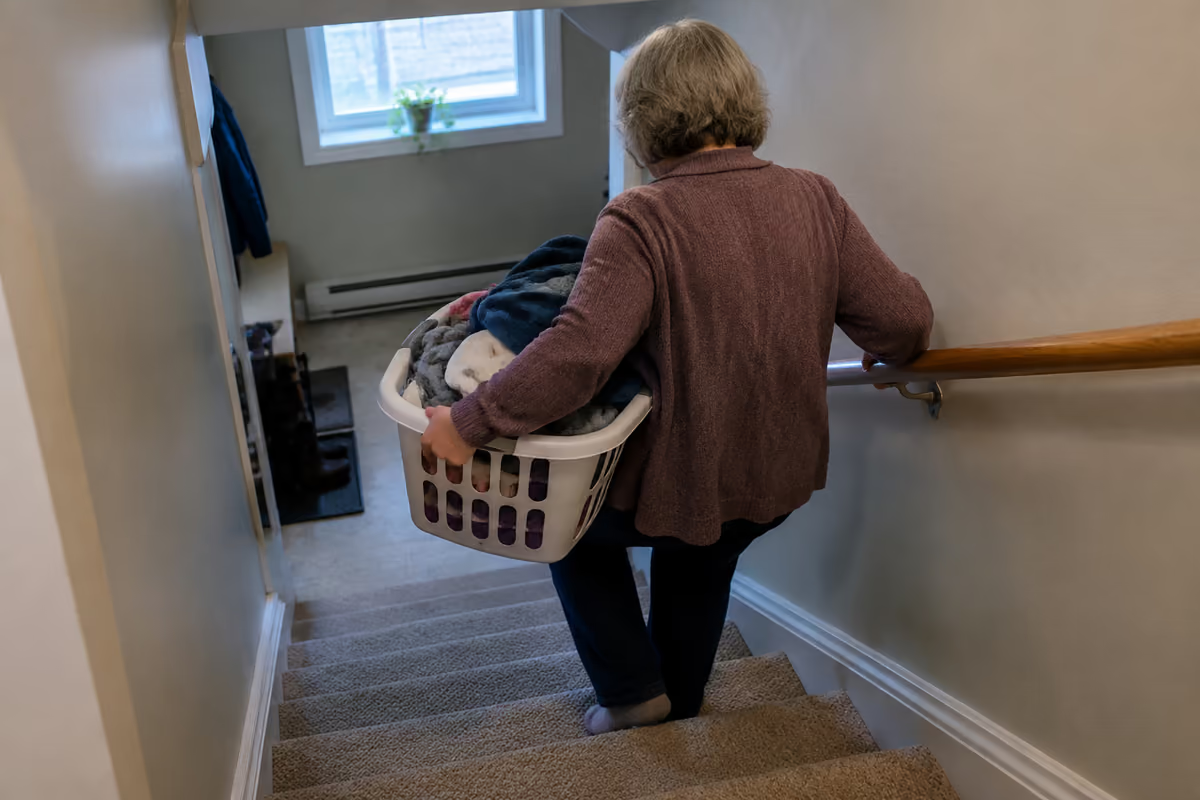
Mobility is the most visible barrier. Stairs become a negotiation rather than an afterthought, especially when both hands are occupied with a laundry basket that weighs fifteen pounds or more. A senior who lives in a two-storey home with the washer in the basement faces this negotiation every single wash day, and the risk of a fall while carrying a load is not hypothetical. It is one of the most common scenarios occupational therapists flag when assessing a home for safety. Even in a single-level apartment, the walk to a shared laundry room at the end of a corridor, often involving a heavy door and an elevator, can be enough to turn a straightforward chore into an exhausting expedition.
Grip and upper-body strength matter more than people realize. Wringing out a hand-washed item, pulling wet sheets from a drum, carrying a basket with one hand while opening a door with the other: these movements demand a secure grip and enough arm strength to control the weight. Arthritis in the hands, which affects roughly half of adults over sixty-five, makes each of these tasks painful or simply impossible on bad days. The workaround is usually to do less laundry, less often, which is how small piles become large ones.
Cognitive changes add a quieter layer of difficulty. Forgetting a load in the washer overnight is something everyone does occasionally, but when it happens repeatedly the clothes develop mildew and need rewashing, which doubles the effort. Forgetting to move items to the dryer, forgetting which settings a particular fabric needs, or losing track of which day laundry was last done: these are not emergencies, but they accumulate into a pattern where the task quietly stops getting completed on any reliable rhythm.
Energy and endurance round out the picture. Standing at a folding surface for fifteen to twenty minutes is surprisingly tiring for someone managing chronic fatigue, heart conditions, or the general deconditioning that comes with reduced activity. Many seniors can still do laundry physically but find that the effort costs them the rest of their afternoon, which means other tasks, errands, meals, or social activities get sacrificed. When a chore begins eating into the rest of life rather than fitting neatly inside it, the chore has outgrown the person, and that is a practical observation rather than a judgement.
None of this is unusual and none of it is shameful. The body changes with age in ways that are entirely predictable, and laundry happens to sit at the intersection of nearly every change: strength, balance, cognition, endurance, and fine motor control. Acknowledging that intersection honestly is the first step toward finding a solution that preserves dignity rather than eroding it.
Signs it is time to get help
Recognizing when a parent or grandparent needs laundry assistance is rarely a single dramatic moment. It tends to arrive as a series of small observations spread across several visits, each one easy to dismiss on its own but collectively impossible to ignore. The difficulty is that laundry is a private task, done behind closed doors, and seniors who are struggling with it rarely volunteer the information. Pride, embarrassment, and a genuine fear that admitting difficulty will lead to a loss of independence all conspire to keep the problem invisible until it becomes obvious.
The most common early sign is clothing worn repeatedly without washing. A favourite shirt appears every visit, or trousers that were fresh two weeks ago show visible wear and faint odour. This is not laziness. It is usually a sign that the effort of washing one item has become disproportionate to the perceived benefit, especially when the person lives alone and sees few visitors. They are making a quiet cost-benefit calculation, and the cost side of laundry has grown heavy enough to tip the scale toward skipping it.
Piles that grow rather than shrink are another reliable indicator. A hamper that stays full between visits, a spare bedroom where clothes accumulate on a chair, or bags of laundry that have clearly been sitting untouched for weeks all point to the same problem: the task is being deferred rather than completed. Sometimes the pile itself becomes an obstacle, too heavy or unwieldy to carry to the machine in a single trip, which makes starting even harder and creates a cycle that feeds on itself.
Stains that go untreated tell a related story. Pre-treating a stain requires bending, scrubbing, and often soaking, all of which demand effort and attention that may no longer be available. When you notice food stains on a parent's clothing that they would never have tolerated five years ago, you are not seeing carelessness. You are seeing a gap between the standard they hold and the capacity they have, and that gap tends to widen rather than close on its own.
Odour is the sign that most often prompts action, because it is the one that cannot be rationalized away or attributed to a single bad week. When a parent's clothing or bedding carries a persistent unwashed smell, the laundry has not merely fallen behind. It has stopped happening with any regularity at all, and the problem has likely been building for longer than the smell suggests. By the time odour is noticeable to a visitor, the person living with it has almost certainly grown accustomed to it and no longer registers it themselves.
Bedding that has not been changed in weeks or months is perhaps the most overlooked sign, because visitors rarely see a parent's bed. But unchanged sheets carry health implications beyond simple discomfort: dust mites, skin irritation, and bacterial buildup all worsen with time, and for seniors with compromised immune systems or skin conditions the consequences are real. If you notice bedding that looks unchanged across multiple visits, the issue is not just laundry. It is comfort and health being quietly sacrificed because the task of stripping and remaking a bed, carrying heavy sheets to a machine, and managing the long wash cycle has become more than the person can handle alone.
The compassionate response to any of these signs is not alarm or judgement. It is the recognition that a practical solution exists, one that does not require moving, giving up the home, or accepting a loss of autonomy. Setting up a laundry service is one of the smallest, least intrusive interventions a family can make, and it often prevents the cascade of neglect that leads to larger conversations about care.
How pickup works for seniors
The mechanics of a laundry pickup are simple for anyone, but seniors and their families often have specific questions about accessibility, physical effort, and what happens if something goes wrong. The service is designed so that the senior themselves needs to do almost nothing beyond placing a bag in an agreed spot. Everything else, the scheduling, the payment, the care instructions, can be managed remotely by a family member who does not even need to live in the same city.
The process breaks down into four steps, and each one has been shaped with reduced mobility and limited energy in mind. There is no app that must be navigated on a tiny screen, no heavy lifting required, and no need to be standing at the door at a precise time. The entire handoff is built around the idea that a senior's morning routine should not need to change in order for their laundry to get done.
Booking happens once
A family member or the senior themselves sets up the account online or by phone. Once a recurring schedule is in place, no repeat booking is needed. The pickup simply happens on the same day each week without requiring any action.
The bag goes to the door
The laundry bag is left in an agreed spot: inside the front door, on the porch, with a building concierge, or wherever works best for the home. No stairs, no carrying to a car, no trip to a laundromat. The bag just needs to be reachable.
We collect, wash, fold, and return
The bag is picked up during the scheduled window, taken through the full wash and fold process, and returned clean and folded within 48 hours, with 24-hour rush available for an added charge. The senior does not need to be home for either the pickup or the delivery.
Clean laundry arrives at the same spot
The finished bag is placed back in the same location it was collected from. For seniors with limited mobility, this means clean laundry is waiting exactly where they can reach it without bending, climbing, or carrying.
The recurring schedule is the part that matters most for seniors, because it removes the need to remember, decide, or initiate anything on a weekly basis. Once set, the service simply runs. A bag appears, a bag disappears, and clean clothes return. For seniors with early cognitive decline, this predictability is not merely convenient. It is the difference between a task that happens reliably and one that drifts into neglect because the executive function needed to initiate it has become unreliable.
For families managing this remotely, the account structure means you can see when pickups happen, whether the bag was collected, and when the return was completed. You do not need to phone your parent every Tuesday to ask whether they remembered to put the laundry out. The system tells you, which reduces the weekly check-in from a source of mild anxiety to a quiet confirmation that everything is running as it should.
The physical design of the handoff deserves emphasis, because it is the part that distinguishes this from asking a senior to manage their own laundry in any other way. There is no driving to a drop-off point, no loading a car, no navigating a parking lot, and no standing at a counter. The entire interaction happens at their own front door, in their own time, with a bag that weighs whatever they chose to put in it. If a senior can walk to their front door, they can use this service. If they cannot, a family member or care aide can place the bag for them, and the service still works identically.
A door-to-door laundry pickup routine built around a senior's home removes every barrier except the decision to start. And that decision, in most families, is made not by the senior themselves but by the adult child who has been watching the pile grow and wondering what to do about it. This section is your answer.
Care preferences we honour
Seniors often have specific needs that a generic laundry service might overlook. Skin becomes more sensitive with age. Familiar routines matter more, not less, when other parts of life are becoming less predictable. The care preferences system exists so that every wash follows the same instructions, every time, without anyone needing to repeat themselves or hope the message got through.
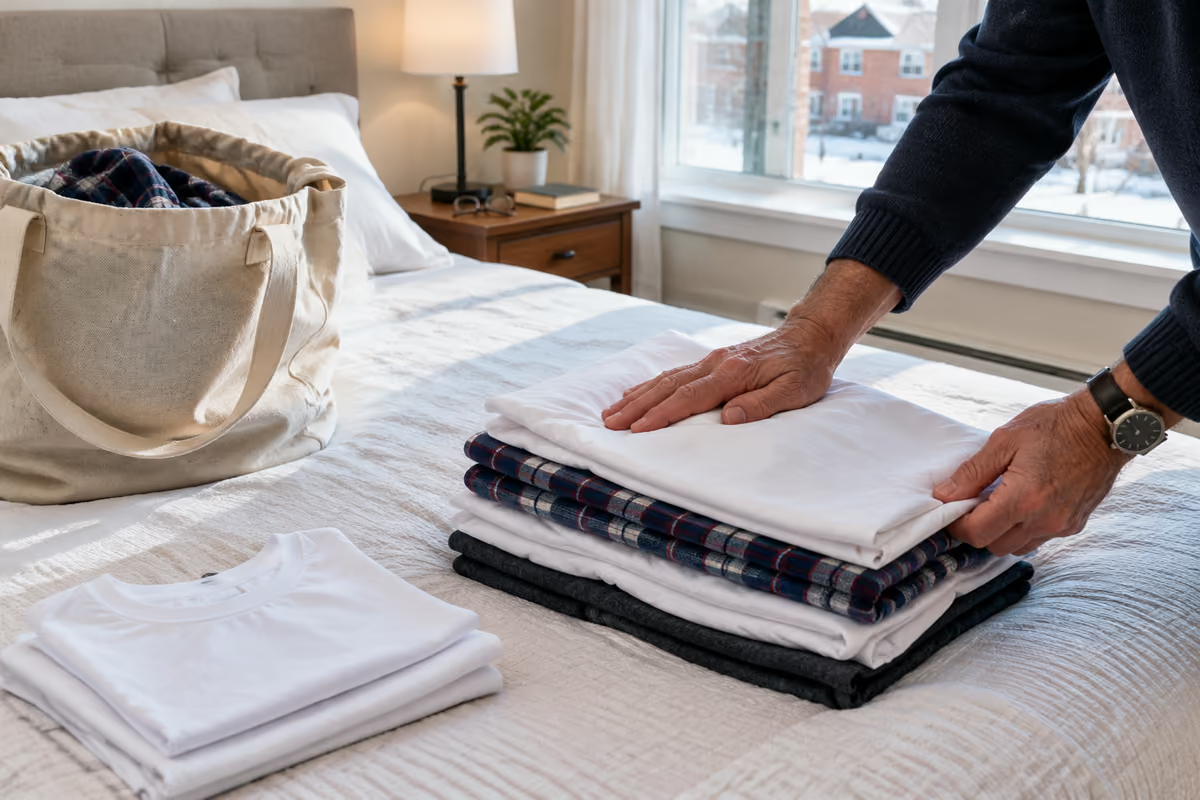
Fragrance-free detergent is the default for senior accounts, because chemical sensitivities and skin irritation become more common with age and many seniors are on medications that make skin more reactive. If a specific detergent brand is preferred, or if a senior has always used a particular product and finds comfort in the familiar scent, that can be noted and followed consistently. The point is not to impose a standard but to honour the preference, whatever it is, reliably.
Temperature preferences matter too. Some seniors prefer warm washes for bedding and towels because they associate warmth with cleanliness, and for items like sheets that benefit from sanitization this is a reasonable request we follow. Everyday clothing still defaults to cold water unless told otherwise, because cold protects fabric and colour and the gentle approach is the right one when no specific instruction overrides it.
Preferences persist across every pickup
Note any care preferences once, either during account setup or in a message at any point, and they apply to every future order. You do not need to repeat instructions each week. If preferences change, a single update adjusts the standing instructions going forward.
Folding preferences are more personal than people expect. Some seniors want towels folded in thirds, the way they have always done it, because that is what fits their linen closet. Others want shirts on hangers rather than folded flat because arthritic hands struggle to unfold and refold. These details sound small from the outside, but for the person receiving the laundry back, they are the difference between a service that feels impersonal and one that feels like someone is paying attention. We follow whatever instructions are given, and when none are given, we fold in a standard way that works for most shelves and drawers.
For seniors living in retirement homes or assisted-living communities, labelling items with name tags is common practice, and we handle labelled clothing with the awareness that it needs to return to the right person. Items are never mixed between orders, which means a labelled shirt goes back to the same senior it came from, not into a shared pile. This sounds obvious, but in larger facilities with communal laundry rooms, mixing is the number one complaint families have. The single-order separation built into our wash and fold service eliminates that problem entirely.
For seniors with sensitive-skin options, the combination of fragrance-free detergent, cold water, and an extra rinse cycle removes nearly all residual irritants from fabric. This is not a special upcharge. It is a care note that adjusts the standard process, and it applies automatically to every order once it is set.
What family members can set up
Most senior laundry accounts are created and managed by an adult child. This is by design. The person doing the physical laundry does not need to be the person managing the digital side of the service, and separating those two roles is what makes the service work for seniors who are not comfortable with apps, websites, or online payments. A daughter in Kanata can set up an account for her father in Sandy Hill, manage the billing from her own device, and her father never needs to touch a screen.
The setup itself takes a few minutes and covers everything the service needs to run on a recurring basis without further input. Once it is done, the service operates on autopilot unless someone deliberately changes something. Here is what a family member typically configures during that initial setup.
Family account setup checklist
- Create the account with your email and your parent's address as the service location
- Add your payment method so billing goes to you, not your parent
- Set a recurring weekly schedule for the same day and window each week
- Leave care notes that persist across every pickup without needing to be repeated
- Designate a safe bag-drop spot that works for your parent's mobility level
- Add bedding and comforters to the rotation on a monthly or biweekly cycle
The family billing arrangement deserves a closer look because it is the piece that makes this work for seniors who should not be managing recurring charges. The payment method belongs to whoever sets up the account, which means the senior never sees an invoice, never needs to remember a password, and never needs to approve a charge. The adult child receives a receipt after each pickup, can review the order history at any time, and can pause or adjust the schedule without involving their parent in the decision. This is not a workaround. It is the intended use case, and the account structure supports it natively.
The recurring schedule is the second critical piece. A senior who cannot remember to book a pickup does not need to. The schedule runs automatically on the chosen day, and the only action required is leaving the bag in the designated spot. If the bag is not out, we note it and move on without charging. There is no penalty for a missed week, and the schedule simply continues the following week as normal. This forgiveness is built in because the reality of caring for a senior includes days when things do not go to plan, and punishing a missed pickup would make the service a source of stress rather than relief.
The bag-drop location matters more for seniors than for most customers. A spot that requires walking to the end of a driveway, or down a flight of stairs, or through a heavy door defeats the purpose of a service meant to remove physical burden. The ideal spot is immediately inside or just outside the main door the senior uses, at floor level, requiring no bending or lifting beyond what they do to walk through that door anyway. Apartment buildings with concierge desks offer an even simpler option: the bag goes to the desk, and the desk hands it to us. Retirement communities often have a designated area for service pickups, and we coordinate with front-desk staff to make the handoff seamless.
Adding bedding cleaning to the rotation is something families often forget during initial setup and add later once they realize how much a senior struggles with heavy duvets and fitted sheets. A monthly bedding pickup on top of the weekly clothing rotation keeps everything fresh without requiring the senior to wrestle with items that can weigh fifteen pounds wet and are awkward to carry even dry. Bedding books as its own order, and you can pick the same pickup window as the weekly clothing pickup.
What changes for families
The families who need this most rarely find it through an ad or a search. They find it through exhaustion. An adult child visits on a Sunday, notices the laundry situation, spends the afternoon washing and folding, drives home feeling guilty that it took a visit to catch it, and starts looking for something that runs without their physical presence. It is a common pattern for families caring for an older parent, and the relief when the cycle breaks is genuine.
I used to drive across the city every Saturday to do my mother's laundry. It was not the driving that wore me down, it was knowing that if I missed a week, she would wear the same clothes for fourteen days rather than ask for help. Now a bag leaves her door every Tuesday and comes back folded. She does not have to ask anyone. I do not have to worry about what happens when I cannot make the trip. It gave both of us our weekends back.
That scenario is not unusual. The guilt of being the only person managing a parent's laundry, combined with the impossibility of being physically present every week, creates a quiet, persistent stress that most adult children carry without naming. A recurring service does not replace the relationship or the visits. It removes one specific burden from the list so that the visits can be about something other than chores.
A weekly recurring pickup rhythm usually brings the same shift: the mental load drops, the parent's clothing stays consistently clean, and the visits become lighter because there is one fewer problem to solve during the short time together. That shift is worth more than the per-pound cost suggests, because what it actually buys is not clean laundry. It buys the absence of worry between visits.
The consistency of the service can also become a quiet signal of a parent's wellbeing. When the bag goes out every week as expected, things are running normally. When it does not, it can be an early indicator that something has changed, a prompt to check in rather than a reason to panic. This is not a feature we designed deliberately. It is something families noticed on their own and shared with us, and it speaks to how a simple routine can serve as a gentle monitoring layer without being intrusive or clinical.
Common questions from families
When an adult child is setting up laundry service for a parent, the questions tend to be different from those a typical customer asks. They are less about logistics and more about trust, consistency, and what happens when the person using the service cannot advocate for themselves in the usual ways. These are the practical questions that come up when family members manage an account on behalf of a senior in Ottawa.
Can I manage the account for my parent?
Yes. The account can be set up with your email and your parent's address. You manage scheduling, payment, and care notes remotely. Your parent does not need to interact with the app or remember login details. The bag simply appears and disappears on the scheduled day.
What if they forget to put the bag out?
If the bag is not at the agreed spot during the pickup window, we note it and move on without charging. You receive a notification so you can check in with your parent. Many families find that the routine itself becomes a memory anchor after the first few weeks, but missed pickups are handled gracefully rather than penalized.
Do you handle incontinence items?
Yes. Bedding and clothing affected by incontinence are washed with appropriate settings and handled without judgement. This is more common than families expect, and it is not something we treat as unusual or difficult. Bag the items normally and note it in the account preferences if it is a regular occurrence.
Is there a discount for seniors?
Yes. Seniors qualify for the special per-pound rate, which is lower than the standard rate and is self-declared at booking. It applies to every pickup, one-time or recurring. Recurring schedules otherwise use the same rates as one-time orders.
Can you pick up from a retirement home?
Yes, provided the residence allows external service providers to collect and return items. Many Ottawa retirement residences have a front desk or concierge arrangement that works well for bag handoff. We coordinate with the building's preferred process.
How do I know the laundry was done?
Each pickup and delivery is logged with a timestamp on the account. You can check the order history remotely at any time. When the bag is returned, the status updates so you have confirmation without needing to call your parent and ask.
These questions share a common thread: they are all asking whether the service can run reliably when the person receiving it may not be able to manage it actively. The answer is yes, because the system is designed around a recurring schedule with preset preferences, not around a customer who checks an app daily. Once the account is configured, the service runs on its own rhythm, and the family member's role shifts from managing laundry to occasionally reviewing that things are going smoothly.
For families managing care across distance, this predictability matters more than price or speed. Knowing that clean laundry arrives every Tuesday without intervention is a small certainty in a situation that often feels uncertain, and small certainties accumulate into something that resembles peace of mind.
Dignity and respect in the service
There is a reason this section exists separately rather than being folded into the FAQ or the process description. Dignity is not a feature. It is not a bullet point on a sales page. It is the atmosphere in which the entire service either works or fails for this audience, and it deserves to be named plainly rather than implied.
When laundry service enters a senior's life, it arrives at a moment that already carries emotional weight. The person receiving the service may feel embarrassed that they can no longer manage a task they handled independently for decades. They may feel that accepting help is a step toward losing autonomy rather than preserving it. They may worry about a stranger seeing their clothes, their bedding, the private evidence of a body that is changing. These feelings are real and they are common, and a service that ignores them is not truly serving this audience regardless of how well it washes a shirt.
Our approach is built around a few quiet commitments. We assign consistent drivers when possible, because familiarity reduces the discomfort of a stranger at the door. We handle items without comment on their condition, because the state of someone's laundry is not a subject that benefits from observation. We follow care instructions precisely and consistently, because predictability is a form of respect. And we treat the bag as private, because that is what it is.
None of this appears on an invoice or a feature comparison chart. It is the invisible infrastructure that makes the difference between a service that a senior tolerates and one they accept willingly. Families notice it in the absence of resistance: when a parent who initially objected to the idea stops mentioning it, or when they begin leaving the bag out on the right day without a reminder, that quiet acceptance is the signal that the service has earned its place rather than imposed it.
The framing matters too. This is not care. It is not home health. It is laundry service, the same service anyone in Ottawa can use, with the same quality and the same published rate. Seniors are not a special category of customer who receive a diluted or patronizing version of the service. They are customers whose circumstances mean the service reaches them in a slightly different way, with a bit more patience and a bit more consistency, but the standard is identical. That distinction matters to people who are navigating the space between independence and dependence, and we hold it carefully.
What Ottawa seniors search for
These are the phrases Ottawa families type when they begin looking for help. Each one reflects a real concern, and each one leads to the same answer: a simple, respectful pickup service that handles laundry without requiring the senior to leave home, carry heavy loads, or remember complicated steps.
senior laundry service Ottawa
Pickup and delivery designed for older adults.
elderly laundry help
Door-to-door without carrying or driving.
laundry pickup seniors
Scheduled collection, 48-hour return.
mobility laundry assistance
No stairs, no machines, no lifting.
laundry service aging parents
Recurring schedule managed by family.
Ottawa senior home services
Consistent routine without reminders.
laundry help elderly Ottawa
Clean clothes returned folded and ready.
senior wash and fold
Same quality service, adapted delivery.
laundry pickup retirement home
We collect from lobbies and front desks.
family billing laundry service
Adult children manage payment remotely.
A gentle next step
The decision to arrange laundry help for a parent, or to accept it yourself, is not a dramatic one. It is a quiet, practical step that removes one physical burden from a week that may already hold enough of them. Nothing about booking a pickup changes a living situation, alters a routine beyond the laundry itself, or signals anything other than common sense. It simply means that clean, folded clothes appear at the door on a predictable schedule, without anyone needing to carry, climb, or remember.
If you are the adult child reading this, the setup takes a few minutes and runs on your payment method from that point forward. Your parent does not need to manage an app, remember a password, or do anything beyond leaving a bag in the agreed spot. If you are the senior reading this for yourself, the same simplicity applies: one booking, one bag, one spot, and the rest happens without you.
For many families, the result is the same small relief. It is not that laundry was the hardest problem. It is that removing it freed attention for the things that actually matter, the visit, the walk, the afternoon that used to be spent sorting and folding. That freed afternoon is the real product, and it is available whenever you are ready to claim it.
Set up a recurring pickupBook a weekly laundry pickup for a parent or yourself. Door-to-door service, family billing available, 48-hour standard return.Ready To Book
Hand off the laundry in under two minutes.

Reader handoffCopy, email, print, or return to the archive.
Share or save
Send this Ottawa laundry guide to someone who needs it.
Share the ottawa laundry guide with a roommate, property contact, or teammate before pickup notes get messy. The controls stay local to this page: no tracking widgets, no third-party script, just practical laundry tips Ottawa readers can pass along.
Services that pair with this guide
Services that pair with this guide.
Use the related services below when these laundry tips Ottawa readers need to turn a guides note into a pickup, a wash and fold order, or a question about specialty handling.
Related services




Related laundry searches.
Ottawa laundry guides continue from a real service page. Every search below lands on a live route.

Done reading?
Use the guide, then hand off the laundry.
This guide should leave you with a clearer next step. Book a pickup when the load fits standard laundry, or contact us when care labels, volume, bedding, or business needs deserve review first.